


Hey there! As a provider of XRF gold testing equipment, I often get asked about the detection limit of XRF tests for gold in alloys. So, I thought I'd write this blog to share some insights on this topic.
First off, let's understand what XRF testing is all about. XRF, or X-ray fluorescence, is a non-destructive analytical technique used to determine the elemental composition of a sample. When it comes to gold alloys, XRF testing can quickly and accurately identify the presence and concentration of gold and other elements in the alloy.
Now, the detection limit of an XRF test for gold in alloys is basically the lowest amount of gold that the XRF machine can reliably detect. It's a crucial factor because it determines how accurately we can measure the gold content, especially in alloys with low gold concentrations.
The detection limit of an XRF test for gold can vary depending on a few key factors. One of the main factors is the type of XRF equipment being used. Different models have different sensitivities and capabilities. For example, our NAP 8200E XRF Gold Tester is a high - performance benchtop unit. It's designed with advanced technology that allows it to detect gold at relatively low concentrations. The sophisticated detectors and X - ray sources in this machine can pick up even small amounts of gold in an alloy.
Another great option is our NA 8500 XRF Gold Tester. This model is known for its precision and reliability. It has been optimized to have a lower detection limit for gold, which means it can accurately measure gold in alloys where the gold content is on the lower side.
The N1 XRF Gold Tester is also a fantastic choice. It's more compact but still packs a punch in terms of performance. It can detect gold in alloys with a decent level of accuracy, making it suitable for a wide range of applications, from small - scale jewelry testing to larger - scale industrial quality control.
The matrix of the alloy is another important factor that affects the detection limit. An alloy is a mixture of different metals, and the other elements in the alloy can interfere with the XRF measurement of gold. For instance, if an alloy has a high concentration of elements that have similar X - ray emission spectra to gold, it can be more challenging for the XRF machine to accurately detect and quantify the gold.
The condition of the sample also plays a role. A rough or uneven sample surface can scatter the X - rays in an unpredictable way, which may reduce the accuracy of the measurement and potentially increase the effective detection limit. So, it's important to prepare the sample properly before running an XRF test. Usually, this involves polishing the sample to get a smooth surface.
The measurement time can influence the detection limit as well. Generally, the longer the measurement time, the lower the detection limit. When the XRF machine has more time to analyze the sample, it can collect more data, which improves the signal - to - noise ratio. This means it can detect smaller amounts of gold more accurately. However, longer measurement times also mean lower throughput, so there's a trade - off between accuracy and efficiency.
In most cases, modern XRF machines like the ones we offer can detect gold in alloys at concentrations as low as a few parts per million (ppm). For example, in high - end jewelry alloys where the gold content might be diluted with other precious or base metals, our XRF testers can still give a reliable reading of the gold concentration.
For industrial applications, such as gold recovery from electronic waste, the ability to detect low levels of gold is crucial. Electronic waste often contains only small amounts of gold, and being able to accurately measure this gold content is essential for determining the economic viability of the recovery process.
Our XRF gold testers are not only accurate but also user - friendly. They come with intuitive software that makes it easy to operate the machine, even for those who are new to XRF testing. The software can display the results in a clear and understandable format, and it can also generate reports for record - keeping purposes.
If you're in the business of buying, selling, or manufacturing gold alloys, having an accurate XRF gold tester is a must. It can help you avoid costly mistakes, such as overpaying for alloys with lower gold content or under - pricing your products.

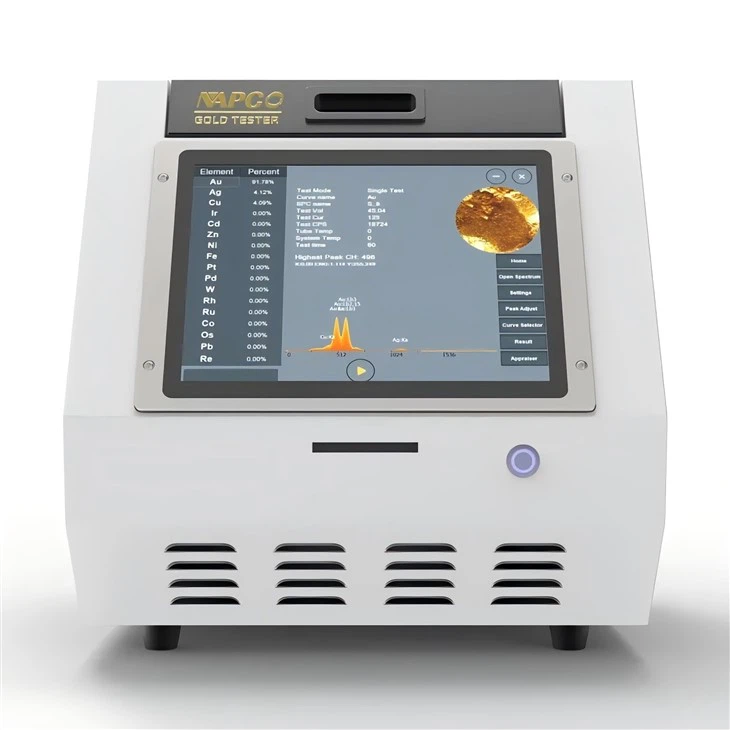
Whether you're a small jewelry store owner looking to test the authenticity of incoming pieces or a large - scale gold refinery needing to ensure the quality of your output, our XRF gold testers are up to the task.
If you're interested in learning more about our XRF gold testing equipment or want to discuss your specific needs, don't hesitate to reach out. We're here to help you make the right choice for your gold testing requirements.
References
- "X - ray Fluorescence Spectrometry" by Grant W. Potts and Paul A. Vaughan
- "Principles of Instrumental Analysis" by Douglas A. Skoog, F. James Holler, and Stanley R. Crouch