


Hey there! As a supplier of gold testers, I often get asked about the resolution of these nifty devices. So, let's dive right in and break down what resolution means in the context of a gold tester.
First off, resolution in a gold tester refers to how precisely it can measure the composition of gold and other metals in a sample. It's all about getting an accurate readout of what's really in that shiny piece of jewelry or gold bar you're testing. Think of it like using a high - resolution camera. A camera with high resolution can capture fine details, and similarly, a gold tester with good resolution can detect even the smallest amounts of different metals in a sample.
There are a few factors that affect the resolution of a gold tester. One of the main ones is the type of technology it uses. Most modern gold testers, like the ones we supply, use X - ray fluorescence (XRF) technology. XRF gold testers work by emitting X - rays onto the sample. When these X - rays hit the atoms in the sample, they cause the atoms to emit secondary X - rays with specific energies. The gold tester then analyzes these secondary X - rays to determine the elemental composition of the sample.
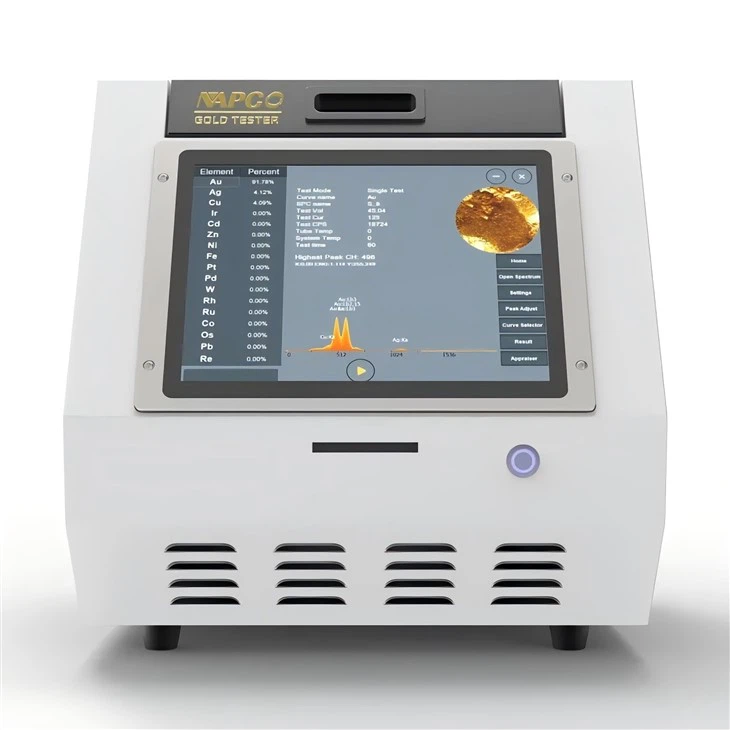
The detector in an XRF gold tester plays a crucial role in determining its resolution. A high - quality detector can distinguish between different X - ray energies more accurately, which means it can provide a more detailed and precise analysis of the sample. For example, our NAP 8200E XRF Gold Tester is equipped with a top - notch detector that offers excellent resolution. It can accurately detect the presence of various metals, including gold, silver, platinum, and even trace elements like copper and zinc.
Another factor that affects resolution is the calibration of the gold tester. Calibration is like setting the zero point on a scale. If a gold tester is not calibrated correctly, it can give inaccurate readings. That's why we make sure that all our gold testers, including the N1 - 25 XRF Gold Tester and N1 - 10 XRF Gold Tester, are carefully calibrated before they leave our facility. This ensures that you get the most accurate and reliable results every time you use them.
The resolution of a gold tester is also important when it comes to detecting impurities in gold. Pure gold is very soft, so it's often alloyed with other metals to make it stronger. These alloying metals can affect the value and quality of the gold. A gold tester with high resolution can detect even small amounts of impurities, which is essential for determining the true purity of the gold. For instance, if you're buying or selling gold jewelry, you want to know exactly how much pure gold is in it and what other metals are present.

Let's talk about the practical implications of resolution in a real - world scenario. Suppose you're a jeweler. You receive a batch of gold chains from a supplier. You want to make sure that the gold in these chains is of the quality and purity that the supplier claims. Using a gold tester with high resolution, you can quickly and accurately analyze the chains. If the tester shows that the gold content is lower than expected or that there are unexpected impurities, you can take appropriate action, like negotiating a better price or returning the batch.
On the other hand, if you're a gold refiner, resolution is even more critical. You need to know the exact composition of the gold you're refining to ensure that you're getting the maximum value from your raw materials. A high - resolution gold tester can help you optimize your refining process and ensure that you're producing high - quality gold products.
Now, you might be wondering how to choose a gold tester with the right resolution for your needs. Well, it depends on what you're using the tester for. If you're just doing basic testing of gold jewelry in a retail setting, a gold tester with moderate resolution might be sufficient. But if you're involved in high - end gold trading or refining, you'll want a gold tester with the highest possible resolution.
Our range of gold testers offers different levels of resolution to suit different needs. The NAP 8200E XRF Gold Tester is our top - of - the - line model, offering the highest resolution and the most advanced features. It's ideal for professional gold traders, refiners, and high - end jewelers. The N1 - 25 XRF Gold Tester and N1 - 10 XRF Gold Tester are more budget - friendly options that still offer good resolution and reliable performance, making them suitable for smaller jewelry stores and hobbyists.
In conclusion, the resolution of a gold tester is a crucial factor that determines its accuracy and usefulness. Whether you're a jeweler, a gold trader, or a refiner, having a gold tester with the right resolution can save you time, money, and headaches. If you're interested in purchasing a gold tester or want to learn more about our products, don't hesitate to reach out. We're here to help you find the perfect gold tester for your needs.
References
- "X - Ray Fluorescence Spectrometry: Principles and Applications" by Richard Jenkins
- "Handbook of Applied X - Ray Analysis" by John R. DeVries