


Hey there, fellow gold enthusiasts! If you're in the business of buying, selling, or appraising gold, you know how crucial it is to accurately determine its purity. That's where a potentiometric gold testing machine comes in handy. As a supplier of gold testing machines, I've seen firsthand how these devices can revolutionize the way you work with gold. In this blog post, I'll break down how a potentiometric gold testing machine works, so you'll have a clear understanding of this essential tool.
What is a Potentiometric Gold Testing Machine?
Before we dive into how it works, let's quickly go over what a potentiometric gold testing machine is. Simply put, it's a device that measures the electrical potential difference between two electrodes in a solution to determine the concentration of gold in a sample. This type of testing is non-destructive, which means you can test your gold without damaging it. That's a huge plus, especially when you're dealing with valuable items.
The Basics of Potentiometry
To understand how a potentiometric gold testing machine works, you need to have a basic grasp of potentiometry. Potentiometry is a technique in electrochemistry that measures the potential difference (voltage) between two electrodes in an electrochemical cell. An electrochemical cell consists of two electrodes - a working electrode and a reference electrode - immersed in an electrolyte solution.
The working electrode is in contact with the sample you're testing. When the sample contains gold ions, a chemical reaction occurs at the surface of the working electrode. This reaction causes a change in the electrical potential at the electrode. The reference electrode, on the other hand, maintains a constant potential. By measuring the potential difference between the working electrode and the reference electrode, we can determine the concentration of gold ions in the sample.
How a Potentiometric Gold Testing Machine Works Step by Step
Step 1: Sample Preparation
The first step in using a potentiometric gold testing machine is to prepare your sample. You'll need to take a small amount of the gold item you want to test. This can be done by drilling a tiny hole in the item or taking a small filing. The sample should be clean and free of any dirt or debris. Once you have your sample, you'll dissolve it in a suitable electrolyte solution. The electrolyte solution contains chemicals that will react with the gold ions in the sample.
Step 2: Setting Up the Electrochemical Cell
Next, you'll set up the electrochemical cell. Place the working electrode and the reference electrode in the electrolyte solution containing the dissolved gold sample. The working electrode is usually made of a material that can react with gold ions, such as platinum or glassy carbon. The reference electrode is typically a silver/silver chloride electrode, which maintains a stable potential.
Step 3: Measuring the Potential Difference
Once the electrodes are in the solution, the potentiometric gold testing machine will measure the potential difference between the working electrode and the reference electrode. This potential difference is directly related to the concentration of gold ions in the sample. The machine uses a high-impedance voltmeter to measure the voltage accurately.
Step 4: Calculating the Gold Purity
The potentiometric gold testing machine then uses the measured potential difference to calculate the concentration of gold in the sample. Based on this concentration, it can determine the purity of the gold. The purity is usually expressed in karats or fineness. For example, 24-karat gold is considered pure gold, while 18-karat gold is 75% pure.
Advantages of Using a Potentiometric Gold Testing Machine
There are several advantages to using a potentiometric gold testing machine. One of the biggest advantages is its accuracy. Potentiometric testing can provide highly accurate results, often within a few percentage points of the actual gold purity. This is crucial when you're dealing with high-value items.
Another advantage is that it's non-destructive. Unlike some other gold testing methods, such as acid testing, potentiometric testing doesn't damage the sample. This means you can test your gold items without worrying about reducing their value.
It's also relatively fast. Once you've prepared the sample and set up the electrochemical cell, the testing process usually takes only a few minutes. This allows you to quickly determine the purity of your gold and make informed decisions.
Our Gold Testing Machines
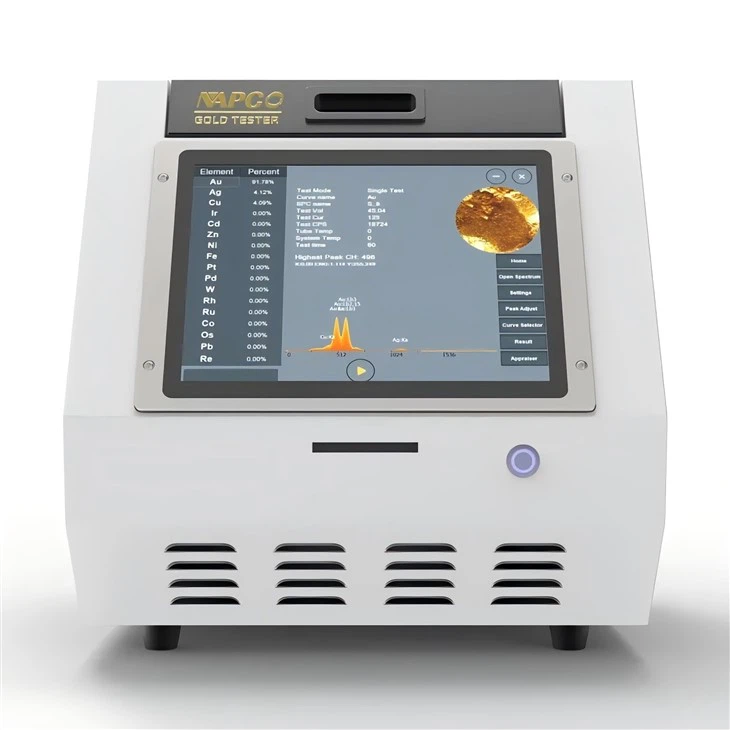
As a supplier of gold testing machines, we offer a range of high-quality devices to meet your needs. Our N1-10 XRF Gold Tester is a benchtop machine that uses XRF technology to quickly and accurately determine the purity of gold and other precious metals. It's easy to use and provides reliable results.
Another great option is our NAP 8200E XRF Gold Tester. This machine also uses XRF technology and offers advanced features for more detailed analysis. It's perfect for professional jewelers, pawnbrokers, and precious metal dealers.
If you're looking for a more powerful and versatile machine, our N1-25 XRF Gold Tester is a great choice. It can handle larger samples and provides even more accurate results. It's ideal for high-volume testing and research applications.

Contact Us for More Information
If you're interested in learning more about our gold testing machines or have any questions about how they work, please don't hesitate to reach out. We're here to help you find the right solution for your gold testing needs. Whether you're a small business owner or a large-scale gold buyer, we have the expertise and products to support you.
Let's start a conversation and see how our potentiometric gold testing machines can benefit your business.
References
- Bard, A. J., & Faulkner, L. R. (2001). Electrochemical Methods: Fundamentals and Applications. Wiley.
- Kissinger, P. T., & Heineman, W. R. (Eds.). (1996). Laboratory Techniques in Electroanalytical Chemistry. Marcel Dekker.