


When it comes to assessing the purity of gold, two primary types of testers dominate the market: digital and analog gold purity testers. As a supplier of high - quality gold purity testers, I have witnessed firsthand the unique features and applications of both types. In this blog post, I will delve into the differences between digital and analog gold purity testers, helping you make an informed decision when choosing the right tool for your needs.
How Analog Gold Purity Testers Work
Analog gold purity testers rely on traditional methods to determine the purity of gold. One of the most common types is the acid testing kit. This method involves making a small scratch on the gold item and applying different acids to the scratch. Each acid is formulated to react with a specific purity of gold. For example, a stronger acid will dissolve lower - purity gold, while purer gold will remain unaffected.
Another analog method is the density test. Gold has a distinct density, and by measuring the density of a gold item, one can estimate its purity. This is done by weighing the item in air and then in water, using Archimedes' principle. The difference in weight can be used to calculate the density, which can then be compared to the known densities of pure gold and gold alloys.
How Digital Gold Purity Testers Work
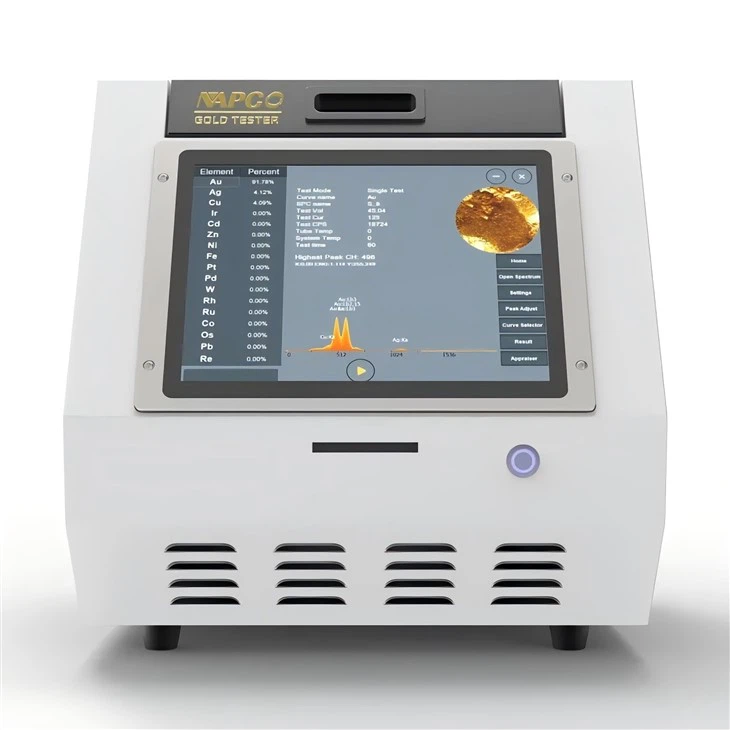
Digital gold purity testers, on the other hand, use advanced technologies to provide accurate and non - destructive testing. One of the most popular digital testing methods is X - ray fluorescence (XRF). XRF testers work by emitting X - rays onto the surface of the gold item. The X - rays cause the atoms in the gold to emit secondary X - rays, and the energy and intensity of these secondary X - rays can be analyzed to determine the elemental composition of the gold, including its purity.
As a supplier, we offer a range of high - quality XRF gold testers, such as the N1 XRF Gold Tester, NA 8500 XRF Gold Tester, and NAP 8200E XRF Gold Tester. These testers are designed to provide fast, accurate, and non - destructive testing, making them ideal for a variety of applications, from jewelry stores to gold refineries.
Accuracy and Precision
One of the most significant differences between digital and analog gold purity testers is their accuracy and precision. Digital testers, especially XRF testers, are generally more accurate and precise than analog testers. XRF testers can provide detailed information about the elemental composition of the gold, with an accuracy of up to 0.1% in many cases. This level of accuracy is crucial for applications where precise purity measurements are required, such as in the gold trading and refining industries.
Analog testers, while still useful, have some limitations in terms of accuracy. Acid testing, for example, can be affected by factors such as the depth of the scratch, the concentration of the acid, and the presence of other metals in the gold alloy. Density testing can also be inaccurate if the gold item has a complex shape or if there are air bubbles trapped inside.
Speed of Testing
Digital gold purity testers are also much faster than analog testers. XRF testers can provide results in a matter of seconds, allowing for quick and efficient testing of multiple gold items. This is especially beneficial for businesses that need to test a large number of items on a regular basis, such as jewelry manufacturers and wholesalers.

Analog testing methods, on the other hand, can be time - consuming. Acid testing requires careful preparation of the acid solutions and waiting for the reactions to occur, which can take several minutes. Density testing also involves multiple steps, including weighing the item in air and water, which can be a slow process.
Non - Destructive Testing
Digital gold purity testers, particularly XRF testers, offer the advantage of non - destructive testing. This means that the gold item does not need to be damaged or altered in any way during the testing process. This is a significant benefit for valuable or antique gold items, as it allows for testing without affecting their appearance or value.
Analog testing methods, such as acid testing, are destructive. Making a scratch on the gold item and applying acid can leave a visible mark, which can reduce the value of the item, especially if it is a high - end piece of jewelry.
Ease of Use
Digital gold purity testers are generally easier to use than analog testers. XRF testers are often equipped with user - friendly interfaces and software that can guide the user through the testing process. The results are displayed digitally, making them easy to read and interpret.
Analog testing methods, on the other hand, require some skill and experience to perform accurately. Acid testing, for example, requires careful handling of the acids, which can be dangerous if not used properly. Density testing also requires a certain level of knowledge of physics and the use of specialized equipment.
Cost
The cost of digital and analog gold purity testers can vary significantly. Digital testers, especially high - end XRF testers, tend to be more expensive than analog testers. However, the higher cost is often justified by their accuracy, speed, and non - destructive testing capabilities.
Analog testers, such as acid testing kits, are relatively inexpensive and can be a good option for small businesses or individuals who only need to test gold occasionally. However, they may not provide the same level of accuracy and precision as digital testers.
Applications
The choice between a digital and an analog gold purity tester also depends on the specific application. Digital testers are ideal for industries that require high - accuracy and non - destructive testing, such as gold trading, refining, and high - end jewelry manufacturing. Our N1 XRF Gold Tester, NA 8500 XRF Gold Tester, and NAP 8200E XRF Gold Tester are well - suited for these applications.
Analog testers, on the other hand, can be a good choice for small jewelry stores, pawn shops, or individuals who need a simple and cost - effective way to test gold. Acid testing kits, for example, can be used to quickly determine if a gold item is genuine or not.
Conclusion
In conclusion, both digital and analog gold purity testers have their own advantages and disadvantages. Digital testers, such as XRF testers, offer high accuracy, speed, non - destructive testing, and ease of use, but they are more expensive. Analog testers are less expensive and can be a good option for occasional testing, but they are slower, less accurate, and often destructive.
As a supplier of gold purity testers, we understand the importance of choosing the right tool for your specific needs. Whether you are a large - scale gold refinery or a small jewelry store, we can provide you with the best solution. If you are interested in learning more about our products or have any questions about gold purity testing, please feel free to contact us for further discussion and potential procurement. We are committed to providing you with high - quality products and excellent customer service.
References
- "Gold Testing Methods: A Comprehensive Guide." Jewelry Industry Journal, 2022.
- "X - ray Fluorescence Spectroscopy for Gold Purity Analysis." Analytical Chemistry Review, 2021.
- "Traditional Gold Testing Techniques: Advantages and Limitations." Precious Metals Research, 2020.