


Hey there! As a supplier of XRF gold testing equipment, I often get asked if XRF is used in gold forensic analysis. Well, let's dive right into it and explore this fascinating topic.
First off, what is XRF? XRF stands for X-ray fluorescence. It's a non-destructive analytical technique that can determine the elemental composition of a sample. When it comes to gold, XRF can quickly and accurately tell you the purity of the gold, as well as the presence of other elements in the alloy.
In gold forensic analysis, the main goal is to determine the authenticity, purity, and origin of gold items. This could be in cases of fraud, theft, or when verifying the quality of gold for investment purposes. And that's where XRF really shines.
One of the key advantages of using XRF in gold forensic analysis is its speed. Traditional methods of gold analysis, like acid testing or fire assay, can be time-consuming and destructive. With XRF, you can get results in a matter of seconds or minutes. Just place the gold sample in the XRF machine, and it will analyze the elemental composition without damaging the sample. This is crucial in forensic cases where you might need to preserve the evidence.
Another great thing about XRF is its accuracy. Modern XRF gold testers are highly precise and can detect even trace amounts of other elements in the gold. For example, if someone is trying to pass off a lower-purity gold as high-purity, the XRF will be able to spot the difference. It can also identify other metals that might be used to alloy the gold, which can give clues about the origin and manufacturing process of the gold item.
Let's talk about some of the XRF gold testers we offer. We have the N1-10 XRF Gold Tester. This is a great entry-level benchtop XRF gold tester. It's easy to use and provides accurate results for gold purity analysis. Whether you're a small jewelry shop or a forensic lab doing initial screening, the N1-10 is a reliable choice.
Then there's the N1-25 XRF Gold Tester. This is a more advanced model with enhanced features. It can handle a wider range of sample sizes and has a higher level of accuracy. If you're dealing with more complex gold samples or need to analyze a large volume of samples, the N1-25 is the way to go.
And for those who need the ultimate in precision and performance, we have the NAP 8200E XRF Gold Tester. This top-of-the-line XRF gold tester is used by many professional forensic labs and large-scale gold trading companies. It can analyze not only gold but also other precious metals and elements with extreme accuracy.
In forensic analysis, the ability to get detailed and accurate elemental data is crucial. XRF can provide information about the specific elements present in the gold, their concentrations, and even the ratios between different elements. This data can be used to create a unique "fingerprint" for each gold item. By comparing the fingerprints of different gold samples, forensic experts can determine if they are from the same source or if there are any signs of tampering.
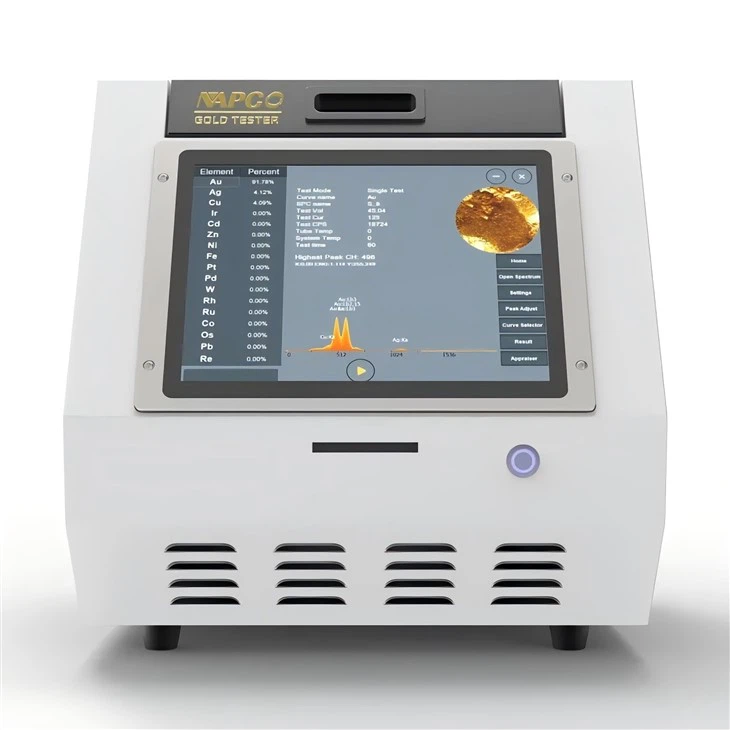

For example, if a stolen gold bar is recovered, the XRF analysis can be used to compare its elemental composition with the records of the original gold bar. If the compositions match, it's strong evidence that the recovered bar is the stolen one. On the other hand, if there are significant differences, it could indicate that the bar has been altered or is a fake.
XRF can also be used to detect counterfeit gold. Counterfeiters often use base metals or lower-purity gold alloys to mimic the appearance of high-purity gold. XRF can quickly identify these counterfeits by detecting the presence of non-gold elements or abnormal elemental ratios. This is especially important in the gold market, where counterfeiting can cause significant financial losses.
However, it's important to note that XRF has its limitations. While it's very accurate for determining the surface composition of the gold, it might not be able to detect internal inclusions or impurities that are hidden beneath the surface. In some cases, additional testing methods might be needed to get a complete picture. But overall, XRF is an invaluable tool in gold forensic analysis.
In conclusion, XRF is definitely used in gold forensic analysis, and it plays a crucial role in determining the authenticity, purity, and origin of gold items. Its speed, accuracy, and non-destructive nature make it a preferred choice for many forensic labs and gold industry professionals.
If you're in the market for an XRF gold tester for forensic analysis or any other gold testing needs, we'd love to hear from you. We can provide you with more information about our products, answer your questions, and help you choose the right XRF gold tester for your specific requirements. Just reach out to us, and let's start a conversation about how we can help you with your gold testing needs.
References
- "X-ray Fluorescence Spectrometry: Principles and Applications" by E. P. Bertin
- "Forensic Science Handbook" by Richard Saferstein