


As a leading supplier of XRF gold testing equipment, I've witnessed firsthand the remarkable capabilities of XRF technology in handling gold with different densities. XRF, or X-ray fluorescence, is a non-destructive analytical technique that has revolutionized the way we test and analyze precious metals. In this blog post, I'll delve into how XRF testing manages gold with varying densities, highlighting the advantages of our cutting-edge XRF gold testers.
Understanding Gold Density
Before we explore how XRF testing deals with gold of different densities, it's essential to understand what density means in the context of gold. Density is defined as mass per unit volume. Pure gold has a density of approximately 19.32 grams per cubic centimeter (g/cm³). However, gold is rarely found in its pure form. It is often alloyed with other metals such as silver, copper, nickel, or zinc to increase its hardness and durability, which can affect its density.
For example, 18-karat gold, which is 75% pure gold, has a different density compared to 24-karat pure gold. The presence of other metals in the alloy changes the overall mass and volume of the gold sample, resulting in a lower density. Different gold alloys used in jewelry, coins, or bullion can have a wide range of densities depending on their composition.
How XRF Testing Works
XRF testing works by directing a beam of X-rays at a sample. When the X-rays interact with the atoms in the sample, they cause the electrons in the inner shells of the atoms to be ejected. As the outer shell electrons fill the vacancies in the inner shells, they emit characteristic X-rays with energies that are unique to each element. By measuring the energies and intensities of these emitted X-rays, an XRF analyzer can identify the elements present in the sample and determine their concentrations.
In the case of gold testing, the XRF analyzer can accurately measure the percentage of gold in an alloy, as well as the presence and quantity of other alloying elements. This information is crucial for determining the purity and value of the gold sample.
Handling Gold with Different Densities
One of the key advantages of XRF testing is its ability to handle gold with different densities effectively. Here's how XRF technology manages this:
1. Non-Destructive Analysis
XRF testing is a non-destructive technique, which means it does not damage the gold sample during the testing process. This is particularly important when dealing with valuable or rare gold items. Whether the gold sample has a high or low density due to its alloy composition, XRF can analyze it without altering its physical or chemical properties. This allows for repeated testing if necessary, and the sample can still be used for its intended purpose after testing.
2. Accurate Elemental Analysis
Regardless of the density of the gold sample, XRF analyzers can accurately identify and quantify the elements present in the alloy. The characteristic X-rays emitted by each element are independent of the sample's density. As long as the X-rays can penetrate the surface of the sample, the analyzer can detect the elements and measure their concentrations. This means that XRF testing can provide accurate results for gold samples with different densities, whether they are pure gold or gold alloys.

3. Calibration for Different Densities
To ensure accurate results, XRF analyzers are calibrated using a set of standard samples with known compositions and densities. These standards cover a wide range of gold alloys, allowing the analyzer to account for the effects of different densities on the X-ray emissions. During the calibration process, the analyzer measures the X-ray responses of the standard samples and creates a calibration curve. This curve is then used to convert the X-ray measurements of an unknown sample into accurate elemental concentrations.
4. Depth Profiling
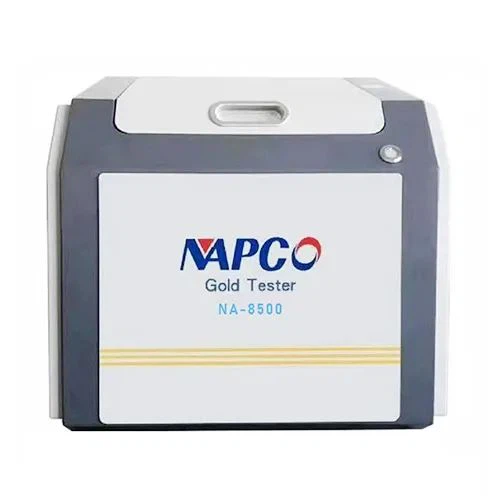
Some advanced XRF analyzers, such as our NA 8500 XRF Gold Tester, have the ability to perform depth profiling. This is useful when dealing with gold samples that have a non-uniform density or composition. For example, in some gold-plated items, the surface layer may have a different density and composition compared to the underlying material. Depth profiling allows the analyzer to measure the elemental composition at different depths within the sample, providing a more comprehensive understanding of its structure.
Our XRF Gold Testers
At our company, we offer a range of high-quality XRF gold testers that are specifically designed to handle gold with different densities. Our testers are equipped with advanced technology and features that ensure accurate and reliable results.
- NA 8500 XRF Gold Tester: This benchtop XRF analyzer offers high precision and sensitivity. It can analyze a wide range of gold alloys with different densities, providing accurate results in a matter of seconds. The NA 8500 is suitable for both small-scale jewelry testing and large-scale bullion and coin analysis.
- NAP 8200E XRF Gold Tester: The NAP 8200E is a versatile XRF analyzer that combines ease of use with high performance. It can handle gold samples of various shapes and sizes, and its advanced software allows for quick and accurate analysis. Whether you're testing gold jewelry or industrial gold products, the NAP 8200E can provide reliable results.
- N1 XRF Gold Tester: The N1 is a compact and portable XRF analyzer that is ideal for on-site gold testing. It offers the same level of accuracy as benchtop models but is more convenient for field use. With its lightweight design and long battery life, the N1 can be used to test gold samples in different locations, regardless of their density.
Benefits of Using Our XRF Gold Testers
- Accuracy: Our XRF gold testers are calibrated to provide highly accurate results, even for gold samples with different densities. This ensures that you can trust the purity and composition analysis of your gold items.
- Speed: XRF testing is a fast process, and our testers can provide results in a matter of seconds. This allows for efficient testing, especially when dealing with a large number of samples.
- Non-Destructive: As mentioned earlier, XRF testing is non-destructive, which means your gold samples remain intact after testing. This is important for preserving the value and integrity of your precious items.
- Versatility: Our XRF gold testers can analyze a wide range of gold alloys, from low-karat jewelry to high-purity bullion. They can also detect other elements commonly found in gold alloys, such as silver, copper, and platinum.
Contact Us for Purchasing and Consultation
If you're in the market for a reliable XRF gold tester to handle gold with different densities, we're here to help. Our team of experts can provide you with detailed information about our products, assist you in choosing the right XRF analyzer for your needs, and offer technical support and training.
Whether you're a jewelry manufacturer, a precious metals dealer, a pawnbroker, or a collector, our XRF gold testers can provide you with accurate and efficient gold testing solutions. Contact us today to start a conversation about how our XRF technology can benefit your business.
References
- "X-ray Fluorescence Spectrometry" by Ronald Jenkins.
- "Precious Metals Testing: Principles and Practice" by John R. Lane.