


Hey there! As a supplier of XRF machines for gold, I've gotten a ton of questions about how these nifty devices respond to different lighting conditions. So, I thought I'd take a deep dive into this topic and share some insights with you all.
First off, let's quickly go over what an XRF machine for gold actually does. XRF stands for X-ray fluorescence. These machines use X-rays to analyze the elemental composition of a sample. In the case of gold testing, they can accurately determine the purity of gold and detect other elements that might be mixed in. It's a super handy tool for jewelers, pawn shops, and anyone else who deals with gold on a regular basis.
Now, let's talk about lighting. You might be thinking, "What does lighting have to do with an XRF machine?" Well, it turns out that lighting can have a surprisingly big impact on the performance of these machines.
Natural Lighting
Natural lighting, like sunlight, is one of the most common types of lighting we encounter. When it comes to using an XRF machine for gold in natural light, there are a few things to keep in mind.
Sunlight is a broad - spectrum light source, which means it contains a wide range of wavelengths. In some cases, the visible light from the sun can interfere with the X - ray detection process in the XRF machine. The machine is designed to detect X - rays emitted by the sample, and the bright sunlight can cause some background noise in the detector.
For example, if you're using an XRF machine outdoors on a sunny day, the intense sunlight can make it a bit harder for the machine to accurately measure the X - ray signals. This can lead to slightly less accurate results, especially when it comes to detecting trace elements in the gold sample.
However, if you're careful and take some precautions, you can still get good results in natural light. One thing you can do is to find a shaded area. This will reduce the amount of direct sunlight hitting the machine and the sample. Another option is to use a diffuser to soften the sunlight. This can help to minimize the interference caused by the bright light.
Artificial Lighting
Artificial lighting comes in many forms, such as fluorescent lights, LED lights, and incandescent lights. Each type of artificial light has its own characteristics, and they can all affect an XRF machine in different ways.
Fluorescent Lights
Fluorescent lights are commonly used in offices and commercial spaces. They work by exciting mercury vapor inside a glass tube, which then emits ultraviolet light. This ultraviolet light is then converted into visible light by a phosphor coating on the inside of the tube.
The problem with fluorescent lights is that they can emit a small amount of X - rays and other forms of electromagnetic radiation. This radiation can interfere with the XRF machine's detector, causing background noise and potentially affecting the accuracy of the results.
If you're using an XRF machine in a room with fluorescent lights, you might notice some fluctuations in the readings. To minimize this interference, you can try turning off the fluorescent lights or using a shielding material to block the radiation.
LED Lights
LED lights are becoming increasingly popular because they are energy - efficient and long - lasting. Unlike fluorescent lights, LED lights do not emit X - rays or other forms of harmful radiation.
In general, LED lights have a minimal impact on the performance of an XRF machine. However, some LED lights can have a high color temperature, which means they emit a lot of blue light. This blue light can sometimes cause a small amount of interference, but it's usually not significant enough to affect the accuracy of the results.
Incandescent Lights
Incandescent lights work by heating a filament until it glows. They emit a continuous spectrum of light, similar to sunlight. However, they are not as energy - efficient as LED lights and have a shorter lifespan.
Incandescent lights are less likely to cause interference with an XRF machine compared to fluorescent lights. But, like sunlight, they can be quite bright, and the intense light can cause some background noise in the detector if the machine is not properly shielded.

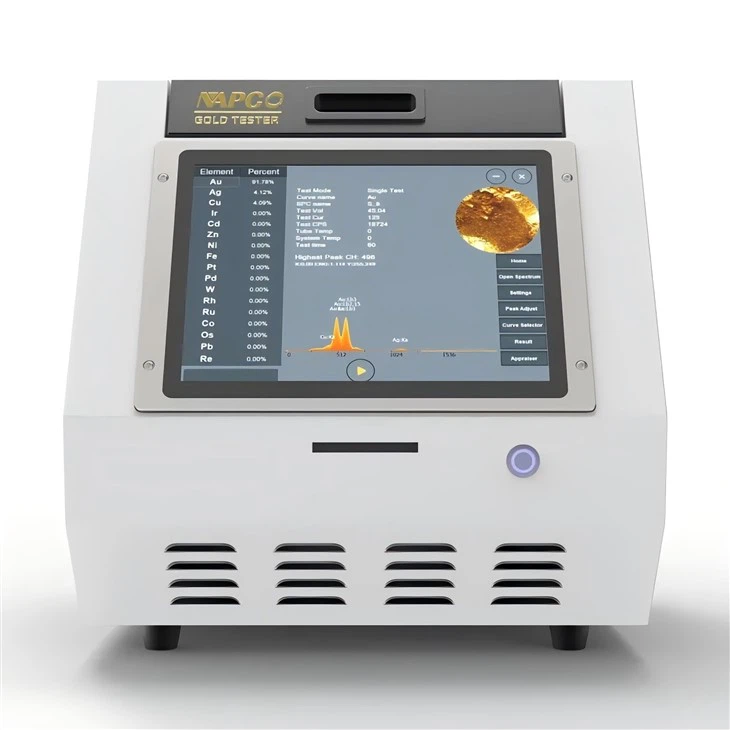
Our XRF Gold Testers
At our company, we offer a range of high - quality XRF gold testers that are designed to perform well in different lighting conditions.
The NAP 8200E XRF Gold Tester is a top - of - the - line machine that features advanced shielding technology. This technology helps to minimize the interference caused by external light sources, whether it's natural or artificial. It can provide accurate and reliable results, even in challenging lighting environments.
The V1 XRF Gold Tester is another great option. It's a compact and portable machine that is easy to use. It has a built - in light sensor that can automatically adjust the settings based on the lighting conditions. This ensures that you get consistent results every time you use it.
The N1 - 25 XRF Gold Tester is a powerful machine that is suitable for professional use. It has a high - resolution detector that can accurately detect even the smallest amounts of impurities in the gold sample. It's also designed to be resistant to external light interference, making it a reliable choice for any lighting situation.
Conclusion
In conclusion, lighting conditions can have a significant impact on the performance of an XRF machine for gold. Natural lighting, such as sunlight, can cause interference due to its intensity and broad - spectrum nature. Artificial lighting, especially fluorescent lights, can also emit radiation that can affect the accuracy of the results.
However, with the right precautions and the use of high - quality XRF machines, you can minimize the effects of lighting and get accurate and reliable results. At our company, we're committed to providing you with the best XRF gold testers that are designed to perform well in all lighting conditions.
If you're in the market for an XRF machine for gold, we'd love to talk to you. Whether you're a small - scale jeweler or a large - scale gold dealer, we have the perfect solution for you. Contact us today to start a conversation about your needs and how our XRF machines can help you.
References
- "X - Ray Fluorescence Spectrometry" by Ronald Jenkins
- "Handbook of Applied X - Ray Analysis" by John R. de Vries