


Can an XRF gold tester be used for gold - coated glass?
Hey there! As a supplier of XRF gold testers, I often get asked all sorts of questions about what our machines can and can't do. One question that's come up a few times lately is whether an XRF gold tester can be used for gold - coated glass. Let's dig into this topic and find out.
First off, let's talk a bit about what XRF gold testers are. XRF stands for X - ray fluorescence. These testers work by emitting X - rays onto the surface of an object. When the X - rays hit the atoms in the material, they cause the atoms to emit secondary X - rays. The energy and intensity of these secondary X - rays are unique to each element. By analyzing these secondary X - rays, the XRF tester can determine the elemental composition of the material.
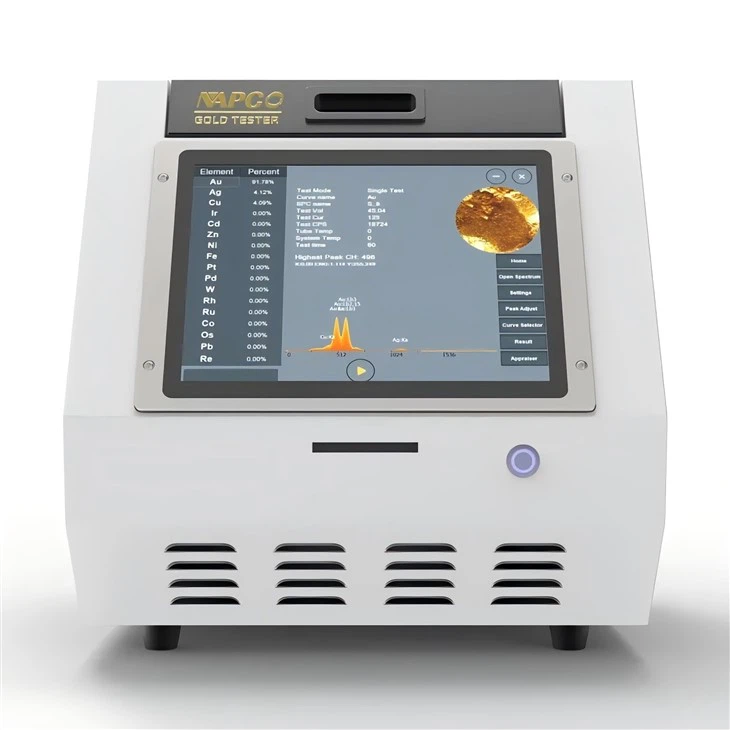

Now, gold - coated glass is exactly what it sounds like: glass that has a thin layer of gold on its surface. This gold coating can be used for various purposes, like in decorative items, some high - tech applications, or even in jewelry - related pieces. The key here is that the gold layer is usually very thin, and beneath it is the glass substrate.
So, can our XRF gold testers handle gold - coated glass? Well, the short answer is yes, but with some caveats.
One of the main advantages of using an XRF gold tester on gold - coated glass is its non - destructive nature. Unlike some other testing methods that might require taking a sample or scratching the surface, XRF testing leaves the gold - coated glass intact. This is super important, especially if the item is a valuable piece or a prototype that needs to be preserved.
Our V1 XRF Gold Tester is a great option for this kind of testing. It's highly sensitive and can detect even very thin layers of gold on the glass. The tester can quickly analyze the elemental composition of the surface layer and give you an accurate reading of the gold content. However, there are some factors that can affect the accuracy of the results.
The thickness of the gold coating is a major factor. If the gold layer is extremely thin, say just a few nanometers, the X - rays from the tester might penetrate through the gold layer and start interacting with the glass beneath. This can lead to a mixed signal, where the tester detects both the gold and some of the elements in the glass. As a result, the reading of the gold content might be a bit off.
Another factor is the type of glass. Different types of glass have different elemental compositions. Some glasses might contain elements that could interfere with the XRF analysis of the gold. For example, if the glass has a high concentration of certain heavy metals, these metals could produce secondary X - rays that overlap with the signals from the gold, making it harder for the tester to accurately determine the gold content.
Our N1 - 10 XRF Gold Tester has some advanced features that can help mitigate these issues. It has a sophisticated software algorithm that can filter out some of the interference from the glass elements. This allows for a more accurate analysis of the gold layer, even when dealing with different types of glass.
However, it's important to note that for very thin gold coatings, the tester might not be able to give you an exact measurement of the gold thickness. It can tell you the presence of gold and give you a rough estimate of the gold content, but getting an exact thickness measurement is a bit more challenging.
In some cases, if the gold coating is extremely thin and the glass has a complex elemental composition, it might be necessary to do some calibration. Calibration involves using known samples of gold - coated glass with a well - defined gold thickness and elemental composition. By comparing the readings from these known samples with the readings from the unknown samples, we can adjust the tester's settings to get more accurate results.
Our NAP 8200E XRF Gold Tester comes with a built - in calibration feature that makes this process a lot easier. You can simply input the data from the known samples, and the tester will automatically adjust its analysis parameters to account for the specific characteristics of the gold - coated glass.
Now, let's talk about some real - world applications. In the jewelry industry, gold - coated glass can be used in unique and creative designs. Designers might want to test the gold coating to ensure its quality and authenticity. Our XRF gold testers can quickly and non - destructively provide this information, allowing designers to make informed decisions about their products.
In the electronics industry, gold - coated glass is sometimes used in touchscreens or other high - tech components. Testing the gold coating is crucial to ensure the proper functioning of these devices. Our testers can help manufacturers determine if the gold layer meets the required specifications.
So, to sum it up, XRF gold testers can definitely be used for gold - coated glass. They offer a non - destructive, relatively quick way to analyze the gold content. However, factors like the thickness of the gold layer and the type of glass can affect the accuracy of the results. But with the right XRF tester, like our V1, N1 - 10, or NAP 8200E models, and proper calibration, you can get reliable and useful information.
If you're in the market for an XRF gold tester for testing gold - coated glass or any other gold - related items, we're here to help. Whether you're a small - scale jeweler, a large - scale manufacturer, or someone in between, our team can assist you in choosing the right tester for your needs. Just reach out to us, and we can have a chat about your specific requirements. We're always happy to answer any questions you might have and guide you through the process of selecting and using our XRF gold testers.
References
- "X - ray Fluorescence Spectroscopy: Principles and Applications" by E. P. M. van der Eijk
- "Introduction to Analytical Chemistry" by Douglas A. Skoog, Donald M. West, and F. James Holler