


Surface irregularities in gold samples can pose significant challenges when it comes to accurate analysis. As a leading gold spectrometer supplier, we understand these challenges and have developed advanced technologies to ensure precise and reliable results, even when dealing with samples that are far from perfectly smooth.

Understanding the Impact of Surface Irregularities
Before delving into how our gold spectrometers handle surface irregularities, it's essential to understand why these irregularities matter. Gold samples can have various surface conditions, from rough castings to polished bars. Surface irregularities can cause several issues during analysis. Firstly, they can lead to inconsistent X - ray scattering. When X - rays are emitted onto a sample, the irregular surface can scatter the X - rays in unpredictable ways. This scattered radiation can interfere with the detection of characteristic X - rays emitted by the gold and other elements in the sample, leading to inaccurate readings.
Secondly, surface roughness can affect the penetration depth of X - rays. In a smooth sample, X - rays penetrate to a relatively uniform depth, allowing for a representative analysis of the bulk material. However, on a rough surface, X - rays may penetrate deeper in some areas and less in others. This non - uniform penetration can result in an analysis that does not accurately reflect the overall composition of the sample.
Our Gold Spectrometers' Solutions
Advanced X - ray Optics
Our N1 XRF Gold Tester is equipped with advanced X - ray optics that are designed to minimize the impact of surface irregularities. The X - ray source and detector are carefully aligned to optimize the collection of characteristic X - rays. By using a narrow and well - focused X - ray beam, we can target specific areas of the sample, reducing the influence of surface roughness. This focused beam allows for a more accurate measurement of the elements present in the sample, even on a rough surface.
The N1 XRF Gold Tester also features an adjustable X - ray tube voltage and current. This flexibility enables us to fine - tune the X - ray beam according to the sample's surface condition. For highly irregular samples, a higher voltage can be used to increase the penetration depth, ensuring that the analysis includes a more representative portion of the sample.
Multiple Measurement Points
Another approach our spectrometers take to deal with surface irregularities is to use multiple measurement points. The NA 6500 XRF Gold Tester is programmed to automatically measure multiple points on the sample surface. By taking readings from different locations, we can account for the variations in surface roughness and composition. The spectrometer then averages these measurements to provide a more accurate and reliable result.
This method is particularly effective for samples with large - scale surface irregularities, such as those with deep grooves or pits. By measuring multiple points, we can ensure that the analysis is not skewed by the unique characteristics of a single area.
Software Algorithms for Compensation
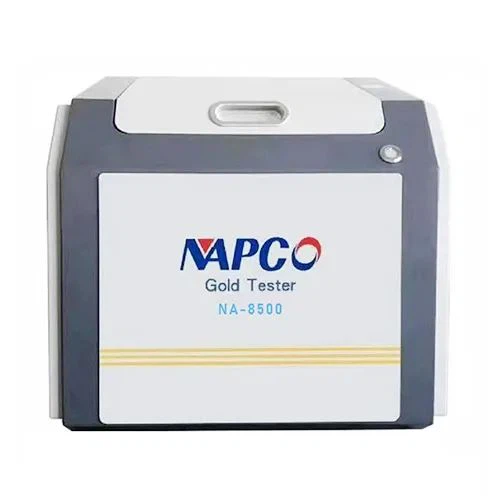
Our NA 8500 XRF Gold Tester incorporates sophisticated software algorithms that are specifically designed to compensate for surface irregularities. These algorithms analyze the raw data collected from the sample and adjust the results to account for the effects of surface roughness.
The software can identify patterns in the scattered X - rays and use this information to correct the elemental composition readings. For example, if the software detects that the X - rays are being scattered more than expected due to surface roughness, it can adjust the calibration of the detector to ensure that the measured elemental concentrations are accurate.
Real - World Applications
In the gold refining industry, our spectrometers have been widely used to analyze gold samples with various surface conditions. Refiners often receive gold in the form of rough castings or scrap, which can have highly irregular surfaces. Our spectrometers' ability to accurately analyze these samples has been crucial in determining the purity of the gold and ensuring that the refining process is efficient and cost - effective.
In the jewelry manufacturing industry, our spectrometers are used to test the quality of gold jewelry. Jewelry pieces can have complex surface textures, including engravings and filigree work. Our spectrometers can provide accurate elemental analysis of these pieces, allowing jewelers to ensure that their products meet the required quality standards.
Conclusion
Surface irregularities in gold samples present unique challenges for accurate analysis. However, as a gold spectrometer supplier, we have developed a range of technologies and solutions to overcome these challenges. Our N1 XRF Gold Tester, NA 6500 XRF Gold Tester, and NA 8500 XRF Gold Tester are equipped with advanced X - ray optics, multiple measurement point capabilities, and sophisticated software algorithms to ensure precise and reliable analysis of gold samples, regardless of their surface condition.
If you are in the market for a high - quality gold spectrometer that can handle surface irregularities with ease, we invite you to contact us for a detailed discussion on how our products can meet your specific needs. Our team of experts is ready to assist you in selecting the right spectrometer for your application and providing you with the support you need to ensure accurate and efficient analysis.
References
- "X - ray Fluorescence Spectrometry" by Ronald Jenkins.
- "Principles of Instrumental Analysis" by Douglas A. Skoog, F. James Holler, and Stanley R. Crouch.