


Hey there! As a supplier of benchtop gold testers, I often get asked about how our machines work, especially when it comes to heat - treated gold. Let's dive right into it.
First off, let's talk a bit about heat - treated gold. Heat treatment is a common process in the gold industry. It can change the physical and chemical properties of gold. For example, it can enhance the hardness of gold alloys, making them more suitable for certain types of jewelry. Sometimes, heat treatment is also used to change the color of gold. When gold is heated, the atoms within the metal start to move around. This can cause changes in the crystal structure of the gold, which in turn affects its density and other characteristics.
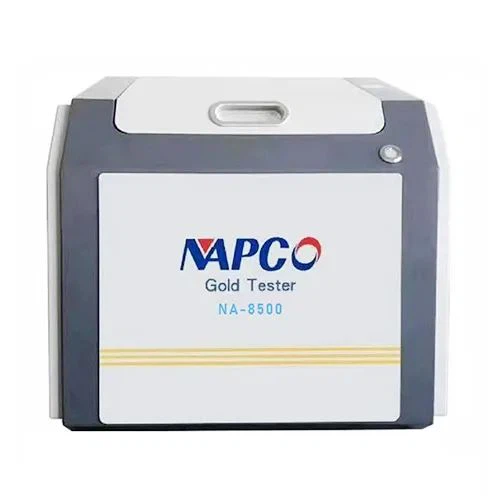
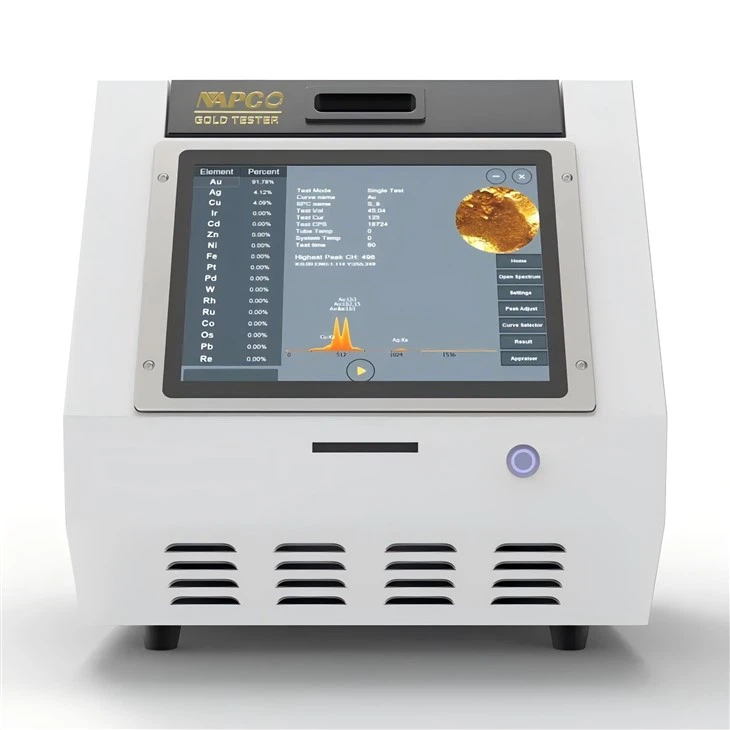
Now, how do our benchtop gold testers handle this heat - treated gold? Well, we mainly offer three great models: the NA 8500 XRF Gold Tester, the NA 6500 XRF Gold Tester, and the NAP 8200E XRF Gold Tester. These testers work based on X - ray fluorescence (XRF) technology.
XRF technology is pretty cool. When you put a piece of heat - treated gold into one of our benchtop testers, the machine emits X - rays onto the sample. These X - rays interact with the atoms in the gold. When an X - ray hits an atom in the gold, it can knock out an inner - shell electron. This creates a vacancy in the inner shell. To fill this vacancy, an electron from an outer shell drops down. When this happens, it releases energy in the form of a secondary X - ray, which is called a fluorescent X - ray.
Each element in the gold alloy has a unique set of energy levels for its electrons. So, the energy of the fluorescent X - rays emitted is specific to each element. Our benchtop testers are equipped with detectors that can measure the energy and intensity of these fluorescent X - rays. By analyzing the energy peaks of the fluorescent X - rays, the tester can determine which elements are present in the gold sample and in what proportions.
Now, you might be wondering if heat treatment affects this process. The good news is that heat treatment doesn't really throw off our XRF testers. Even though heat treatment changes the physical properties of gold, it doesn't change the atomic structure of the individual elements in the alloy. The energy levels of the electrons in each element remain the same, regardless of whether the gold has been heat - treated or not. So, our testers can accurately identify the elements in the heat - treated gold just as well as they can with non - heat - treated gold.
Let's take a closer look at how each of our models deals with heat - treated gold.
The NA 8500 XRF Gold Tester is our top - of - the - line model. It has a high - resolution detector. This means it can pick up even the smallest amounts of different elements in the heat - treated gold. It can analyze a wide range of gold alloys, from 9K to 24K. The tester also has advanced software that can correct for any minor interference that might occur during the testing process. So, you can be really confident in the results when testing heat - treated gold with this model.
The NA 6500 XRF Gold Tester is a great middle - ground option. It's more affordable than the NA 8500 but still offers excellent performance. It can quickly and accurately analyze heat - treated gold samples. It has a user - friendly interface, so even if you're new to using gold testers, you can easily operate it. The software on this model also provides clear and detailed reports about the composition of the heat - treated gold.
The NAP 8200E XRF Gold Tester is designed for those who need a portable yet powerful option. It's a bit smaller than the other two models, but don't let its size fool you. It can still do a great job of testing heat - treated gold. It has a built - in rechargeable battery, so you can take it with you to different locations. The testing process is fast, and it gives reliable results for heat - treated gold samples.
In addition to the basic XRF technology, our benchtop gold testers also have some other features that are useful when dealing with heat - treated gold. For example, they have calibration functions. Before testing a heat - treated gold sample, you can calibrate the tester using a known standard sample. This ensures that the results are as accurate as possible.
Another important feature is the ability to store test results. You can keep a record of the composition of different heat - treated gold samples. This is really handy if you're dealing with a large number of samples or if you need to refer back to previous test results.
If you're in the business of buying, selling, or manufacturing gold products, having a reliable benchtop gold tester is crucial. Whether you're dealing with heat - treated gold or not, our testers can provide you with accurate and fast results. They can help you avoid making costly mistakes when it comes to determining the purity of gold.
So, if you're interested in purchasing one of our benchtop gold testers, don't hesitate to get in touch. We're always here to answer any questions you might have and to help you choose the right model for your needs. Whether you're a small jewelry store or a large gold refinery, we have a solution for you.
References
- "X - Ray Fluorescence Spectrometry" by G. E. Brown
- "Gold Alloys and Their Properties" by J. E. Shield