




Hey there, folks! If you're in the gold business or just a gold enthusiast, you've probably wondered how those gold purity testers actually work. Well, you're in the right place! I'm a supplier of gold purity testers, and I'm here to break it down for you in simple terms.
Let's start with the basics. Gold purity is usually measured in karats. Pure gold is 24 karats, but in most cases, gold is alloyed with other metals to make it stronger and more durable. So, when you're buying or selling gold, it's crucial to know its purity. That's where gold purity testers come in handy.
There are several methods to test gold purity, but one of the most popular and accurate ways is using X-ray fluorescence (XRF) technology. XRF gold testers are widely used in the industry because they're non-destructive, fast, and can provide accurate results.
How XRF Gold Testers Work
XRF gold testers work based on the principle of X-ray fluorescence. When an X-ray beam is directed at a sample, the atoms in the sample absorb the X-rays and then emit secondary X-rays, known as fluorescent X-rays. These fluorescent X-rays have specific energies that are characteristic of the elements in the sample.
Here's a step-by-step breakdown of how an XRF gold tester operates:
-
X-ray Generation: The tester has an X-ray tube that generates a beam of high-energy X-rays. This tube is usually made of a metal target, such as tungsten, which emits X-rays when bombarded with electrons.
-
Sample Interaction: The X-ray beam is directed at the gold sample. When the X-rays hit the atoms in the sample, they cause the electrons in the inner shells of the atoms to be ejected. This creates a vacancy in the inner shell, and electrons from the outer shells fill this vacancy. As the electrons move from the outer shells to the inner shells, they release energy in the form of fluorescent X-rays.
-
Detection: The fluorescent X-rays are detected by a detector in the tester. The detector measures the energy and intensity of the fluorescent X-rays. Each element emits fluorescent X-rays with a unique energy, so by analyzing the energy spectrum of the detected X-rays, the tester can identify the elements present in the sample and their concentrations.
-
Analysis and Display: The tester's software analyzes the data from the detector and calculates the purity of the gold sample. The results are then displayed on the tester's screen, usually in terms of karats or percentage purity.
Advantages of XRF Gold Testers
- Non-destructive: One of the biggest advantages of XRF gold testers is that they're non-destructive. You don't have to damage or alter the sample in any way to test its purity. This is especially important when dealing with valuable or antique gold items.
- Fast Results: XRF testers can provide results in a matter of seconds to a few minutes, depending on the sample and the tester's settings. This makes them ideal for high-volume testing in a commercial setting.
- Accurate: XRF testers can provide accurate results for a wide range of gold alloys. They can detect the presence of other elements in the sample and calculate the purity of the gold with a high degree of precision.
Our Gold Purity Testers
As a supplier of gold purity testers, we offer a range of high-quality XRF gold testers to meet the needs of different customers. Here are some of our popular models:
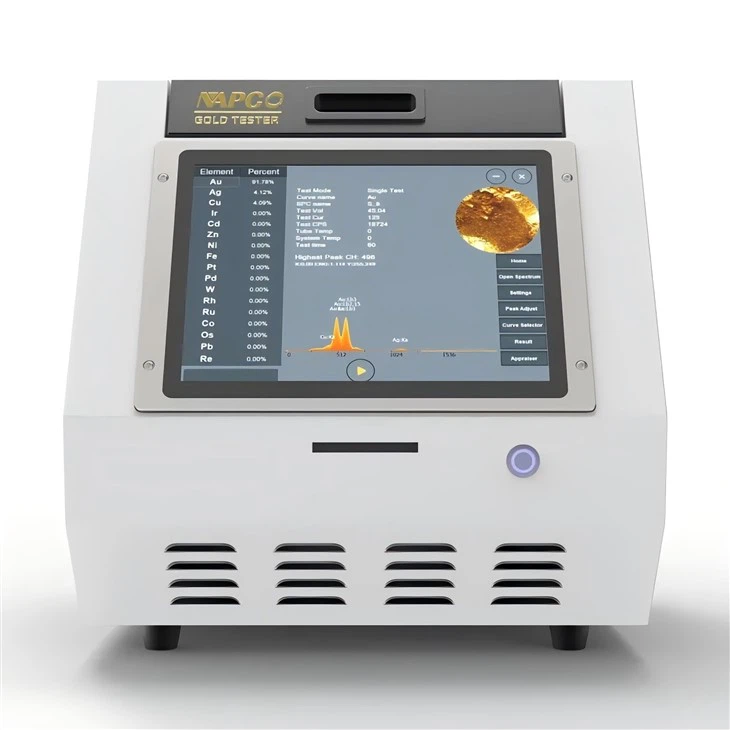

- NAP 8200E XRF Gold Tester: This benchtop tester is designed for high-precision analysis of gold and other precious metals. It features a large sample chamber, a high-resolution detector, and advanced software for accurate and reliable results.
- NA 8500 XRF Gold Tester: The NA 8500 is a versatile XRF gold tester that can analyze a wide range of samples, including small jewelry pieces and large bullion bars. It offers fast analysis times and excellent sensitivity.
- NA 6500 XRF Gold Tester: This compact and affordable XRF gold tester is perfect for small businesses and individual users. It provides accurate results and is easy to operate.
Factors Affecting the Accuracy of XRF Gold Testers
While XRF gold testers are generally accurate, there are several factors that can affect their performance:
- Sample Composition: The accuracy of the tester depends on the composition of the sample. If the sample contains elements that are not commonly found in gold alloys, it may affect the accuracy of the results.
- Sample Thickness and Surface Condition: The thickness and surface condition of the sample can also affect the accuracy of the tester. A thick or uneven sample may absorb more X-rays, which can lead to inaccurate results.
- Calibration: Proper calibration is essential for accurate results. The tester should be calibrated regularly using certified reference samples to ensure its accuracy.
Maintenance and Care of XRF Gold Testers
To ensure the long-term performance and accuracy of your XRF gold tester, it's important to follow proper maintenance and care procedures:
- Keep the Tester Clean: Regularly clean the sample chamber and the detector to remove any dust or debris. Use a soft, dry cloth to wipe the surfaces.
- Avoid Exposure to Extreme Conditions: Do not expose the tester to extreme temperatures, humidity, or vibrations. This can damage the internal components of the tester and affect its performance.
- Follow the Manufacturer's Instructions: Always follow the manufacturer's instructions for operating and maintaining the tester. This includes using the correct power supply, handling the sample properly, and performing regular calibration.
Conclusion
In conclusion, XRF gold testers are a valuable tool for anyone involved in the gold business. They offer a fast, non-destructive, and accurate way to test the purity of gold samples. As a supplier of gold purity testers, we're committed to providing high-quality products and excellent customer service.
If you're interested in purchasing a gold purity tester or have any questions about our products, please don't hesitate to contact us. We'd be happy to discuss your needs and help you find the right tester for your application.
References
- Goldstein, J. I., Newbury, D. E., Echlin, P., Joy, D. C., Fiori, C., & Lifshin, E. (Eds.). (2003). Scanning electron microscopy and X-ray microanalysis. Springer Science & Business Media.
- Bertin, E. P. (1975). Principles and practice of X-ray spectrometry. Plenum Press.