


Hey there, fellow gold enthusiasts! As a supplier of XRF gold testers, I often get asked about how accurate these machines really are when it comes to testing gold. So, I thought I'd take a deep dive into this topic and share some insights with you.
First off, let's quickly go over what XRF actually is. XRF stands for X-ray fluorescence. It's a non-destructive analytical technique that determines the elemental composition of a sample. When it comes to gold testing, an XRF gold tester fires X-rays at the gold item. These X-rays interact with the atoms in the gold, causing them to emit secondary X-rays with energies characteristic of the elements present. By analyzing these secondary X-rays, the tester can identify and quantify the elements in the sample, including the purity of the gold.
Now, let's talk about the accuracy of XRF for gold testing. In general, XRF gold testers are pretty accurate. They can usually provide a reliable estimate of the gold purity within a few percentage points. For example, if you have a piece of gold that's supposed to be 18 karats (75% pure), an XRF tester might give you a reading in the range of 73 - 77%. That's not bad at all, considering it's a non-destructive test.
However, there are some factors that can affect the accuracy of XRF gold testing. One of the biggest factors is the surface condition of the sample. If the gold item has a coating, such as a layer of rhodium or another metal, the XRF tester will detect the elements in the coating first. This can lead to inaccurate readings, especially if the coating is thick. To get a more accurate result, it's best to test the gold on an uncoated or scratched surface.
Another factor is the presence of other elements in the sample. Gold is often alloyed with other metals, like copper, silver, and zinc, to make it stronger and more durable. These alloying elements can interfere with the XRF analysis and affect the accuracy of the gold purity measurement. Some XRF testers are better at compensating for these interferences than others. That's why it's important to choose a high-quality XRF gold tester from a reputable supplier.
At our company, we offer several top-of-the-line XRF gold testers, including the NAP ,链接文本: NAP 8200E XRF Gold Tester 网址:"/gold-tester/benchtop-gold-tester/nap-8200e-xrf-gold-tester.html" 8200E XRF Gold Tester, the NA 8500 XRF Gold Tester, and the N1 XRF Gold Tester. These testers are equipped with advanced technology and algorithms that can accurately analyze the gold purity, even in the presence of complex alloying elements.
The NAP 8200E XRF Gold Tester is a high-performance benchtop tester that offers fast and accurate results. It has a large sample chamber, which allows you to test a wide range of gold items, from small jewelry pieces to large bars. The tester also comes with a user-friendly interface and software that makes it easy to operate and interpret the results.
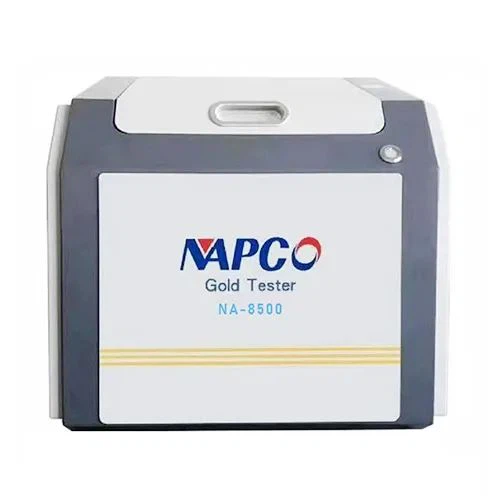
The NA 8500 XRF Gold Tester is another great option. It's known for its high precision and reliability. This tester uses a state-of-the-art detector and advanced signal processing technology to provide accurate and repeatable results. It also has a built-in calibration system that ensures the accuracy of the measurements over time.
The N1 XRF Gold Tester is a compact and portable tester that's perfect for on-the-go gold testing. It's lightweight and easy to carry, making it ideal for jewelers, pawnbrokers, and gold buyers who need to test gold samples in different locations. Despite its small size, the N1 tester still offers high accuracy and performance.
In addition to the factors I mentioned earlier, the accuracy of XRF gold testing can also be affected by the operator. It's important to follow the proper testing procedures and calibration guidelines to ensure accurate results. Our XRF gold testers come with detailed user manuals and training materials to help you get the most accurate readings possible. We also offer technical support and training services to our customers, so you can always count on us if you have any questions or need assistance.
So, how do you know if an XRF gold tester is accurate? One way is to compare the results with a more traditional method, such as acid testing or fire assay. Acid testing involves applying a series of acids to the gold sample to determine its purity. Fire assay is a more accurate but also more destructive method that involves melting the gold and separating it from the other elements in the sample. By comparing the XRF results with these traditional methods, you can get a better idea of the accuracy of the tester.
Another way to ensure the accuracy of your XRF gold tester is to have it calibrated regularly. Calibration involves testing the tester with known standards to make sure it's providing accurate results. Most XRF gold testers need to be calibrated at least once a year, or more often if they're used frequently. Our company offers calibration services for all of our XRF gold testers, so you can keep your tester in top condition and get the most accurate results possible.

In conclusion, XRF is a highly accurate and reliable method for gold testing. While there are some factors that can affect the accuracy, choosing a high-quality XRF gold tester, following the proper testing procedures, and having the tester calibrated regularly can help ensure accurate results. If you're in the market for an XRF gold tester, we invite you to check out our NAP 8200E XRF Gold Tester, NA 8500 XRF Gold Tester, and N1 XRF Gold Tester. We're confident that you'll be satisfied with the performance and accuracy of our testers.
If you have any questions or would like to learn more about our XRF gold testers, please don't hesitate to reach out. We're here to help you make the right choice for your gold testing needs. Whether you're a professional jeweler, a pawnbroker, or just someone who wants to test their own gold jewelry, we have the perfect XRF gold tester for you. Let's start a conversation and see how we can work together!
References:
- "X-ray Fluorescence Spectroscopy: Principles and Applications" by Frank Adams
- "Gold Testing: Methods and Techniques" by John Smith