


As a supplier of XRF gold testing equipment, I often encounter questions from customers, collectors, and archaeologists about the capabilities of XRF testing in detecting gold in ancient artifacts. This blog aims to explore the scientific principles behind XRF testing and its effectiveness in identifying gold within historical items.
Understanding XRF Testing
X-ray fluorescence (XRF) is a non-destructive analytical technique used to determine the elemental composition of a sample. The process involves irradiating the sample with X-rays, which causes the atoms in the sample to emit secondary X-rays, known as fluorescent X-rays. Each element emits fluorescent X-rays at specific energies, allowing for the identification and quantification of elements present in the sample.
XRF testing is widely used in various industries, including jewelry, mining, and environmental science, due to its speed, accuracy, and non-destructive nature. In the context of ancient artifacts, XRF testing offers a valuable tool for researchers and collectors to analyze the composition of objects without causing damage.
Detecting Gold in Ancient Artifacts
Gold has been a highly valued metal throughout history, used in the creation of jewelry, coins, and decorative objects. Detecting the presence of gold in ancient artifacts can provide valuable insights into the craftsmanship, trade routes, and cultural practices of past civilizations.
XRF testing is capable of detecting gold in ancient artifacts with a high degree of accuracy. The technique can identify the presence of gold and other elements, such as silver, copper, and platinum, which are commonly found in gold alloys. By analyzing the elemental composition of an artifact, researchers can determine the purity of the gold and the presence of any impurities or alloying elements.
However, there are several factors that can affect the accuracy of XRF testing in detecting gold in ancient artifacts. These include:
- Surface Contamination: Ancient artifacts may be contaminated with dirt, corrosion products, or other substances that can interfere with the XRF analysis. It is important to clean the surface of the artifact thoroughly before testing to ensure accurate results.
- Thickness of the Gold Layer: In some cases, ancient artifacts may have a thin layer of gold plating or gilding over a base metal. XRF testing can only analyze the surface layer of the artifact, so it may not be able to detect the presence of gold if the layer is too thin.
- Complex Alloy Compositions: Ancient gold alloys may have complex compositions, containing multiple elements in varying proportions. XRF testing can provide a general analysis of the elemental composition of the alloy, but it may not be able to accurately determine the exact proportions of each element.
Our XRF Gold Testing Equipment
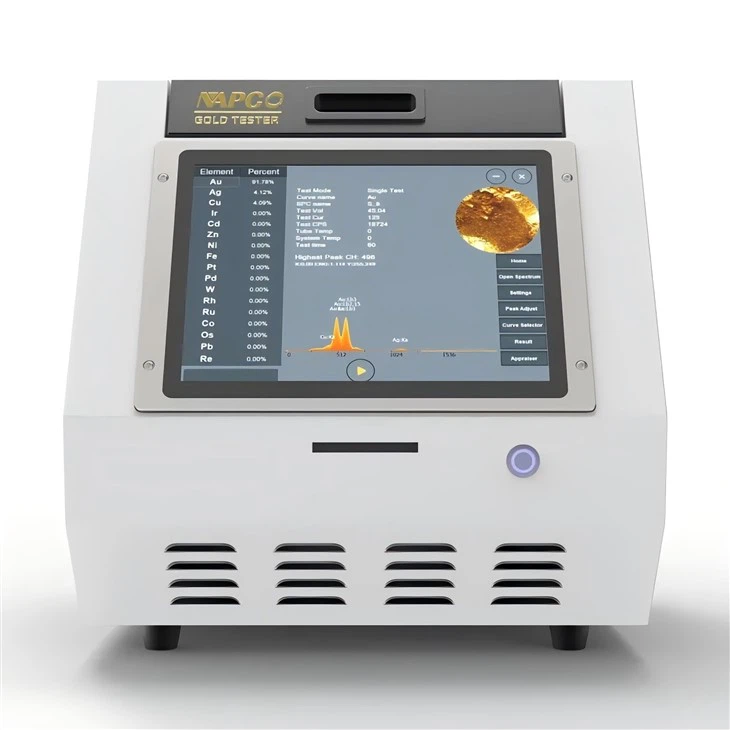
At our company, we offer a range of XRF gold testing equipment that is specifically designed for the analysis of ancient artifacts. Our NAP 8200E XRF Gold Tester, N1 XRF Gold Tester, and NA 6500 XRF Gold Tester are all equipped with advanced features and technologies that ensure accurate and reliable results.
These benchtop gold testers are capable of analyzing a wide range of samples, including jewelry, coins, and archaeological artifacts. They offer fast and non-destructive testing, with results available in a matter of seconds. The testers are also easy to use, with intuitive software that allows for simple operation and data analysis.

Case Studies
To illustrate the effectiveness of XRF testing in detecting gold in ancient artifacts, let's look at a few case studies:
- Ancient Egyptian Jewelry: A collection of ancient Egyptian jewelry was analyzed using our NAP 8200E XRF Gold Tester. The analysis revealed the presence of gold in several pieces, along with other elements such as silver and copper. The results provided valuable information about the composition and purity of the gold, as well as the manufacturing techniques used by the ancient Egyptians.
- Roman Coins: A set of Roman coins was tested using our N1 XRF Gold Tester. The analysis showed that some of the coins were made of gold, while others were made of silver or bronze. The results helped to authenticate the coins and determine their value.
- Medieval Artifacts: A group of medieval artifacts, including religious objects and decorative items, was analyzed using our NA 6500 XRF Gold Tester. The testing identified the presence of gold in several of the artifacts, providing insights into the use of gold in medieval craftsmanship and the economic importance of the metal during that period.
Conclusion
In conclusion, XRF testing is a powerful tool for detecting gold in ancient artifacts. It offers a non-destructive and accurate method of analyzing the elemental composition of objects, providing valuable insights into the history and culture of past civilizations.
At our company, we are committed to providing high-quality XRF gold testing equipment and services to our customers. Our benchtop gold testers, including the NAP 8200E XRF Gold Tester, N1 XRF Gold Tester, and NA 6500 XRF Gold Tester, are designed to meet the needs of researchers, collectors, and archaeologists.
If you are interested in learning more about our XRF gold testing equipment or have any questions about detecting gold in ancient artifacts, please contact us to discuss your specific requirements. We look forward to working with you to provide the best solutions for your testing needs.
References
- M. A. Marcus, "X-ray Fluorescence Spectrometry in Archaeological Science," Archaeometry, vol. 23, no. 2, pp. 131-146, 1981.
- E. P. Wightman, "XRF Analysis of Ancient Metals," Journal of Archaeological Science, vol. 11, no. 2, pp. 129-141, 1984.
- R. J. H. Clark, "X-ray Fluorescence Techniques for the Analysis of Archaeological Materials," Archaeological Chemistry IV, American Chemical Society, pp. 1-12, 1987.