




In the realm of precious metals, gold stands out as a symbol of wealth, luxury, and timeless value. However, pure gold is relatively soft, making it less suitable for many practical applications. As a result, gold is often alloyed with base metals such as copper, silver, zinc, and nickel to enhance its durability and strength. This practice gives rise to various gold alloys with different compositions and properties. One question that frequently arises is whether an XRF (X-ray fluorescence) gold tester can be used for gold alloyed with base metals. As a supplier of XRF gold testers, I am well - positioned to delve into this topic and provide valuable insights.
How XRF Gold Testers Work
Before we discuss the applicability of XRF gold testers to gold alloys, it is essential to understand how these devices function. XRF technology is based on the principle of X - ray fluorescence. When an X - ray beam is directed at a sample, the atoms in the sample absorb the X - rays and then emit secondary X - rays, known as fluorescent X - rays. Each element has a unique set of fluorescent X - ray energies, which act as a kind of "fingerprint." By analyzing the energies and intensities of the fluorescent X - rays emitted by the sample, an XRF gold tester can identify the elements present in the sample and determine their concentrations.
Detecting Base Metals in Gold Alloys
XRF gold testers are highly effective in detecting base metals in gold alloys. The technology can accurately identify common base metals such as copper, silver, zinc, and nickel, which are frequently used in gold alloying. For example, copper is often added to gold to create a red - gold alloy, while silver can be used to produce a white - gold alloy. An XRF gold tester can quickly and non - destructively analyze the sample to determine the presence and proportion of these base metals.
The N1 - 25 XRF Gold Tester is a prime example of a high - performance device in this regard. It is equipped with advanced detectors and software algorithms that can precisely measure the concentrations of different elements in a gold alloy. This allows jewelers, precious metal dealers, and manufacturers to accurately assess the quality and composition of their gold products.
Determining Gold Purity in Alloys
In addition to detecting base metals, XRF gold testers can also determine the purity of gold in an alloy. Gold purity is typically expressed in karats, with 24 - karat gold being pure gold. For example, 18 - karat gold contains 75% gold and 25% other metals. An XRF gold tester can analyze the sample and calculate the percentage of gold based on the concentrations of all the elements present.
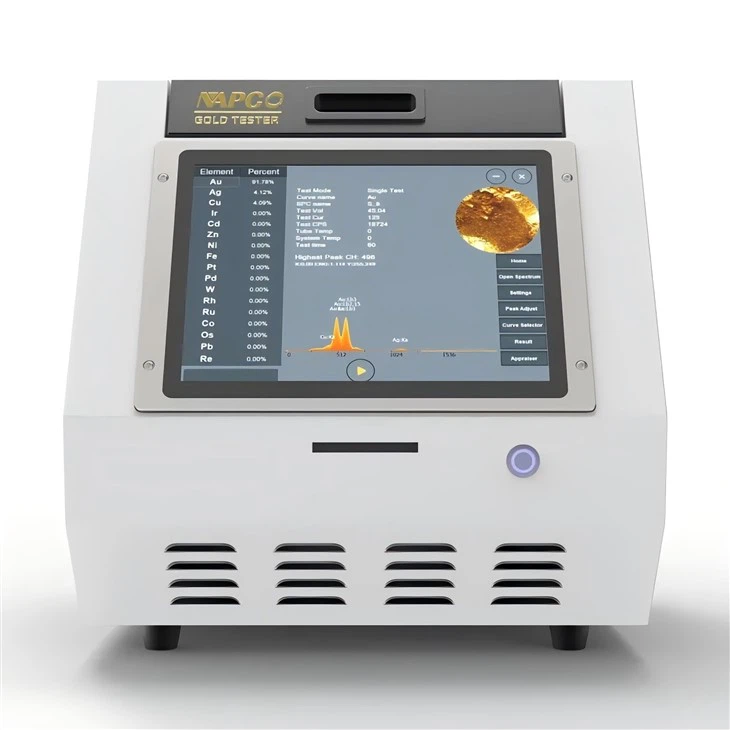

The NAP 8200E XRF Gold Tester is specifically designed for accurate gold purity analysis. It offers high - precision measurements, even for complex gold alloys. This is crucial for industries where precise gold purity determination is required, such as the jewelry and bullion markets.
Advantages of Using XRF Gold Testers for Gold Alloys
There are several advantages to using XRF gold testers for analyzing gold alloys. Firstly, they are non - destructive. Unlike traditional methods such as acid testing, which can damage the sample, XRF testing leaves the sample intact. This is particularly important for valuable or antique gold items.
Secondly, XRF gold testers provide rapid results. In a matter of seconds to minutes, the device can provide a detailed analysis of the sample's composition. This allows for quick decision - making in a business environment, such as when buying or selling gold alloys.
Thirdly, XRF technology is highly accurate. Modern XRF gold testers can achieve high levels of precision, with error margins typically within a few percentage points. This accuracy is essential for ensuring the quality and value of gold alloys.
Limitations and Considerations
While XRF gold testers are powerful tools for analyzing gold alloys, they do have some limitations. One limitation is that they can only provide surface - level analysis. If the gold alloy has a heterogeneous composition, with different layers or inclusions, the XRF results may not accurately represent the overall composition of the sample.
Another consideration is that XRF gold testers may have difficulty distinguishing between certain elements with similar atomic structures. For example, some platinum - group metals may be misidentified or have overlapping peaks in the XRF spectrum. However, advanced software algorithms and calibration techniques can help mitigate these issues.
Applications in Different Industries
XRF gold testers have a wide range of applications in various industries. In the jewelry industry, they are used to verify the purity of gold jewelry, ensure compliance with quality standards, and detect counterfeit items. Jewelers can use the N1 - 10 XRF Gold Tester to quickly assess the quality of incoming gold materials and finished products.
In the precious metal recycling industry, XRF gold testers are essential for determining the value of scrap gold. Recyclers can use the technology to analyze the composition of gold alloys and calculate the amount of pure gold present, which is crucial for pricing and processing.
In the mining industry, XRF gold testers can be used for on - site exploration and quality control. Miners can quickly analyze ore samples to determine the gold content and the presence of other valuable metals, which helps in decision - making regarding mining operations.
Conclusion
In conclusion, XRF gold testers can indeed be used for gold alloyed with base metals. They are effective in detecting base metals, determining gold purity, and providing rapid, non - destructive, and accurate analysis. While they have some limitations, these can be managed with proper calibration and understanding of the technology.
As a supplier of XRF gold testers, we offer a range of high - quality products, including the N1 - 25 XRF Gold Tester, NAP 8200E XRF Gold Tester, and N1 - 10 XRF Gold Tester, to meet the diverse needs of our customers in different industries. If you are interested in purchasing an XRF gold tester for your business or research, we invite you to contact us for further information and to discuss your specific requirements. Our team of experts is ready to provide you with professional advice and support.
References
- Jenkins, R., Gould, R. W., & Gedcke, D. (1981). Quantitative X - ray fluorescence analysis. Marcel Dekker.
- Potts, P. J., & Webb, P. C. (1992). X - ray fluorescence spectrometry. Longman Scientific & Technical.
- Van Grieken, R., & Markowicz, A. A. (2002). Handbook of X - ray spectrometry. Marcel Dekker.