


Hey there! As a supplier of XRF machines for gold testing, I often get asked about the signal-to-noise ratio (SNR) of these machines. It's a crucial concept that can significantly impact the accuracy and reliability of gold testing results. So, let's dive in and explore what the signal-to-noise ratio of an XRF machine for gold really means.
First off, what's the signal-to-noise ratio? In simple terms, the SNR is a measure of the strength of the signal (the useful information we're trying to detect, like the presence and concentration of gold) compared to the level of noise (random or unwanted signals that can interfere with our measurements). A higher SNR means that the signal is stronger relative to the noise, which generally leads to more accurate and precise measurements.
When it comes to XRF machines for gold testing, the signal is the characteristic X-ray emissions from the gold atoms in the sample. These emissions are unique to gold and can be detected and analyzed by the XRF machine to determine the gold content. The noise, on the other hand, can come from various sources, such as background radiation, electronic interference, or statistical fluctuations in the detector's response.
So, why is the SNR so important in gold testing? Well, a high SNR allows the XRF machine to distinguish between the gold signal and the noise more effectively. This means that the machine can provide more accurate and reliable measurements of the gold content, even in samples with low gold concentrations or complex matrices. In other words, a good SNR helps us get the most accurate picture of the gold in the sample, which is crucial for making informed decisions in the gold industry.
Now, let's talk about how the SNR is affected by different factors in an XRF machine. One of the most important factors is the detector. A high-quality detector with low noise characteristics can significantly improve the SNR. For example, some of our XRF machines, like the NAP 8200E XRF Gold Tester, are equipped with advanced detectors that are designed to minimize noise and maximize the signal detection efficiency.
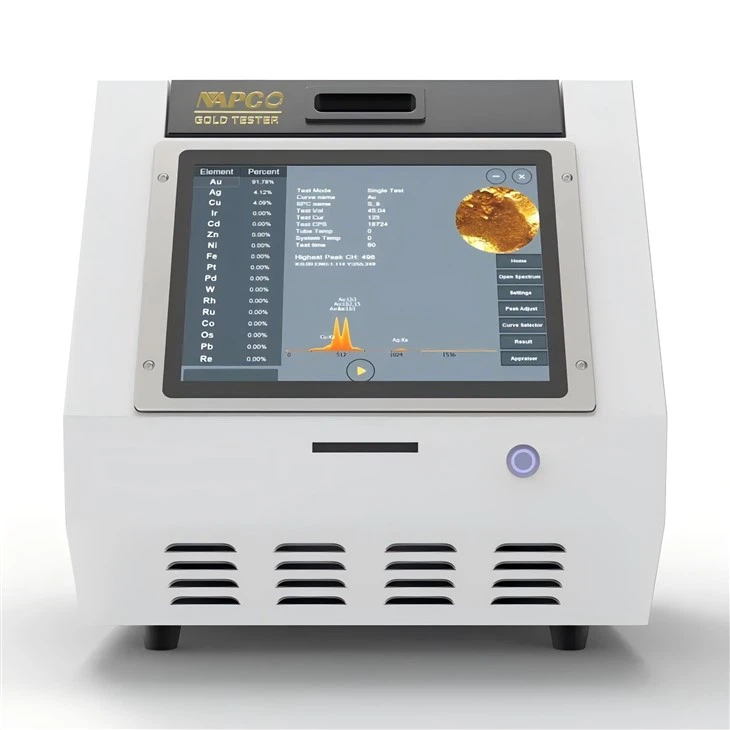

Another factor that can affect the SNR is the X-ray source. A more powerful X-ray source can generate a stronger signal, which can improve the SNR. However, it's important to balance the power of the X-ray source with the potential for increased noise and radiation exposure. Our NA 8500 XRF Gold Tester uses a state-of-the-art X-ray source that provides a high-intensity X-ray beam while maintaining a low noise level.
The sample preparation and measurement conditions also play a role in the SNR. For example, a well-prepared sample with a smooth surface and uniform composition can reduce the noise and improve the signal. Additionally, the measurement time can affect the SNR. Longer measurement times generally result in a higher SNR, as more signal is collected, but this also increases the testing time. Our NA 6500 XRF Gold Tester offers a flexible measurement time option, allowing users to optimize the SNR based on their specific testing requirements.
In addition to these factors, the design and calibration of the XRF machine also have a significant impact on the SNR. Our XRF machines are carefully designed and calibrated to ensure the highest possible SNR and accuracy. We use advanced algorithms and signal processing techniques to filter out the noise and enhance the signal, resulting in more reliable and precise gold testing results.
So, how can you tell if an XRF machine has a good SNR? Well, one way is to look at the specifications provided by the manufacturer. Most reputable manufacturers, like us, will provide information about the SNR or related performance metrics in their product datasheets. You can also look for independent reviews and test results from other users or industry experts.
Another way to evaluate the SNR is to perform some tests on the machine yourself. You can use standard reference samples with known gold concentrations to compare the measured results with the actual values. A machine with a high SNR should provide more accurate and consistent results.
In conclusion, the signal-to-noise ratio is a critical factor in the performance of an XRF machine for gold testing. A high SNR allows for more accurate and reliable measurements, which is essential for making informed decisions in the gold industry. At our company, we understand the importance of the SNR and have designed our XRF machines to provide the highest possible performance in this regard. Our NAP 8200E XRF Gold Tester, NA 8500 XRF Gold Tester, and NA 6500 XRF Gold Tester are all equipped with advanced detectors, powerful X-ray sources, and sophisticated signal processing algorithms to ensure a high SNR and accurate gold testing results.
If you're in the market for an XRF machine for gold testing, we'd love to hear from you. Whether you're a jeweler, a gold refiner, or a precious metals trader, our XRF machines can provide you with the reliable and accurate gold testing results you need. Contact us today to learn more about our products and how they can benefit your business.
References:
- "X-ray Fluorescence Spectrometry: Principles and Applications" by Ronald Jenkins
- "Handbook of X-ray Spectrometry" by Eugene P. Bertin