


The sensitivity of a digital gold tester is a crucial factor that determines its effectiveness in accurately assessing the purity and composition of gold and other precious metals. As a leading supplier of digital gold testers, we understand the significance of sensitivity in these devices and how it impacts the reliability of test results. In this blog post, we will delve into the concept of sensitivity in digital gold testers, explore its importance, and discuss how our products, such as the N1-25 XRF Gold Tester, N1-10 XRF Gold Tester, and NAP 8200E XRF Gold Tester, are designed to offer high sensitivity for precise and trustworthy testing.
Understanding Sensitivity in Digital Gold Testers
Sensitivity in the context of a digital gold tester refers to the device's ability to detect and measure small variations in the elemental composition of a sample. A more sensitive gold tester can accurately identify trace elements and determine the exact percentage of gold and other metals present in a piece of jewelry, bullion, or other gold items. This is particularly important because gold is often alloyed with other metals to enhance its durability, color, and other properties. The presence of these alloying elements can significantly affect the value and quality of the gold, making it essential to have a tester that can accurately quantify their amounts.
How Sensitivity is Measured
The sensitivity of a digital gold tester is typically measured in terms of its limit of detection (LOD) and limit of quantification (LOQ). The LOD is the lowest concentration of an element that the tester can reliably detect, while the LOQ is the lowest concentration at which the element can be accurately quantified. A lower LOD and LOQ indicate higher sensitivity, meaning the tester can detect and measure even the smallest amounts of elements in a sample.
Importance of High Sensitivity in Gold Testing
Accurate Purity Assessment
One of the primary reasons for using a digital gold tester is to determine the purity of gold. High sensitivity is crucial for this purpose because it allows the tester to accurately detect and measure the presence of other metals in the gold alloy. For example, a 14-karat gold piece contains 58.3% gold and 41.7% other metals. A sensitive gold tester can precisely measure the percentage of these other metals, ensuring that the reported purity is accurate. This is essential for both buyers and sellers of gold, as it helps them make informed decisions about the value and quality of the gold items.
Detection of Counterfeits
Counterfeiting is a significant problem in the gold market, and high-sensitivity gold testers play a vital role in detecting fake gold items. Counterfeiters often use base metals or lower-quality alloys to mimic the appearance of real gold. A sensitive gold tester can detect the presence of these non-gold elements, even in small amounts, and identify the item as a counterfeit. This helps protect consumers from fraud and ensures the integrity of the gold market.
Quality Control in the Jewelry Industry
In the jewelry industry, quality control is essential to ensure that the products meet the required standards. High-sensitivity gold testers are used by jewelry manufacturers to test the purity of the gold used in their products and to ensure that the alloy composition is consistent. This helps maintain the quality and reputation of the brand and ensures that the customers receive high-quality jewelry.
Factors Affecting the Sensitivity of Digital Gold Testers
Technology Used
The technology employed in a digital gold tester has a significant impact on its sensitivity. X-ray fluorescence (XRF) technology is one of the most commonly used methods in modern gold testers due to its high sensitivity and non-destructive nature. XRF testers work by emitting X-rays onto the sample, which causes the atoms in the sample to emit characteristic X-rays. These emitted X-rays are then detected and analyzed to determine the elemental composition of the sample. XRF testers can detect a wide range of elements, including gold, silver, platinum, and other alloying metals, with high sensitivity.
Detector Quality
The quality of the detector in a digital gold tester also affects its sensitivity. A high-quality detector can accurately detect and measure the X-rays emitted by the sample, even at low intensities. This allows the tester to detect and measure trace elements with high precision. Our digital gold testers are equipped with advanced detectors that offer excellent sensitivity and reliability.
Sample Preparation
Proper sample preparation is essential for obtaining accurate and reliable test results. The surface of the sample should be clean and free from contaminants, as these can interfere with the testing process and reduce the sensitivity of the tester. Additionally, the sample should be placed in the tester in the correct position to ensure that the X-rays are properly focused on the sample.
Our High-Sensitivity Digital Gold Testers
As a leading supplier of digital gold testers, we offer a range of high-quality products that are designed to provide accurate and reliable gold testing. Our N1-25 XRF Gold Tester, N1-10 XRF Gold Tester, and NAP 8200E XRF Gold Tester are all equipped with advanced XRF technology and high-quality detectors to ensure high sensitivity and accurate results.
N1-25 XRF Gold Tester
The N1-25 XRF Gold Tester is a high-performance benchtop tester that offers exceptional sensitivity and accuracy. It can detect and measure a wide range of elements, including gold, silver, platinum, and other alloying metals, with a low limit of detection. The tester is easy to use and provides fast and reliable test results, making it ideal for both professional jewelers and gold dealers.
N1-10 XRF Gold Tester
The N1-10 XRF Gold Tester is a compact and portable tester that is perfect for on-the-go gold testing. Despite its small size, it offers high sensitivity and accuracy, allowing you to test the purity of gold items anywhere. The tester is battery-powered and can be easily carried in a briefcase or backpack, making it convenient for use in the field.
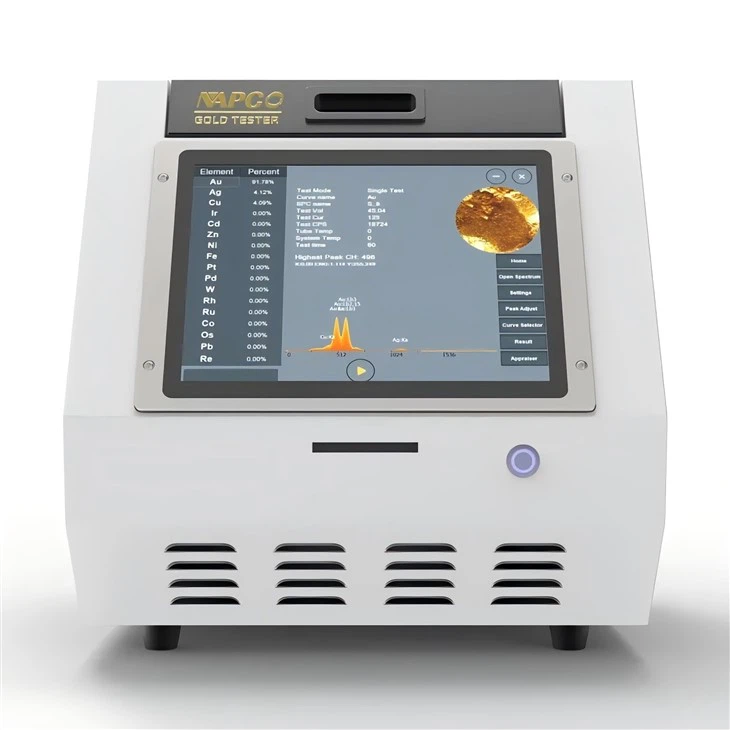

NAP 8200E XRF Gold Tester
The NAP 8200E XRF Gold Tester is a state-of-the-art benchtop tester that combines high sensitivity with advanced features. It is equipped with a large touchscreen display and intuitive software, making it easy to operate. The tester can store a large number of test results and generate detailed reports, making it suitable for use in quality control laboratories and research institutions.
Conclusion
The sensitivity of a digital gold tester is a critical factor that determines its effectiveness in accurately assessing the purity and composition of gold. High sensitivity is essential for accurate purity assessment, detection of counterfeits, and quality control in the gold industry. As a leading supplier of digital gold testers, we offer a range of high-quality products, including the N1-25 XRF Gold Tester, N1-10 XRF Gold Tester, and NAP 8200E XRF Gold Tester, that are designed to offer high sensitivity for precise and trustworthy testing.
If you are in the market for a digital gold tester and are looking for a reliable and sensitive device, we encourage you to contact us for more information. Our team of experts will be happy to assist you in choosing the right gold tester for your needs and provide you with the best possible service.
References
- "X-ray Fluorescence Spectrometry: Principles and Applications" by E. P. Parry
- "Gold Testing: Methods and Techniques" by John Smith