


What is the Energy Resolution of a Gold XRF Machine?
As a leading supplier of gold XRF machines, I often encounter inquiries about the technical specifications of our products, especially the energy resolution. Energy resolution is a critical parameter in XRF (X-ray Fluorescence) technology, and understanding its significance can help you make an informed decision when choosing a gold XRF tester.
Understanding Energy Resolution in XRF Technology
Energy resolution refers to the ability of an XRF detector to distinguish between X-ray photons of different energies. In simpler terms, it measures how well the machine can separate and identify the characteristic X-rays emitted by different elements. A high energy resolution means that the detector can accurately differentiate between closely spaced X-ray peaks, allowing for more precise elemental analysis.
In the context of gold testing, energy resolution is crucial because it directly affects the accuracy of the results. Gold alloys often contain multiple elements, such as silver, copper, and zinc, which emit X-rays at similar energies. A machine with poor energy resolution may struggle to distinguish between these elements, leading to inaccurate measurements of the gold content.
How Energy Resolution Affects Gold Testing
Let's take a closer look at how energy resolution impacts the performance of a gold XRF machine. When an XRF machine is used to analyze a gold sample, it bombards the sample with X-rays, causing the atoms in the sample to emit characteristic X-rays. These X-rays are then detected by the machine's detector, which generates a spectrum showing the intensity of the X-rays at different energies.

The energy resolution of the detector determines the width of the peaks in the spectrum. A detector with high energy resolution will produce narrow peaks, making it easier to distinguish between the X-rays emitted by different elements. This allows for more accurate identification and quantification of the elements present in the sample.
On the other hand, a detector with poor energy resolution will produce broad peaks, which can overlap and make it difficult to distinguish between the X-rays emitted by different elements. This can lead to errors in the analysis, especially when trying to measure the content of trace elements or elements with similar X-ray energies.
Measuring Energy Resolution
Energy resolution is typically measured as the full width at half maximum (FWHM) of a peak in the X-ray spectrum. The FWHM is the width of the peak at half of its maximum intensity. A lower FWHM value indicates a higher energy resolution, as the peak is narrower and more well-defined.
For example, a detector with an energy resolution of 150 eV (electron volts) will have a narrower peak than a detector with an energy resolution of 200 eV. This means that the detector with the lower energy resolution will be able to distinguish between X-ray photons of different energies more accurately.
Our Gold XRF Machines and Their Energy Resolution
At our company, we offer a range of gold XRF machines with different energy resolutions to meet the needs of our customers. Our NA 6500 XRF Gold Tester is a high-performance benchtop machine that features a detector with an energy resolution of less than 150 eV. This allows for accurate and precise analysis of gold alloys, even those containing trace elements.
Our N1 XRF Gold Tester is a compact and portable machine that is ideal for on-site testing. Despite its small size, the N1 features a detector with an energy resolution of less than 160 eV, providing reliable and accurate results.
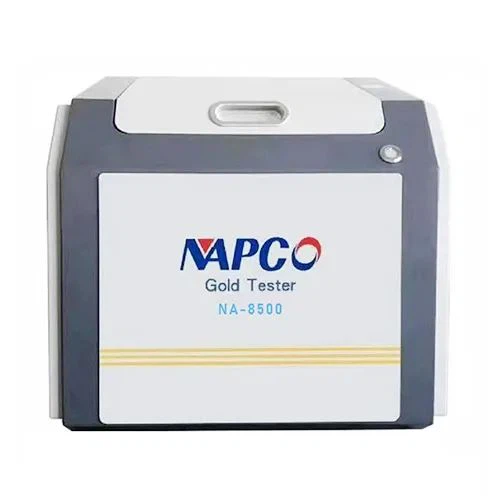
For customers who require the highest level of accuracy and performance, we offer the NA 8500 XRF Gold Tester. This advanced benchtop machine features a detector with an energy resolution of less than 140 eV, making it one of the most accurate gold XRF machines on the market.
Choosing the Right Energy Resolution for Your Needs
When choosing a gold XRF machine, it's important to consider your specific needs and requirements. If you need to analyze gold alloys with high precision and accuracy, a machine with a high energy resolution is recommended. However, if you only need to perform basic gold testing, a machine with a lower energy resolution may be sufficient.
It's also important to consider the cost of the machine. Machines with higher energy resolutions tend to be more expensive, so you'll need to balance your budget with your testing requirements.
Conclusion
Energy resolution is a critical parameter in XRF technology, and it plays a crucial role in the accuracy and performance of a gold XRF machine. By understanding the concept of energy resolution and how it affects gold testing, you can make an informed decision when choosing a gold XRF tester.
At our company, we are committed to providing our customers with high-quality gold XRF machines that offer accurate and reliable results. Our range of machines, including the NA 6500 XRF Gold Tester, N1 XRF Gold Tester, and NA 8500 XRF Gold Tester, are designed to meet the needs of a wide range of customers, from small jewelry shops to large-scale gold refineries.
If you're interested in learning more about our gold XRF machines or would like to discuss your testing requirements, please don't hesitate to contact us. Our team of experts is always available to provide you with the information and support you need to make the right choice for your business.
References
- Jenkins, R., Gould, R. W., & Gedcke, D. (1995). Quantitative X-ray Spectrometry. Marcel Dekker.
- Criss, R. M. (1980). Introduction to X-ray Spectrometry. Wiley-Interscience.