


XRF (X-ray fluorescence) machines have become indispensable tools in the gold industry, offering non-destructive and rapid analysis of gold purity and other elemental compositions. As a leading supplier of XRF machines for gold testing, I often encounter questions from customers about the differences between handheld and benchtop XRF machines. In this blog post, I'll delve into the key distinctions between these two types of XRF machines, helping you make an informed decision based on your specific needs.

1. Portability and Mobility
One of the most obvious differences between handheld and benchtop XRF machines is their portability. Handheld XRF machines, as the name suggests, are designed to be carried around easily. They are compact, lightweight, and battery-powered, which makes them ideal for on-site testing. For example, if you're a gold buyer who needs to test gold items at different locations, such as pawn shops, jewelry shows, or mining sites, a handheld XRF machine allows you to conduct tests right where the gold is.
On the other hand, benchtop XRF machines are larger and heavier. They are typically designed to be placed on a stable bench or table in a laboratory or a fixed testing environment. Their lack of portability might seem like a drawback at first glance, but it also means they can be more precisely calibrated and maintained. Since they are not subject to the vibrations and movements associated with being carried around, benchtop XRF machines can provide more consistent and accurate results over time.
2. Analytical Performance
When it comes to analytical performance, both handheld and benchtop XRF machines have their strengths. Handheld XRF machines have made significant advancements in recent years, and they can now provide reasonably accurate results for gold testing. They can quickly analyze the elemental composition of gold alloys, including the percentage of gold, as well as other elements such as silver, copper, and zinc. However, due to their smaller size and less powerful X-ray sources, handheld XRF machines may have limitations in detecting trace elements or analyzing samples with complex matrices.
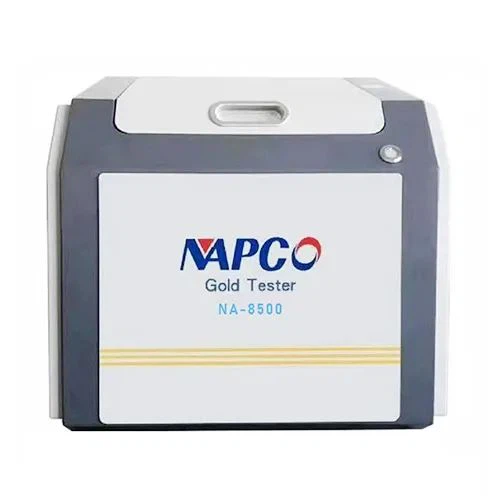
Benchtop XRF machines, in contrast, are equipped with more powerful X-ray tubes and detectors. This allows them to provide higher precision and sensitivity in elemental analysis. They can detect a wider range of elements and analyze samples with greater accuracy, even at very low concentrations. For example, if you need to test gold samples with extremely high purity or samples that contain trace amounts of precious metals, a benchtop XRF machine is likely to be a better choice. Some of our benchtop models, such as the NA 8500 XRF Gold Tester, NA 6500 XRF Gold Tester, and N1 XRF Gold Tester, are specifically designed for high-precision gold analysis.
3. Sample Size and Geometry
The size and shape of the samples you need to test can also influence your choice between a handheld and a benchtop XRF machine. Handheld XRF machines are more flexible when it comes to sample size and geometry. They can be used to test small, irregularly shaped objects, such as jewelry pieces, coins, or small gold nuggets. You can simply point the handheld device at the sample and start the analysis.
Benchtop XRF machines usually require samples to be placed inside a testing chamber. This means that the size of the samples is limited by the dimensions of the chamber. However, they can still handle a relatively wide range of sample sizes, from small gold flakes to larger gold bars. Additionally, the fixed testing environment of benchtop XRF machines allows for more consistent sample positioning, which can improve the accuracy of the analysis.
4. Ease of Use
Both handheld and benchtop XRF machines are designed to be user-friendly, but they have different levels of complexity. Handheld XRF machines are generally easier to operate. They often come with a simple touchscreen interface and pre-programmed testing modes. You can start a test with just a few clicks, and the results are usually displayed on the screen within seconds. This makes handheld XRF machines suitable for users with limited technical knowledge or those who need to conduct quick tests on a regular basis.
Benchtop XRF machines may require more training and technical expertise to operate. They often have more advanced features and settings that need to be configured correctly to obtain accurate results. However, once you are familiar with the operation of a benchtop XRF machine, it can provide a more comprehensive and detailed analysis. Many benchtop XRF machines also come with software that allows you to store and analyze test results, generate reports, and perform statistical analysis.
5. Cost
Cost is another important factor to consider when choosing between a handheld and a benchtop XRF machine. Handheld XRF machines are generally more affordable than benchtop XRF machines. They have a lower upfront cost, and they also require less maintenance and calibration. This makes them a cost-effective option for small businesses, individual gold buyers, or those who only need to conduct occasional gold tests.
Benchtop XRF machines, on the other hand, are more expensive. The higher cost is due to their more advanced technology, larger size, and better analytical performance. However, if you are a large gold refinery, a research institution, or a professional jewelry manufacturer that requires high-precision and high-throughput gold testing, the investment in a benchtop XRF machine may be justified by the long-term benefits.
6. Conclusion
In conclusion, the choice between a handheld and a benchtop XRF machine for gold testing depends on your specific requirements. If you need portability, quick and easy testing, and a cost-effective solution for on-site analysis, a handheld XRF machine is the way to go. On the other hand, if you require high-precision analysis, the ability to handle a wide range of sample sizes, and a more comprehensive testing solution for a fixed laboratory environment, a benchtop XRF machine is a better choice.
As a trusted supplier of XRF machines for gold testing, we offer a wide range of handheld and benchtop XRF machines to meet your needs. Our team of experts is always ready to provide you with professional advice and support to help you select the right XRF machine for your business. Whether you are a small gold dealer or a large-scale gold processing company, we can help you find the perfect solution for your gold testing requirements.
If you are interested in learning more about our XRF machines or would like to discuss your specific needs, please feel free to contact us. We look forward to the opportunity to work with you and help you take your gold testing to the next level.
References
- "X-ray Fluorescence Spectrometry: Principles and Applications" by Ronald Jenkins
- "Handbook of X-Ray Spectrometry" by Eugene P. Bertin