


Hey there! As a supplier of XRF machines for gold, I often get asked about the calibration stability of these nifty devices. So, let's dive right in and break it down.
First off, what the heck is calibration stability? Well, in simple terms, it's how well an XRF machine can maintain its accuracy over time. You see, when you're testing gold, you need reliable results. Whether you're a jeweler, a gold dealer, or someone in the precious metals industry, you can't afford to have a machine that gives inconsistent readings.
Let's talk about why calibration stability is so crucial. Gold is a valuable commodity, and even a small error in measurement can lead to significant financial losses. For example, if your XRF machine overestimates the purity of gold, you might end up paying more for it than it's actually worth. On the other hand, underestimating the purity could mean you're selling gold at a lower price than it should be.
Now, how does an XRF machine maintain its calibration stability? There are a few key factors at play. One of the most important is the quality of the components used in the machine. High - quality detectors, X - ray tubes, and other internal parts are less likely to degrade over time, which helps keep the calibration in check.
Another factor is the design of the machine. A well - designed XRF machine for gold will have built - in features to compensate for any small changes in its performance. For instance, some machines have auto - calibration functions that can adjust the settings based on the current conditions. This helps to ensure that the readings are accurate, even if there are minor fluctuations in the environment or the machine's internal components.
Let's take a look at some of the XRF gold testers we offer. The N1 - 10 XRF Gold Tester is a great example of a machine with excellent calibration stability. It's equipped with state - of the - art detectors that are highly sensitive and reliable. The design of the N1 - 10 allows it to maintain its accuracy even after long - term use. The auto - calibration feature kicks in regularly to make sure that the readings are spot - on.
Then we have the N1 - 25 XRF Gold Tester. This machine is a step up in terms of performance. It has a more powerful X - ray tube and advanced signal processing algorithms. These features not only improve the accuracy of the measurements but also contribute to its calibration stability. The N1 - 25 can handle a wide range of gold samples, from pure gold to gold alloys, and still provide consistent results.
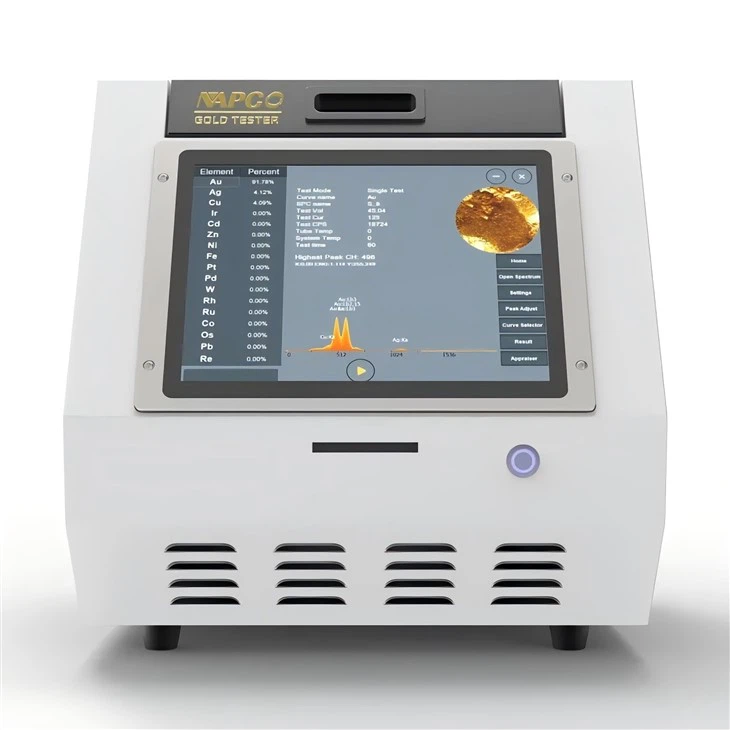
The NAP 8200E XRF Gold Tester is another top - notch option. It's designed for high - volume testing environments. With its robust construction and advanced calibration system, the NAP 8200E can operate continuously without significant drift in its calibration. This means you can rely on it to give accurate readings day in and day out, even when testing a large number of samples.
But it's not just about the machine itself. Proper maintenance also plays a huge role in calibration stability. Regular cleaning of the machine, especially the detector and the sample chamber, is essential. Dust and debris can interfere with the X - ray signals and affect the accuracy of the readings. Additionally, following the manufacturer's recommended maintenance schedule, such as replacing worn - out parts at the right time, can help keep the calibration stable.

Environmental conditions can also impact calibration stability. Extreme temperatures, humidity, and electromagnetic interference can all cause the machine to deviate from its calibrated state. That's why it's important to operate the XRF machine in a controlled environment. If possible, keep the machine in a room with a stable temperature and low humidity. Also, make sure it's away from sources of electromagnetic interference, like large motors or power transformers.
In the real world, calibration stability can make or break a business. Imagine a gold refinery that processes tons of gold every day. If their XRF machine loses its calibration stability, they could end up making costly mistakes in their refining process. On the other hand, a jeweler who uses an XRF machine to test the authenticity of gold jewelry needs accurate readings to build trust with their customers.
So, if you're in the market for an XRF machine for gold, don't just focus on the initial accuracy. Make sure to consider the calibration stability as well. A machine with good calibration stability will save you time, money, and headaches in the long run.
If you're interested in learning more about our XRF gold testers or have any questions about calibration stability, feel free to reach out. We're here to help you make the right choice for your business. Whether you're a small - scale jeweler or a large - scale gold dealer, we have the perfect XRF machine for you.
References
- "X - Ray Fluorescence Spectrometry: Principles and Applications"
- "Handbook of Precious Metals Analysis"