


Hey there! As a supplier of XRF testing equipment for gold, I've seen firsthand how a bunch of factors can mess with the results of XRF testing for gold. In this blog, I'm gonna break down these factors so you can get a better understanding of how XRF testing works and what to watch out for.
1. Sample Composition
The composition of the sample you're testing is a huge deal. Gold is rarely found in its pure form. It's usually alloyed with other metals like copper, silver, zinc, and nickel. These alloying elements can have a big impact on the XRF test results.
When there are other elements in the sample, they can interfere with the XRF analysis. For example, some elements might have similar X - ray emission lines as gold. This can lead to false readings or inaccurate quantification of the gold content.
Let's say you're testing a gold alloy that has a high copper content. Copper can emit X - rays at wavelengths close to those of gold. The XRF machine might misinterpret some of the copper signals as gold signals, making it seem like there's more gold in the sample than there actually is.
To get around this, modern XRF gold testers, like our NAP 8200E XRF Gold Tester, are equipped with advanced algorithms that can distinguish between the different elements. These algorithms take into account the unique spectral characteristics of each element to provide more accurate results.
2. Sample Homogeneity
Another important factor is the homogeneity of the sample. If the gold alloy is not evenly mixed, the XRF results can be inconsistent.
Imagine you have a gold - copper alloy where the copper is clumped together in some areas and the gold is more concentrated in others. When you test a small area of the sample with the XRF machine, the result might only reflect the composition of that specific area. So, if you happen to test an area with a high copper concentration, the machine will show a lower gold content than the actual average gold content of the whole sample.
To ensure accurate results, it's crucial to make sure the sample is as homogeneous as possible. This can be achieved through proper melting and mixing processes during the alloy production. Also, taking multiple readings from different parts of the sample and averaging them can help reduce the impact of sample inhomogeneity. Our N1 XRF Gold Tester has a feature that allows for multiple point testing, which is really useful for dealing with inhomogeneous samples.

3. Surface Condition
The surface of the sample matters a lot. A dirty, rough, or oxidized surface can affect the XRF results.
If the surface is dirty, contaminants like dust, grease, or other substances can absorb or scatter the X - rays, reducing the accuracy of the measurement. For example, if there's a layer of dust on the sample, the X - rays might get absorbed by the dust particles before they can interact with the gold atoms in the sample. This can lead to a lower - than - actual reading of the gold content.
A rough surface can also cause problems. X - rays are scattered more randomly on a rough surface, which can make it difficult for the XRF machine to accurately detect the X - rays emitted by the gold atoms. Oxidation on the surface can change the chemical composition of the outer layer of the sample, which can also lead to inaccurate results.
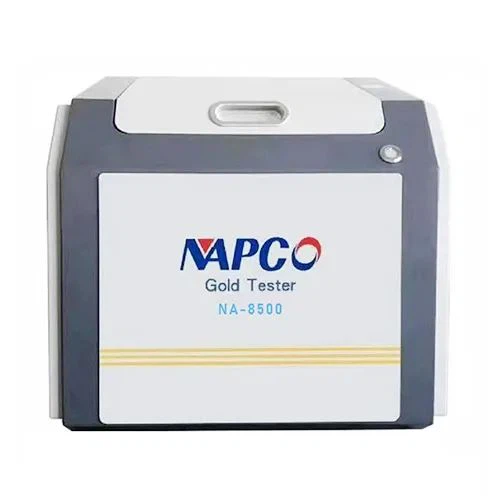
Before testing, it's a good idea to clean the sample surface thoroughly. You can use a mild detergent and a soft brush to remove dirt and grease. For oxidized surfaces, you might need to use a gentle abrasive to polish the surface and expose the underlying alloy. Our NA 8500 XRF Gold Tester is designed to be less sensitive to minor surface irregularities, but it's still best to have a clean and smooth surface for the most accurate results.
4. XRF Machine Calibration
Calibration is key when it comes to getting accurate XRF test results. An XRF machine needs to be calibrated regularly to ensure that it's measuring the gold content correctly.
The calibration process involves using standard samples with known gold concentrations. The machine measures these standard samples, and the results are used to adjust the machine's internal settings so that it can accurately measure unknown samples.
If the machine is not calibrated properly, it can give incorrect readings. For example, if the calibration is off, the machine might consistently over - or under - estimate the gold content. This can be a big problem, especially in industries where accurate gold content determination is crucial, like jewelry manufacturing or gold trading.
We provide calibration services for all our XRF gold testers. Our technicians use high - quality standard samples to ensure that your machine is calibrated to the highest standards. Regular calibration can also help extend the lifespan of the machine and improve its overall performance.
5. Measurement Time
The amount of time you spend taking a measurement can also affect the results. A longer measurement time generally leads to more accurate results.
When you take a measurement with an XRF machine, it's collecting data on the X - rays emitted by the sample. In a short measurement time, the machine might not collect enough data to accurately determine the gold content, especially if the sample has a low gold concentration or a complex composition.
However, longer measurement times can be time - consuming, especially in a production environment where you need to test a large number of samples quickly. So, it's a balance between getting accurate results and maintaining efficiency. Our XRF gold testers are designed to optimize the measurement time without sacrificing too much accuracy. You can adjust the measurement time settings according to your specific needs.
6. Environmental Conditions
The environment in which the XRF testing is done can have an impact on the results. Temperature, humidity, and electromagnetic interference can all affect the performance of the XRF machine.
High temperatures can cause the components of the XRF machine to expand, which can change the alignment of the internal parts and affect the accuracy of the X - ray detection. Humidity can cause corrosion of the machine's internal components, especially if the machine is not properly sealed. Electromagnetic interference from nearby electrical equipment can also disrupt the X - ray signals and lead to inaccurate results.
It's important to keep the XRF machine in a stable environment. Try to maintain a constant temperature and humidity level in the testing area. Also, make sure the machine is away from sources of electromagnetic interference, like large motors or high - voltage power lines.
Conclusion
As you can see, there are several factors that can affect the results of XRF testing for gold. But don't worry! Our range of XRF gold testers, including the NAP 8200E XRF Gold Tester, N1 XRF Gold Tester, and NA 8500 XRF Gold Tester, are designed to minimize the impact of these factors and provide you with accurate and reliable results.
If you're in the market for an XRF gold tester or need more information about our products and services, don't hesitate to reach out. We're here to help you make the right choice for your gold testing needs. Let's start a conversation and see how we can work together to ensure accurate gold analysis.
References
- "X - ray Fluorescence Spectrometry: Principles and Applications" by Brian W. Smith
- "Handbook of X - ray Spectrometry" by Ronald Jenkins