


X-ray fluorescence (XRF) testing has become an indispensable method in the gold industry, offering a non-destructive and relatively quick way to determine the composition and purity of gold items. As a supplier of XRF gold testing equipment, including the NA 6500 XRF Gold Tester, NA 8500 XRF Gold Tester, and NAP 8200E XRF Gold Tester, I have witnessed firsthand the importance of understanding the factors that can affect the results of an XRF test for gold. In this blog post, I will explore these factors in detail to help you achieve more accurate and reliable test results.
Sample Characteristics
Surface Condition
The surface condition of the gold sample plays a crucial role in the XRF testing process. A dirty, oxidized, or scratched surface can interfere with the X-ray penetration and the emission of fluorescent X-rays. Dirt and debris on the surface can absorb or scatter the X-rays, reducing the intensity of the fluorescent signal. Oxidation can also change the elemental composition near the surface, leading to inaccurate results. Therefore, it is essential to clean the sample thoroughly before testing. Use a mild detergent and a soft brush to remove any dirt or contaminants, and then dry the sample completely. For samples with scratches or rough surfaces, polishing may be necessary to ensure a smooth and uniform surface for accurate testing.
Sample Thickness
The thickness of the gold sample can also affect the XRF test results. XRF is a surface analysis technique, and the depth of analysis is typically limited to a few micrometers. If the sample is too thick, the X-rays may not penetrate deep enough to detect the underlying layers, resulting in an inaccurate representation of the overall composition. On the other hand, if the sample is too thin, the X-rays may pass through the sample completely, and the fluorescent signal may be too weak to measure accurately. Therefore, it is important to choose an appropriate sample thickness for XRF testing. In general, samples with a thickness of a few millimeters are suitable for most XRF applications.
Homogeneity
The homogeneity of the gold sample is another important factor to consider. Gold alloys are often composed of multiple elements, and the distribution of these elements within the sample can vary. If the sample is not homogeneous, the XRF test may only analyze a small area of the sample, which may not be representative of the entire sample. This can lead to significant variations in the test results. To ensure the homogeneity of the sample, it is recommended to take multiple measurements from different locations on the sample and calculate the average value.
Instrument Parameters
X-ray Tube Settings
The X-ray tube settings, including the tube voltage, tube current, and exposure time, can have a significant impact on the XRF test results. The tube voltage determines the energy of the X-rays generated by the tube, and higher tube voltages can penetrate deeper into the sample and generate stronger fluorescent signals. However, too high a tube voltage can also cause damage to the sample and increase the background noise. The tube current affects the intensity of the X-rays, and higher tube currents can result in shorter exposure times and more accurate measurements. The exposure time is the duration for which the sample is exposed to the X-rays, and longer exposure times can improve the signal-to-noise ratio and the accuracy of the measurements. Therefore, it is important to optimize the X-ray tube settings based on the sample characteristics and the desired level of accuracy.
Detector Performance
The detector is responsible for measuring the intensity of the fluorescent X-rays emitted by the sample. The performance of the detector, including its energy resolution, efficiency, and stability, can affect the accuracy and reliability of the XRF test results. A detector with high energy resolution can distinguish between different elements more accurately, while a detector with high efficiency can detect more fluorescent X-rays and improve the sensitivity of the test. The stability of the detector is also important, as any fluctuations in the detector performance can lead to inaccurate measurements. Therefore, it is important to choose a detector with good performance characteristics and to calibrate the detector regularly to ensure its accuracy.

Calibration
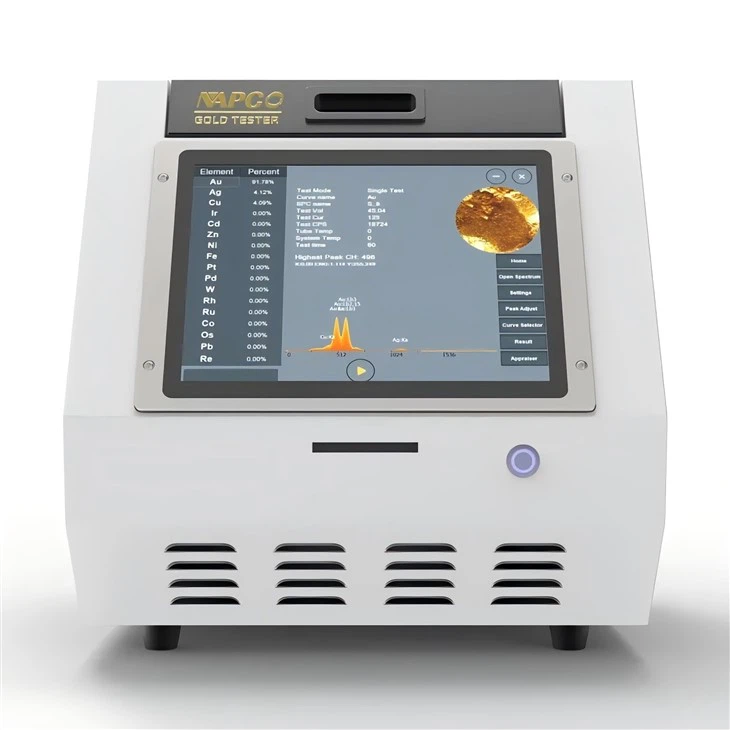
Calibration is a critical step in the XRF testing process to ensure the accuracy and reliability of the test results. Calibration involves comparing the XRF measurements of a set of known standard samples with their actual elemental compositions. The calibration curve obtained from this comparison is then used to convert the XRF measurements of unknown samples into elemental concentrations. If the calibration is not performed correctly, the test results may be inaccurate. Therefore, it is important to use high-quality standard samples that are similar in composition and matrix to the unknown samples, and to follow the manufacturer's instructions for calibration. Regular calibration checks should also be performed to ensure the stability of the calibration curve over time.
Environmental Factors
Temperature and Humidity
Temperature and humidity can affect the performance of the XRF instrument and the stability of the sample. High temperatures can cause thermal expansion of the instrument components, leading to changes in the X-ray tube settings and the detector performance. Humidity can also cause corrosion and oxidation of the instrument parts, as well as the sample itself. Therefore, it is important to operate the XRF instrument in a controlled environment with a stable temperature and humidity. The recommended temperature range for most XRF instruments is between 20°C and 25°C, and the relative humidity should be kept below 60%.
Background Radiation
Background radiation is another environmental factor that can affect the XRF test results. Background radiation refers to the natural radiation present in the environment, including cosmic rays and radioactive materials in the soil and building materials. This radiation can interfere with the measurement of the fluorescent X-rays emitted by the sample, leading to an increase in the background noise and a decrease in the signal-to-noise ratio. To reduce the influence of background radiation, it is recommended to operate the XRF instrument in a shielded environment or to use a background correction algorithm during the data analysis process.
Operator Skills and Experience
Sample Preparation
As mentioned earlier, proper sample preparation is essential for accurate XRF testing. However, the quality of sample preparation can vary depending on the operator's skills and experience. An experienced operator will know how to clean, polish, and prepare the sample correctly to ensure a smooth and homogeneous surface for testing. They will also be able to identify and address any potential issues with the sample, such as surface contamination or oxidation. Therefore, it is important to provide adequate training to operators to ensure that they have the necessary skills and knowledge to perform sample preparation correctly.
Instrument Operation
The operator's skills and experience in operating the XRF instrument can also affect the test results. An experienced operator will know how to set the appropriate X-ray tube settings, select the correct analysis mode, and interpret the test results accurately. They will also be able to troubleshoot any problems that may arise during the testing process, such as instrument malfunctions or abnormal test results. Therefore, it is important to provide comprehensive training to operators on the operation and maintenance of the XRF instrument.
Conclusion
In conclusion, the results of an XRF test for gold can be affected by a variety of factors, including sample characteristics, instrument parameters, environmental factors, and operator skills and experience. By understanding these factors and taking appropriate measures to mitigate their effects, you can achieve more accurate and reliable test results. As a supplier of XRF gold testing equipment, I am committed to providing high-quality products and excellent customer service to help you meet your gold testing needs. If you have any questions or need further assistance with XRF testing for gold, please feel free to contact me to discuss your specific requirements and explore the best solutions for your business.
References
- Jenkins, R. (1999). Principles and Practice of X-ray Fluorescence Spectrometry. John Wiley & Sons.
- Van Grieken, R., & Markowicz, A. A. (2002). Handbook of X-ray Spectrometry. Marcel Dekker.
- Heydarian, M., & Statham, P. J. (2011). X-ray Fluorescence Spectrometry in Geochemistry and Mineralogy. Springer.