


In the realm of precious metals, accurately determining the authenticity and purity of gold is of paramount importance. Benchtop gold testers have emerged as indispensable tools for jewelers, pawnbrokers, gold dealers, and even hobbyists. These devices offer a reliable and efficient way to analyze gold samples without causing damage. As a trusted benchtop gold tester supplier, we understand the significance of these tools and the diverse needs of our customers. In this blog post, we will explore the different types of benchtop gold testers available in the market.
XRF Gold Testers
X-ray Fluorescence (XRF) gold testers are among the most popular and advanced benchtop gold testing devices. They work on the principle of X-ray fluorescence, which involves bombarding the sample with X-rays and measuring the emitted fluorescent X-rays. Each element in the sample emits X-rays with characteristic energies, allowing the tester to identify and quantify the elements present.
One of the key advantages of XRF gold testers is their non-destructive nature. They can provide accurate results without damaging the sample, making them ideal for testing valuable jewelry and collectibles. XRF testers can also analyze a wide range of elements, including gold, silver, platinum, and other precious and non-precious metals.
Our NAP 8200E XRF Gold Tester is a state-of-the-art XRF device that offers high precision and fast analysis. It is equipped with advanced detectors and software, allowing for accurate determination of gold purity and the presence of other elements. The tester has a user-friendly interface and can be operated by both experienced professionals and beginners.
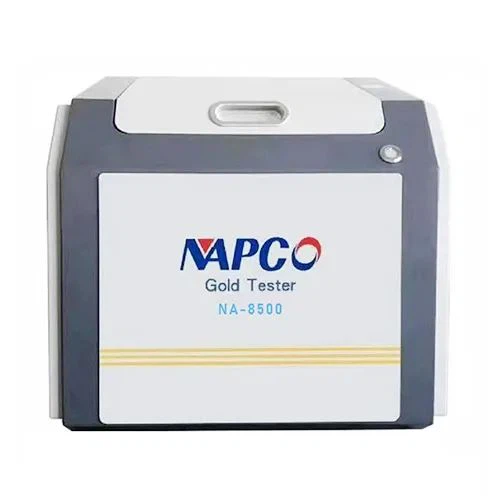
Another popular model is the NA 8500 XRF Gold Tester. This tester features a compact design and powerful analytical capabilities. It can quickly and accurately analyze gold samples, providing detailed reports on the composition and purity of the gold. The NA 8500 is suitable for a variety of applications, from small jewelry shops to large gold refineries.
The N1 XRF Gold Tester is a more affordable option that still offers reliable performance. It is designed for small businesses and individual users who need a simple and efficient way to test gold. The N1 provides accurate results in a short time and is easy to operate, making it a great choice for those new to gold testing.
Acid Testing Kits
Acid testing kits are one of the oldest and most traditional methods of testing gold. These kits typically include a set of acids with different strengths and a testing stone. To test a gold sample, a small scratch is made on the testing stone, and a drop of acid is applied to the scratch. The reaction of the acid with the gold indicates its purity.
Acid testing kits are relatively inexpensive and easy to use. They can provide a quick and rough estimate of the gold purity. However, they have some limitations. Acid testing is a destructive method, as it requires making a scratch on the sample. It can also be inaccurate, especially for samples with complex compositions or for testing very high-purity gold.
Electronic Conductivity Testers
Electronic conductivity testers work by measuring the electrical conductivity of the gold sample. Gold is a good conductor of electricity, and its conductivity is related to its purity. By measuring the conductivity of the sample, the tester can estimate the gold purity.
These testers are non-destructive and relatively fast. They are suitable for testing gold jewelry and other small items. However, electronic conductivity testers can be affected by factors such as the surface condition of the sample and the presence of other metals. They may also not be as accurate as XRF testers for samples with low gold content or complex compositions.
Ultrasonic Gold Testers
Ultrasonic gold testers use ultrasonic waves to analyze the internal structure of the gold sample. When ultrasonic waves pass through the gold, they are affected by the density and composition of the material. By analyzing the reflected ultrasonic waves, the tester can detect any inclusions, voids, or other defects in the gold, as well as estimate its purity.
Ultrasonic gold testers are non-destructive and can provide detailed information about the internal structure of the sample. They are particularly useful for detecting counterfeit or adulterated gold. However, they are more expensive than some other types of testers and may require more training to operate.
Which Benchtop Gold Tester is Right for You?
The choice of benchtop gold tester depends on several factors, including your budget, the type of samples you need to test, and the level of accuracy required.
If you are a professional jeweler, gold dealer, or refiner who needs to test a large number of samples accurately and quickly, an XRF gold tester is likely the best choice. XRF testers offer high precision, non-destructive testing, and the ability to analyze a wide range of elements.
If you are on a tight budget or only need to test a few samples occasionally, an acid testing kit or an electronic conductivity tester may be sufficient. These options are more affordable and easy to use, but they may not provide the same level of accuracy as XRF testers.
For those who need to detect counterfeit or adulterated gold and want to analyze the internal structure of the samples, an ultrasonic gold tester may be a good investment.
As a leading benchtop gold tester supplier, we can help you choose the right tester for your specific needs. Our team of experts has extensive knowledge and experience in the field of gold testing and can provide you with professional advice and support.

If you are interested in purchasing a benchtop gold tester or have any questions about our products, please feel free to contact us. We look forward to working with you to meet your gold testing requirements.
References
- "Gold Testing Methods: A Comprehensive Guide." Precious Metals Journal, Vol. 15, Issue 2, 2022.
- "Advances in X-ray Fluorescence Analysis for Gold Testing." Analytical Chemistry Review, Vol. 28, Issue 3, 2023.
- "Non-Destructive Testing Techniques for Precious Metals." International Journal of Materials Science, Vol. 35, Issue 4, 2021.