


Is neutron activation analysis gold testing machine used widely?
Hey there! I'm a supplier of gold testing machines, and I often get asked about the popularity of neutron activation analysis (NAA) gold testing machines. So, let's dig into this topic and see how widely these machines are actually used.
First off, what's neutron activation analysis? It's a pretty cool scientific method. NAA works by bombarding a sample with neutrons. When the sample is hit by these neutrons, some of its atoms become radioactive. By measuring the radiation emitted by these radioactive atoms, we can figure out what elements are in the sample and how much of each element there is. In the case of gold testing, it can accurately tell us the purity of gold and detect other elements mixed in.
But here's the thing. Even though NAA is a highly accurate method for gold testing, it's not used as widely as you might think. There are a few reasons for this.
One major factor is the cost. Setting up a neutron activation analysis system is extremely expensive. You need a nuclear reactor or a particle accelerator to produce the neutrons. These facilities are not only costly to build but also require a lot of maintenance and safety measures. For most small - to medium - sized gold dealers or jewelers, the price tag is just too high. They simply can't afford to invest in such a high - end testing machine.
Another issue is the complexity. Operating an NAA machine requires highly trained personnel. You can't just hand the controls to anyone. These technicians need to have a deep understanding of nuclear physics and radiation safety. Finding and hiring such experts is not easy, and it adds to the overall cost of using NAA for gold testing.
Safety is also a big concern. Working with radioactive materials and high - energy particles is dangerous. There are strict regulations regarding the use of NAA machines. You need to have proper shielding to protect the operators and the environment from radiation. Any violation of these safety regulations can lead to serious consequences, which makes many businesses hesitant to adopt this technology.
On the other hand, there are other gold testing methods that are more popular in the market. One of the most common alternatives is X - ray fluorescence (XRF) technology. XRF gold testers are much more user - friendly and cost - effective.
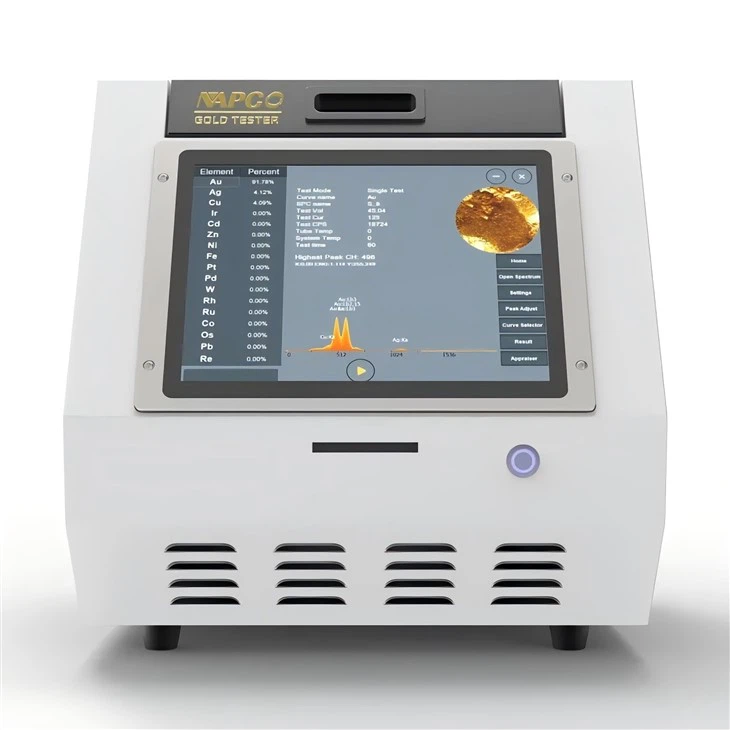
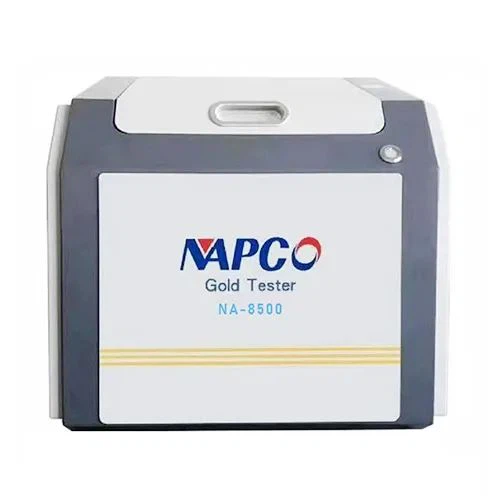
For example, we offer several XRF gold testers like the N1 XRF Gold Tester, the NAP 8200E XRF Gold Tester, and the NA 8500 XRF Gold Tester. These machines are relatively inexpensive compared to NAA machines. They can be easily operated by anyone with a little training. You don't need a nuclear physicist to run them.
XRF testers work by shooting X - rays at the gold sample. The sample then emits characteristic X - rays based on the elements present in it. By analyzing these emitted X - rays, we can determine the composition of the gold. While the accuracy of XRF testers may not be as high as that of NAA machines in some cases, they are accurate enough for most commercial purposes.
They are also much safer to use. There are no radioactive materials involved in the normal operation of XRF testers. You don't have to worry about strict radiation safety regulations or expensive shielding. This makes them a more attractive option for small jewelers, pawn shops, and gold trading companies.
However, it's important to note that NAA still has its place in the gold testing industry. In high - end research institutions and large - scale gold refineries, where extreme accuracy is required, NAA is the go - to method. For example, when testing gold for scientific research or for high - value bullion, the extra cost and complexity of NAA are justified by the need for precise results.
In the gold trading and jewelry making business, the majority of players rely on more practical and cost - effective solutions like XRF gold testers. The market demand for NAA machines is limited mainly to large - scale and high - precision applications.
So, if you're in the gold business and looking for a reliable and affordable gold testing solution, XRF testers are a great choice. Our XRF gold testers, such as the N1 XRF Gold Tester, NAP 8200E XRF Gold Tester, and NA 8500 XRF Gold Tester, offer a good balance between accuracy and cost. They are easy to use and can provide quick results.
If you're interested in learning more about our gold testing machines or want to discuss your specific needs, feel free to reach out. We're here to help you find the best gold testing solution for your business. Whether you're a small jeweler looking to test a few pieces a day or a large gold dealer with high - volume testing requirements, we have the right machine for you.
In conclusion, while neutron activation analysis is a powerful gold testing method, it's not widely used due to cost, complexity, and safety concerns. XRF technology has taken over as the more popular choice in the market, especially for small and medium - sized businesses. But NAA still holds its ground in high - precision and large - scale applications.
References
- "Principles of Instrumental Analysis" by Douglas A. Skoog, F. James Holler, and Stanley R. Crouch.
- "Gold Testing: Methods and Techniques" - Industry white paper on gold testing technologies.
- Research papers on the comparison of different gold testing methods published in scientific journals.