


Yo, folks! As a supplier of XRF testing for gold, I often get asked how our XRF testers handle gold with different colors, like white and rose gold. Well, let's dive right into it.

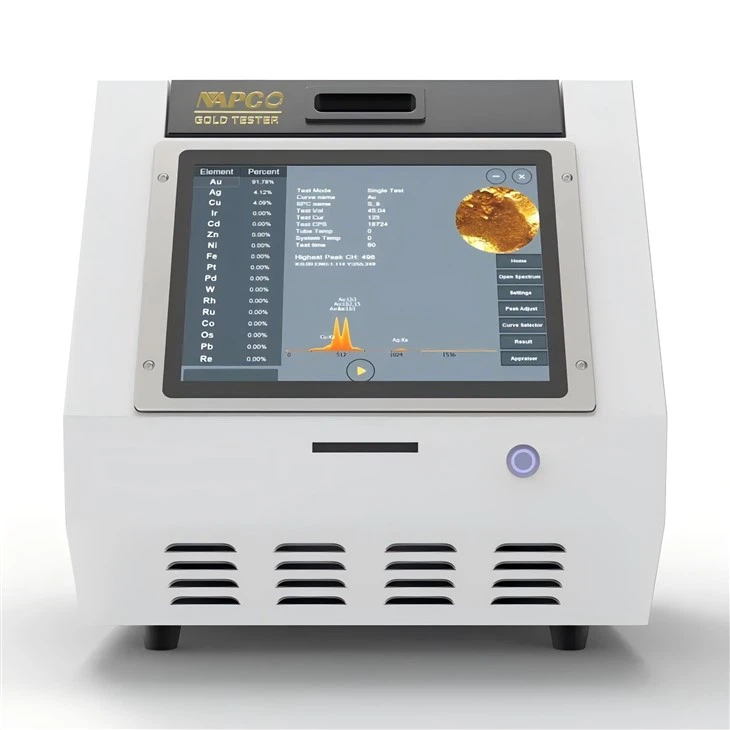
First off, for those who aren't super familiar, XRF stands for X-ray fluorescence. It's a non - destructive testing method that can quickly tell us the elemental composition of a sample. And when it comes to gold, that's super important because different colors of gold have different compositions.
What Makes Gold Different Colors?
Regular yellow gold is an alloy of pure gold (Au) and other metals like copper (Cu), silver (Ag), and zinc (Zn). The karat of the gold indicates the percentage of pure gold in the alloy. For example, 24 - karat gold is 100% pure gold, while 18 - karat gold is 75% pure gold.
White gold, on the other hand, is made by mixing gold with white metals such as palladium (Pd), nickel (Ni), or platinum (Pt). The addition of these metals gives it that cool, white appearance. Rose gold gets its lovely pinkish hue from a higher proportion of copper in the alloy. The more copper, the deeper the rose color.
How XRF Testing Works
Our XRF gold testers, like the NA 6500 XRF Gold Tester, NAP 8200E XRF Gold Tester, and NA 8500 XRF Gold Tester, work by emitting X - rays onto the gold sample. When these X - rays hit the atoms in the gold alloy, they cause the electrons in the atoms to become excited. As these electrons return to their normal state, they emit secondary X - rays, or fluorescence, with energies that are unique to each element.
The XRF tester then measures the energy and intensity of these emitted X - rays. Based on this data, it can identify the elements present in the sample and their concentrations. This allows us to determine the karat of the gold and the exact composition of the alloy, regardless of the gold's color.
Handling White Gold
When testing white gold, our XRF testers are specifically calibrated to detect the presence of palladium, nickel, or platinum. These elements are key in giving white gold its color, and accurately measuring their concentrations is crucial for determining the quality and value of the white gold.
For instance, if a white gold piece contains a significant amount of nickel, it might cause allergic reactions in some people. Our XRF testers can quickly identify the nickel content, which is important for both consumers and jewelry manufacturers. Also, the proportion of palladium or platinum can affect the price of the white gold. By precisely measuring these elements, we can provide an accurate valuation of the white gold item.
Dealing with Rose Gold
Rose gold is a bit different because of its high copper content. Our XRF testers are highly sensitive to copper. They can accurately measure the percentage of copper in the rose gold alloy, which in turn helps us determine the exact shade and karat of the rose gold.
The copper content not only affects the color but also the hardness of the rose gold. A higher copper content generally makes the rose gold harder and more durable. So, when we test rose gold, we're not just looking at the color but also getting insights into its physical properties.
Accuracy and Reliability
One of the biggest advantages of using our XRF gold testers is their accuracy. They can detect even trace amounts of elements in the gold alloy. This is especially important when dealing with different colors of gold, as small variations in the composition can have a big impact on the value and appearance of the gold.
Our testers are also reliable. They're built with high - quality components and advanced technology to ensure consistent results. Whether you're testing a single piece of jewelry or a large batch of gold items, you can trust our XRF testers to give you accurate and repeatable results.
Real - World Applications
In the jewelry industry, our XRF gold testers are a game - changer. Jewelry manufacturers can use them to ensure the quality of their gold products. They can test incoming gold materials to make sure they're getting the right karat and composition. This helps them avoid costly mistakes and maintain a high level of quality in their jewelry.
For jewelers and pawnshops, our XRF testers are essential for accurately appraising gold items. They can quickly and non - destructively determine the value of a piece of gold, whether it's yellow, white, or rose gold. This allows them to offer fair prices to their customers and make informed business decisions.
Conclusion
So, there you have it! Our XRF gold testers are super capable of handling gold with different colors. Whether it's the cool look of white gold or the warm glow of rose gold, our testers can accurately analyze the composition and determine the karat of the gold.
If you're in the market for a reliable XRF gold tester, don't hesitate to reach out. We're here to help you find the best solution for your gold testing needs. Whether you're a small jewelry store or a large gold refinery, we have the right XRF tester for you. Let's start a conversation about how we can make your gold testing process easier and more accurate.
References
- "Introduction to X - ray Fluorescence Spectrometry" by B. D. Cullity
- "The Science of Jewelry Metals" by George E. Totten