


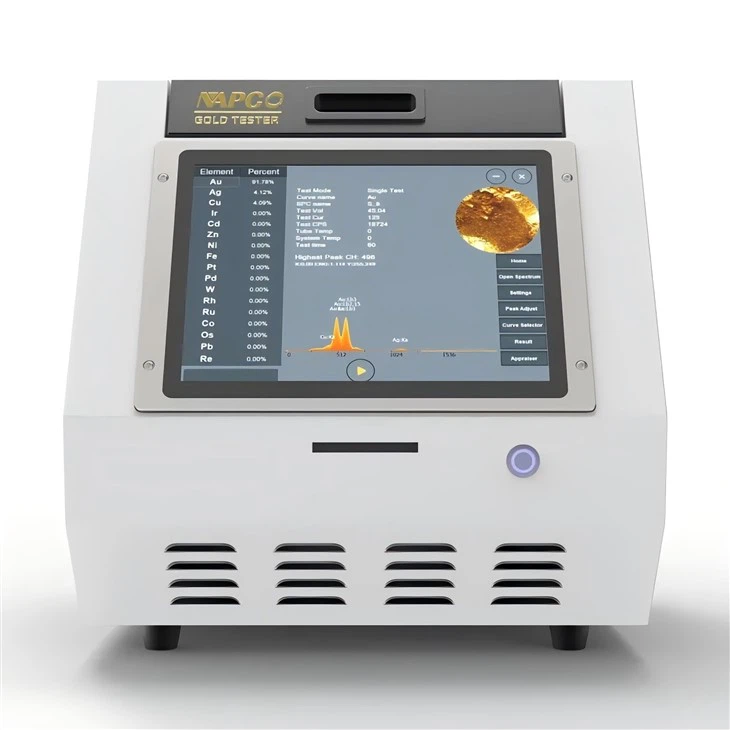
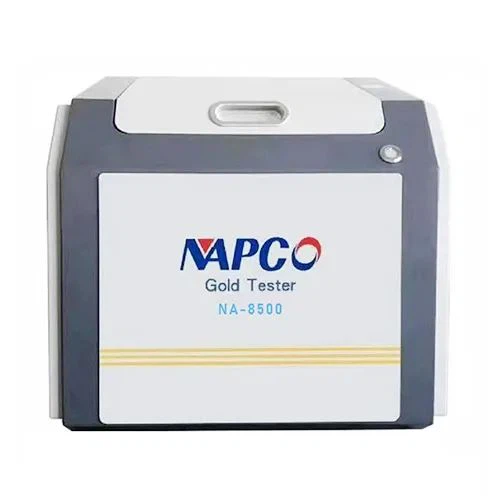
XRF (X-ray fluorescence) testing is a widely used method for analyzing the composition of gold, offering a non-destructive and relatively quick way to determine the purity of gold items. However, one significant challenge in XRF testing of gold is accounting for surface contamination. As a supplier of high-quality XRF gold testing equipment, including the NAP 8200E XRF Gold Tester, NA 6500 XRF Gold Tester, and NA 8500 XRF Gold Tester, we understand the importance of accurate results and the impact of surface contamination on XRF testing.
Understanding Surface Contamination on Gold
Surface contamination on gold can occur in various forms. It may include dirt, dust, oils, residues from handling, or even plating materials. For instance, gold jewelry might have been in contact with lotions, perfumes, or cleaning agents, leaving a thin layer of foreign substances on the surface. In industrial settings, gold components could be contaminated during manufacturing processes, such as soldering or polishing, which may introduce other metals or compounds.
These contaminants can significantly affect XRF test results. XRF testing works by emitting X-rays onto the sample, which then causes the atoms in the sample to emit characteristic fluorescent X-rays. The energy and intensity of these fluorescent X-rays are used to identify and quantify the elements present in the sample. However, if there are contaminants on the surface, the X-rays will interact with these foreign substances first, and the resulting fluorescent X-rays will include signals from both the contaminants and the underlying gold. This can lead to inaccurate readings of the gold's purity and composition.
Methods to Account for Surface Contamination
Pre - testing Cleaning
One of the most straightforward ways to account for surface contamination is to clean the gold sample before testing. Simple cleaning methods can be effective in removing loose dirt and some organic contaminants. For example, a mild detergent solution can be used to clean gold jewelry. The sample is gently soaked in the solution, then rinsed thoroughly with distilled water and dried with a soft, lint - free cloth.
For more stubborn contaminants, ultrasonic cleaning can be employed. Ultrasonic cleaners use high - frequency sound waves to create tiny bubbles in a cleaning solution. These bubbles collapse near the surface of the gold, dislodging contaminants. However, it is important to note that ultrasonic cleaning may not be suitable for all gold items, especially those with delicate settings or porous surfaces, as it could potentially damage the sample.
Multiple Testing Points
Another approach is to take multiple XRF measurements at different points on the gold sample. Surface contamination is often unevenly distributed. By testing multiple areas, we can get a more comprehensive view of the sample's composition. If there is significant variation in the results between different testing points, it may indicate the presence of surface contamination. The average of these measurements can provide a more accurate estimate of the gold's true composition, as long as the contamination is not uniformly present across the entire surface.
Depth Profiling
Some advanced XRF instruments, like our NAP 8200E XRF Gold Tester, are capable of depth profiling. This technique involves adjusting the X - ray penetration depth to analyze different layers of the sample. By starting with a shallow penetration depth to analyze the surface layer and gradually increasing the depth, we can distinguish between the contaminants on the surface and the underlying gold. This allows for a more accurate determination of the gold's purity and composition, as we can separate the signals from the surface contaminants and the bulk gold.
Impact of Equipment Quality on Accounting for Contamination
The quality of the XRF testing equipment plays a crucial role in accounting for surface contamination. High - quality instruments, such as our NA 6500 XRF Gold Tester and NA 8500 XRF Gold Tester, are equipped with advanced detectors and software algorithms that can better distinguish between the signals from contaminants and the gold.
These instruments have higher resolution detectors, which can more accurately measure the energy and intensity of the fluorescent X - rays. This allows for a more precise identification of elements, even in small concentrations. The software algorithms can analyze the data from the detectors and filter out some of the noise caused by surface contaminants. For example, they can recognize patterns in the X - ray spectra that are characteristic of common contaminants and subtract these signals from the overall spectrum to obtain a more accurate representation of the gold's composition.
Real - world Applications and Case Studies
In the jewelry industry, accurate XRF testing is essential for determining the value of gold pieces. A jewelry store that uses our XRF testing equipment can ensure that they are providing accurate information to their customers about the purity of the gold they are selling. For example, a customer brings in a gold necklace that appears to be of high purity. However, after pre - testing cleaning and multiple - point XRF testing, it is discovered that there is a thin layer of copper plating on the surface, which was not visible to the naked eye. By accounting for this surface contamination, the store can accurately assess the true purity of the gold and price the necklace accordingly.
In the electronics industry, gold is often used in connectors and circuit boards. Surface contamination on these components can affect their performance and reliability. Our XRF testing equipment can be used to ensure that the gold used in these applications is of the correct purity. For instance, a manufacturer of electronic devices can use our NA 8500 XRF Gold Tester to test the gold contacts on circuit boards. By accounting for surface contamination, they can avoid using components with inaccurate gold purity, which could lead to product failures and costly recalls.
Conclusion and Call to Action
Accounting for surface contamination is a critical aspect of XRF testing of gold. By using proper cleaning methods, taking multiple measurements, and leveraging the capabilities of advanced XRF equipment, accurate results can be achieved. As a leading supplier of XRF gold testing equipment, we are committed to providing high - quality instruments that can effectively account for surface contamination and deliver reliable results.
If you are in the jewelry industry, electronics manufacturing, or any other field that requires accurate gold testing, our range of XRF gold testers, including the NAP 8200E XRF Gold Tester, NA 6500 XRF Gold Tester, and NA 8500 XRF Gold Tester, can meet your needs. We invite you to contact us to discuss your specific requirements and how our products can help you achieve accurate and efficient gold testing.
References
- Jenkins, R. (1999). X - Ray Fluorescence Spectrometry. John Wiley & Sons.
- Bertin, E. P. (1975). Principles and Practice of X - Ray Spectrometric Analysis. Plenum Press.
- Marcus, P. (2006). Handbook of X - ray Photoelectron Spectroscopy. Physical Electronics.