




Hey there! I'm working as a supplier of gold XRF machines, and I've seen firsthand how sample preparation can make or break the results you get from these nifty devices. So, let's dive into how the way you prep your samples can impact the outcomes of a gold XRF machine.
First off, let's talk about what an XRF machine does. An XRF (X-ray fluorescence) machine is a super useful tool for analyzing the elemental composition of a sample, especially when it comes to precious metals like gold. It works by shooting X-rays at the sample, and then measuring the secondary X-rays that are emitted. Based on the energy and intensity of these secondary X-rays, the machine can figure out what elements are in the sample and how much of each there is.
Now, the quality of these results heavily depends on how well you prepare your sample. One of the most basic things is the surface condition of the sample. If the surface is dirty, scratched, or uneven, it can scatter the X-rays in unpredictable ways. For example, dirt or debris on the surface can absorb or deflect the X-rays, leading to inaccurate readings. Let's say you're testing a gold necklace that's been sitting in a jewelry box for ages and has accumulated dust. If you don't clean it properly before putting it in the NA 8500 XRF Gold Tester, the machine might detect elements from the dirt instead of just the gold, giving you a false reading of the gold's purity.
Another aspect is the size and shape of the sample. Most gold XRF machines are designed to work best with flat and relatively large samples. If you're testing a tiny gold nugget or a thin gold wire, the X-rays might not interact with the sample in the same way as they would with a larger, flat piece. The X-rays need to penetrate a certain depth into the sample to get an accurate reading of the elemental composition. A small or oddly shaped sample might not allow for proper penetration, leading to results that don't represent the true nature of the gold. For instance, if you're using the NAP 8200E XRF Gold Tester on a very thin gold leaf, the machine might only detect the surface layer, which could have different elemental properties than the bulk of the gold.
The homogeneity of the sample also plays a crucial role. Gold alloys are common, and they often have different elements mixed in with the gold. If the sample isn't homogeneous, meaning the elements are not evenly distributed throughout the sample, the XRF machine might give inconsistent results. Let's say you have a gold ring that was poorly made, and the alloy elements are clumped together in some areas. When you test different parts of the ring, the NA 6500 XRF Gold Tester might show different levels of gold purity depending on where the X-rays hit. This can be a real headache if you're trying to get an accurate assessment of the overall purity of the ring.
Sample thickness is yet another factor. If the sample is too thick, the X-rays might not be able to penetrate all the way through, and the machine will only detect the elements near the surface. On the other hand, if it's too thin, there might not be enough material for the X-rays to interact with, also leading to inaccurate results. For example, if you're testing a thick gold bar, you might need to take multiple readings from different depths or use a more powerful XRF machine to ensure you're getting a full picture of the gold's composition.
Now, let's talk about how different types of sample preparation can affect the results. One common method is grinding the sample to create a more uniform surface. Grinding can help remove any surface impurities and make the sample more homogeneous. However, it's important to do it right. If you grind too aggressively, you might introduce new elements from the grinding tool into the sample. For example, if you use a steel grinding wheel on a gold sample, some iron particles from the wheel might get embedded in the gold, and the XRF machine will detect this extra iron, skewing the results.
Polishing is another technique. A well - polished surface can improve the accuracy of the XRF analysis by providing a smooth and clean surface for the X-rays to interact with. But again, you need to be careful. If you use the wrong polishing compound, it could leave a residue on the sample that affects the XRF results.
In some cases, melting the sample can be an option. Melting can create a more homogeneous sample, as the elements are more evenly distributed in the molten state. However, this method has its own drawbacks. It can be time - consuming and requires special equipment. Also, during the melting process, some volatile elements might be lost, which can change the elemental composition of the sample.

So, as you can see, sample preparation is a critical step in getting accurate results from a gold XRF machine. If you're in the business of buying, selling, or testing gold, getting the sample preparation right can save you a lot of headaches and money.
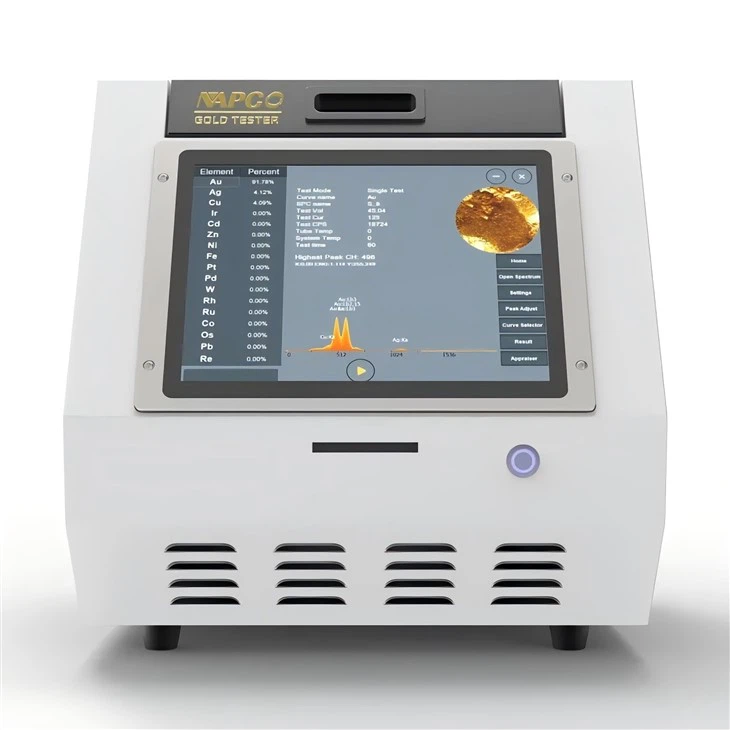
At our company, we understand the importance of accurate results, and that's why we offer high - quality gold XRF machines like the NA 8500 XRF Gold Tester, NAP 8200E XRF Gold Tester, and NA 6500 XRF Gold Tester. These machines are designed to be as accurate as possible, but they still rely on proper sample preparation.
If you're interested in purchasing a gold XRF machine or have any questions about sample preparation and how it affects the results, don't hesitate to reach out. We're here to help you make the most of your gold testing process.
References
- Smith, J. (2020). "Best Practices in XRF Sample Preparation for Precious Metals". Journal of Analytical Sciences.
- Johnson, A. (2019). "Impact of Sample Characteristics on XRF Analysis of Gold Alloys". Precious Metals Research Review.