


Hey there! As a supplier of XRF machines for gold, I've seen my fair share of gold samples with inclusions. In this blog, I'll walk you through how our XRF machines handle these tricky samples.
First off, let's talk about what inclusions are. Inclusions in gold samples are basically foreign materials that are trapped inside the gold. These can be anything from other metals like silver, copper, or platinum to non - metallic substances such as quartz or pyrite. They can have a big impact on the accuracy of gold testing because they can skew the results if not properly accounted for.
Our XRF machines, like the N1 XRF Gold Tester, the NA 6500 XRF Gold Tester, and the NA 8500 XRF Gold Tester, are equipped with advanced technology to deal with these inclusions.
One of the key features of our XRF machines is their ability to analyze multiple elements simultaneously. When a gold sample with inclusions is placed in the machine, it emits X - rays that interact with the atoms in the sample. Different elements in the sample, including the gold and the inclusions, will emit characteristic X - rays of their own. Our machines are designed to detect and measure these emitted X - rays, allowing us to identify and quantify the various elements present in the sample.
For example, if a gold sample has copper inclusions, the machine will be able to detect the characteristic X - rays emitted by copper atoms. By analyzing the intensity of these X - rays, the machine can calculate the percentage of copper in the sample. This is important because copper can affect the color and purity of the gold, and knowing its exact amount helps in getting an accurate assessment of the gold's value.
Another important aspect is the calibration of our XRF machines. We regularly calibrate our machines using certified reference materials that have known compositions. This ensures that the machine's readings are accurate and reliable, even when dealing with samples with inclusions. The calibration process takes into account the different types of inclusions that are commonly found in gold samples and adjusts the machine's algorithms accordingly.
When it comes to samples with large or unevenly distributed inclusions, our machines have a built - in mapping function. This function allows us to scan different areas of the sample and create a map of the element distribution. By analyzing this map, we can get a better understanding of how the inclusions are distributed within the gold and make more accurate measurements.
Let's say we have a gold nugget with some quartz inclusions. The mapping function will show us where the quartz is located within the nugget. If the quartz is concentrated in one area, we can take this into account when calculating the overall purity of the gold. We might need to take multiple readings from different parts of the nugget to get a more representative result.
Our XRF machines also have a high - resolution detector. This detector can pick up even the smallest traces of elements in the sample. So, even if there are very small inclusions in the gold, the machine will be able to detect them. This is crucial because even a tiny amount of an impurity can have a significant impact on the value of the gold.
In addition to the technical features, our team of experts is always on hand to provide support. If you're having trouble analyzing a particularly challenging gold sample with inclusions, you can reach out to us. We can help you interpret the results and offer advice on how to get the most accurate measurements.
We understand that dealing with gold samples with inclusions can be a headache for many of our customers. That's why we've designed our XRF machines to be as user - friendly as possible. The software that comes with our machines has an intuitive interface, making it easy for even non - technical users to operate the machine and analyze the results.

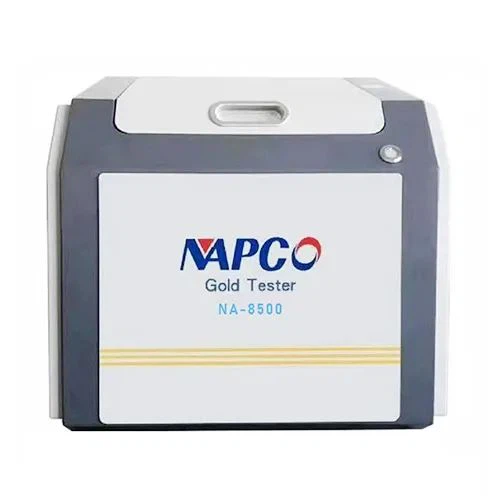
Now, let's talk about the benefits of using our XRF machines for testing gold samples with inclusions. Firstly, it saves time. Traditional methods of gold testing, such as chemical analysis, can be very time - consuming, especially when dealing with samples with inclusions. Our XRF machines can provide results in a matter of minutes, allowing you to make quick decisions about the value of the gold.
Secondly, it's non - destructive. You don't have to damage or destroy the gold sample to get an accurate analysis. This is particularly important for valuable or rare gold items. You can test the sample and still keep it intact.
Lastly, our XRF machines are cost - effective. In the long run, investing in our machines can save you money compared to outsourcing your gold testing or using other more expensive methods.
If you're in the business of buying, selling, or testing gold, and you often deal with samples with inclusions, our XRF machines are the way to go. Whether you're a jeweler, a gold dealer, or a precious metals refiner, our machines can help you get accurate and reliable results.
If you're interested in learning more about our XRF machines or want to discuss your specific needs, don't hesitate to get in touch with us. We're always happy to have a chat and see how we can help you improve your gold testing process.
References
- "X - Ray Fluorescence Spectrometry: Principles and Applications" by David A. Skoog, F. James Holler, and Stanley R. Crouch
- "Gold: Science and Applications" by G. Harbottle and H. W. Spero