


In the world of precious metals, accurately determining the purity and composition of gold is of utmost importance. Whether you're a jeweler, a pawnbroker, a gold dealer, or an investor, having reliable methods to test gold can save you from potential losses and ensure fair transactions. Traditional gold testing methods have been around for a long time, but in recent years, gold spectrometers have emerged as a powerful alternative. In this blog post, I'll compare gold spectrometers with traditional gold testing methods, highlighting the advantages and limitations of each, especially from the perspective of a gold spectrometer supplier.
Traditional Gold Testing Methods
Acid Testing
Acid testing is one of the oldest and most widely used methods for testing gold. It involves applying a small amount of nitric acid to a sample of gold. Pure gold (24 karats) will not react to nitric acid, while lower karat gold or gold alloys will show a reaction based on their composition. For example, 18-karat gold, which is 75% pure gold, will react differently compared to 14-karat gold, which is 58.3% pure.
One of the main advantages of acid testing is its low cost. The equipment required is relatively inexpensive, consisting mainly of nitric acid, testing stones, and a dropper. It's also a simple process that can be learned quickly. However, acid testing has several limitations. It is a destructive method, as the acid can damage the gold sample. It also provides only a rough estimate of the gold's purity and cannot accurately identify other elements present in the alloy. Additionally, the results can be subjective, as the reaction of the acid with the gold can vary depending on the quality of the acid and the skill of the tester.

Fire Assay
Fire assay is a more accurate and reliable traditional method for testing gold. It involves melting the gold sample with a flux in a crucible and then separating the gold from other metals through a series of chemical reactions. The resulting gold is then weighed to determine its purity.
Fire assay is considered the gold standard for gold testing, providing highly accurate results. It can detect trace amounts of other elements in the gold alloy and is suitable for testing large quantities of gold. However, fire assay is a complex and time-consuming process. It requires specialized equipment, such as furnaces and crucibles, and trained personnel to perform the tests. It is also a destructive method, as the gold sample is melted and cannot be recovered in its original form.
X-Ray Fluorescence (XRF) - Traditional Handheld XRF
Before the advent of advanced gold spectrometers, traditional handheld XRF devices were used for gold testing. These devices work by emitting X-rays onto the gold sample, which causes the atoms in the sample to emit fluorescent X-rays. The energy and intensity of these fluorescent X-rays are then measured to determine the elemental composition of the sample.
Traditional handheld XRF devices offer several advantages. They are non-destructive, meaning the gold sample remains intact after testing. They are also relatively fast, providing results within a few seconds to a few minutes. However, traditional handheld XRF devices have limitations. They may not be as accurate as fire assay, especially for samples with complex compositions. They also have a limited range of detectable elements and may not be able to accurately measure the purity of gold in certain alloys.
Gold Spectrometers
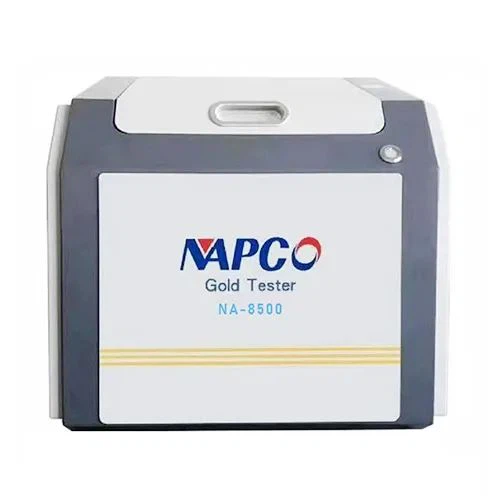
Gold spectrometers, such as the N1 XRF Gold Tester, NAP 8200E XRF Gold Tester, and NA 8500 XRF Gold Tester, are advanced XRF devices specifically designed for gold testing. They use state-of-the-art technology to provide highly accurate and detailed information about the composition of gold samples.
Advantages of Gold Spectrometers
- High Accuracy: Gold spectrometers can provide highly accurate results, often comparable to fire assay. They can accurately measure the purity of gold and detect trace amounts of other elements in the alloy. This makes them ideal for testing high-value gold items and ensuring fair transactions.
- Non-Destructive Testing: Unlike acid testing and fire assay, gold spectrometers are non-destructive. They do not damage the gold sample during testing, allowing it to be used or sold after the test. This is particularly important for valuable jewelry and rare gold items.
- Fast Results: Gold spectrometers can provide results within a few seconds to a few minutes, depending on the model and the complexity of the sample. This allows for quick decision-making in business transactions and reduces downtime.
- Wide Range of Detectable Elements: Gold spectrometers can detect a wide range of elements, including gold, silver, platinum, palladium, copper, and zinc. This makes them suitable for testing different types of gold alloys and can provide detailed information about the composition of the sample.
- User-Friendly Interface: Most gold spectrometers come with a user-friendly interface that is easy to operate. They often include features such as touchscreens, pre-programmed testing modes, and data storage capabilities, making them accessible to both experienced professionals and beginners.
Limitations of Gold Spectrometers
- Higher Cost: Gold spectrometers are generally more expensive than traditional gold testing methods, such as acid testing. However, when considering the accuracy, speed, and non-destructive nature of the tests, the investment can be justified, especially for businesses that regularly test large quantities of gold.
- Sample Size and Shape Limitations: Some gold spectrometers may have limitations on the size and shape of the samples they can test. For example, very large or irregularly shaped samples may not fit properly in the testing chamber, which can affect the accuracy of the results.
Comparison Table
| Testing Method | Accuracy | Destructive | Speed | Cost | Detectable Elements |
|---|---|---|---|---|---|
| Acid Testing | Low - Medium | Yes | Fast | Low | Limited |
| Fire Assay | High | Yes | Slow | High | Wide |
| Traditional Handheld XRF | Medium | No | Fast | Medium | Limited |
| Gold Spectrometers | High | No | Fast | High | Wide |
Conclusion
In conclusion, gold spectrometers offer several advantages over traditional gold testing methods. They provide high accuracy, non-destructive testing, fast results, and a wide range of detectable elements. While they may have a higher upfront cost, the benefits they offer make them a valuable investment for businesses and individuals involved in the gold industry.
If you're in the market for a reliable and accurate gold testing solution, I encourage you to consider our gold spectrometers, such as the N1 XRF Gold Tester, NAP 8200E XRF Gold Tester, and NA 8500 XRF Gold Tester. Our team of experts is available to answer any questions you may have and assist you in choosing the right spectrometer for your needs. Contact us today to start a discussion about your gold testing requirements and explore how our products can benefit your business.
References
- "Precious Metals Testing Methods," Journal of Gemmology.
- "Advances in X-Ray Fluorescence Spectroscopy for Gold Analysis," Analytical Chemistry.
- "A Comparison of Traditional and Modern Gold Testing Techniques," International Journal of Precious Metals Research.