


Hey there, folks! If you're in the gold business, you know how crucial it is to accurately test the purity of gold. There are different methods out there, but today I'm gonna talk about two popular ones: using a benchtop gold tester and acid testing. As a supplier of benchtop gold testers, I've seen firsthand how these two methods stack up against each other.
Let's start with acid testing. It's an old - school method that's been around for ages. You basically take a small sample of the gold item, usually by making a tiny scratch on an inconspicuous part. Then, you apply different acids to the scratch. Each acid is formulated to react with gold of a specific purity. If the gold dissolves in a certain acid, it gives you an idea of its purity level.
One of the biggest advantages of acid testing is its low cost. You don't need a fancy piece of equipment. All you need is a set of acids, a testing stone, and a little bit of know - how. It's also relatively simple to do. If you've been in the gold business for a while, you can probably do acid testing in your sleep.
However, acid testing has its drawbacks. First of all, it's destructive. You're actually scratching the gold item, which can devalue it, especially if it's a high - end piece. And the accuracy isn't always spot - on. The reaction of the acid can be affected by a lot of factors, like the presence of other metals in the alloy. Sometimes, it can be hard to tell the exact purity just by looking at the reaction.
Now, let's talk about benchtop gold testers. These are modern, high - tech devices that use advanced technology to determine the purity of gold. For example, our NA 8500 XRF Gold Tester, NAP 8200E XRF Gold Tester, and N1 XRF Gold Tester use X - ray fluorescence (XRF) technology.
XRF technology works by emitting X - rays onto the gold sample. The gold atoms then emit secondary X - rays with specific energies that are characteristic of the element. By analyzing these secondary X - rays, the tester can accurately determine the composition and purity of the gold.
One of the main advantages of benchtop gold testers is their non - destructiveness. You don't have to scratch or damage the gold item at all. You just place it on the testing platform, and in a matter of seconds, you get an accurate reading of its purity. This is a huge plus, especially when dealing with valuable or antique gold pieces.
Accuracy is another major benefit. Benchtop gold testers can provide highly precise results. They can detect even small amounts of other metals in the gold alloy, giving you a detailed breakdown of the composition. This is really important in the gold business, where even a small difference in purity can mean a big difference in value.
Benchtop gold testers are also very fast. You don't have to wait for an acid reaction to occur. In just a few seconds, you can get a result. This saves a lot of time, especially if you have a large number of items to test.
But, of course, benchtop gold testers aren't without their downsides. The initial cost is higher compared to acid testing. You're investing in a piece of high - tech equipment, which can be a significant expense for some businesses. And you also need to have some basic technical knowledge to operate the tester properly. There's a bit of a learning curve involved.
When it comes to ease of use, acid testing might seem simpler at first glance. But once you get the hang of using a benchtop gold tester, it's actually pretty straightforward. Most of our testers come with user - friendly interfaces and detailed instructions.
In terms of safety, acid testing involves handling dangerous chemicals. Acids can cause burns and other injuries if not handled properly. On the other hand, benchtop gold testers are generally safe to use. As long as you follow the safety guidelines, there's very little risk involved.
Let's talk about the long - term cost. While the initial investment in a benchtop gold tester is high, in the long run, it can save you money. You don't have to keep buying acids and testing stones. And because of its high accuracy, you're less likely to make costly mistakes in determining the purity of gold.
If you're a small - scale gold dealer who mainly deals with low - value items, acid testing might be a good option for you. It's cost - effective and simple. But if you're a large - scale gold refiner, a jeweler who deals with high - end pieces, or someone who values accuracy and non - destructiveness, a benchtop gold tester is definitely the way to go.
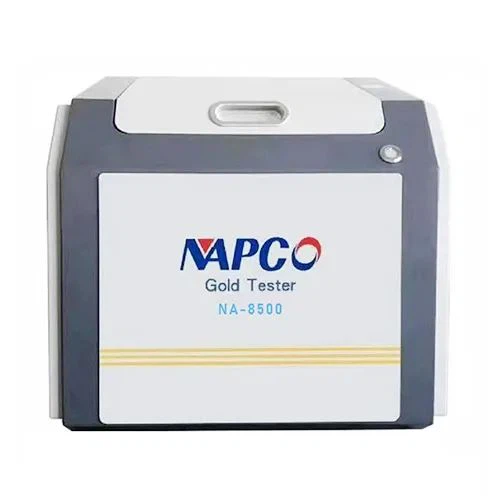

Our benchtop gold testers are designed to meet the needs of different customers. Whether you're just starting out in the gold business or you're an established player, we have a tester that's right for you. The NA 8500 XRF Gold Tester is a high - end model that offers the highest level of accuracy and advanced features. The NAP 8200E XRF Gold Tester is a more budget - friendly option without compromising too much on performance. And the N1 XRF Gold Tester is a compact and portable model, perfect for on - the - go testing.
If you're interested in learning more about our benchtop gold testers or are thinking about making a purchase, don't hesitate to reach out. We're here to answer all your questions and help you find the best solution for your gold testing needs. Whether you're in the market for a new tester or just want to compare different options, we can assist you every step of the way.
In conclusion, both acid testing and benchtop gold testers have their pros and cons. But in today's modern gold business, where accuracy, non - destructiveness, and speed are key, benchtop gold testers offer a lot more advantages.
References
- General knowledge in the gold testing industry
- Product manuals of NA 8500 XRF Gold Tester, NAP 8200E XRF Gold Tester, and N1 XRF Gold Tester