


As a supplier of gold testers, I often encounter inquiries about how our gold testers handle damaged gold items during the testing process. This is a crucial topic, especially for jewelers, pawnbrokers, and gold enthusiasts who frequently deal with a variety of gold pieces in different conditions. In this blog, I will delve into the methods and technologies our gold testers employ to accurately assess damaged gold items.
Understanding the Challenges of Testing Damaged Gold
Damaged gold items present unique challenges during the testing process. Scratches, dents, and other forms of physical damage can affect the surface integrity of the gold, potentially leading to inaccurate readings. Additionally, if the damage has exposed underlying metals or alloys, the composition of the exposed area may differ from the rest of the gold item, further complicating the testing process.
For instance, a scratched gold ring may have a layer of base metal exposed at the scratch site. If the tester only analyzes this exposed area, it may provide a false reading of the overall gold purity. Therefore, it is essential to use gold testers that can account for these variations and provide accurate results.
Our Range of Gold Testers
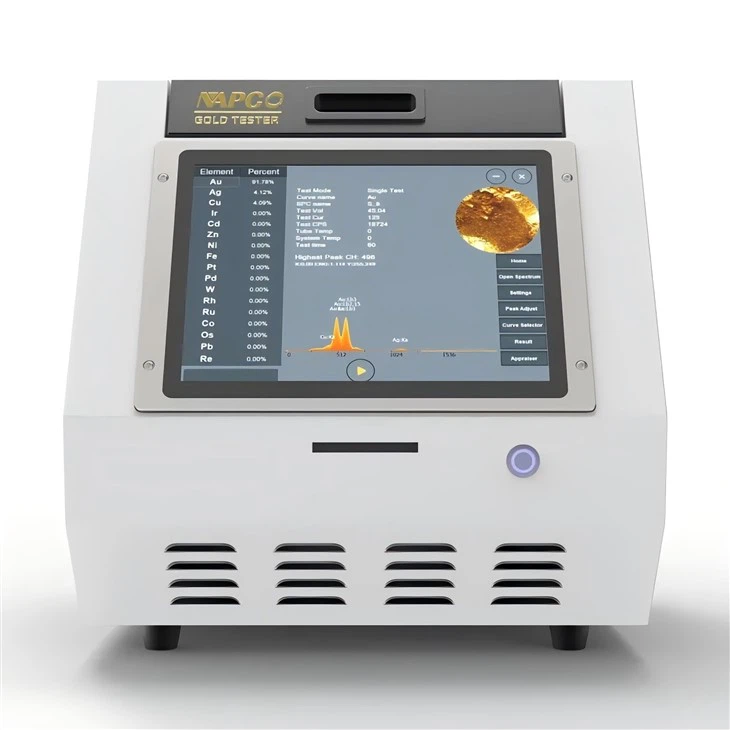
We offer a diverse range of gold testers, each designed to meet specific testing needs. Among our popular models are the NAP 8200E XRF Gold Tester, N1-10 XRF Gold Tester, and N1-25 XRF Gold Tester. These testers utilize advanced X-ray fluorescence (XRF) technology, which is non-destructive and can accurately determine the elemental composition of gold items, even those with damage.
How XRF Technology Works
XRF technology is based on the principle that when a sample is exposed to X-rays, the atoms in the sample emit secondary X-rays, known as fluorescent X-rays. The energy and intensity of these fluorescent X-rays are characteristic of the elements present in the sample. By analyzing these X-rays, the gold tester can identify the elements and their concentrations in the sample.
In the case of damaged gold items, XRF technology can penetrate the surface layer and analyze the underlying gold composition. This is particularly useful when the damage has exposed other metals or alloys. The tester can distinguish between the gold and the other elements, providing an accurate reading of the gold purity.
Handling Damaged Gold Items with XRF Gold Testers
When testing damaged gold items, our XRF gold testers follow a systematic approach to ensure accurate results. Here are the steps involved:
1. Surface Preparation
Before testing, it is important to clean the damaged gold item to remove any dirt, debris, or contaminants that may affect the test results. This can be done using a mild detergent and a soft brush. Once the item is clean, it should be dried thoroughly.
2. Multiple Point Testing
To account for variations in the gold composition due to damage, our XRF gold testers perform multiple point tests on the item. This involves analyzing different areas of the item, including both the damaged and undamaged areas. By taking multiple readings, the tester can obtain a more comprehensive understanding of the overall gold purity.
For example, if a gold necklace has a scratch on one side, the tester will analyze the area around the scratch as well as other areas of the necklace. This helps to ensure that the test results are representative of the entire item.
3. Data Analysis
After obtaining multiple readings, the gold tester analyzes the data to determine the average gold purity of the item. It takes into account the variations in the readings and provides a final result that is as accurate as possible.
Our XRF gold testers are equipped with advanced software that can perform complex data analysis and provide detailed reports. These reports include information such as the gold purity, the presence of other elements, and the confidence level of the results.
4. Calibration and Quality Control
To ensure the accuracy and reliability of the test results, our XRF gold testers are regularly calibrated using certified reference materials. This helps to maintain the precision of the tester and ensures that the results are consistent over time.
In addition, we have a strict quality control process in place to verify the accuracy of the test results. This involves comparing the results obtained from our testers with those obtained from independent laboratories. If any discrepancies are found, the tester is recalibrated or adjusted to ensure accurate results.
Benefits of Using Our XRF Gold Testers for Damaged Gold Items
There are several benefits of using our XRF gold testers for testing damaged gold items:
1. Non-Destructive Testing
Our XRF gold testers are non-destructive, which means they do not damage the gold item during the testing process. This is particularly important for valuable or antique gold items that may be damaged further by traditional testing methods.
2. Accurate Results
By using advanced XRF technology and performing multiple point tests, our gold testers can provide accurate results even for damaged gold items. This helps to ensure that the true value of the gold item is determined.
3. Fast and Efficient Testing
Our XRF gold testers can provide test results in a matter of seconds, making them a fast and efficient solution for testing damaged gold items. This is particularly useful for businesses that need to test a large number of items quickly.
4. Comprehensive Reporting
Our gold testers provide detailed reports that include information such as the gold purity, the presence of other elements, and the confidence level of the results. This helps to provide a clear and transparent understanding of the test results.

Conclusion
Testing damaged gold items can be a challenging task, but with our advanced XRF gold testers, it is possible to obtain accurate and reliable results. Our testers are designed to handle the unique challenges presented by damaged gold items, including variations in the gold composition and surface integrity. By using multiple point testing and advanced data analysis, our testers can provide a comprehensive understanding of the gold purity, even in the presence of damage.
If you are in the market for a gold tester that can handle damaged gold items, we invite you to explore our range of products. Our team of experts is available to provide you with more information and assist you in choosing the right tester for your needs. Contact us today to start the procurement discussion and take your gold testing capabilities to the next level.
References
- Handbook of X-ray Fluorescence Spectrometry, Second Edition by Ronald Jenkins
- X-ray Fluorescence Spectrometry: Principles and Applications by K. Tsuji