


Yo, what's up everyone! I'm a supplier of gold testing machines, and today I wanna talk about how accurate handheld gold testing machines really are.
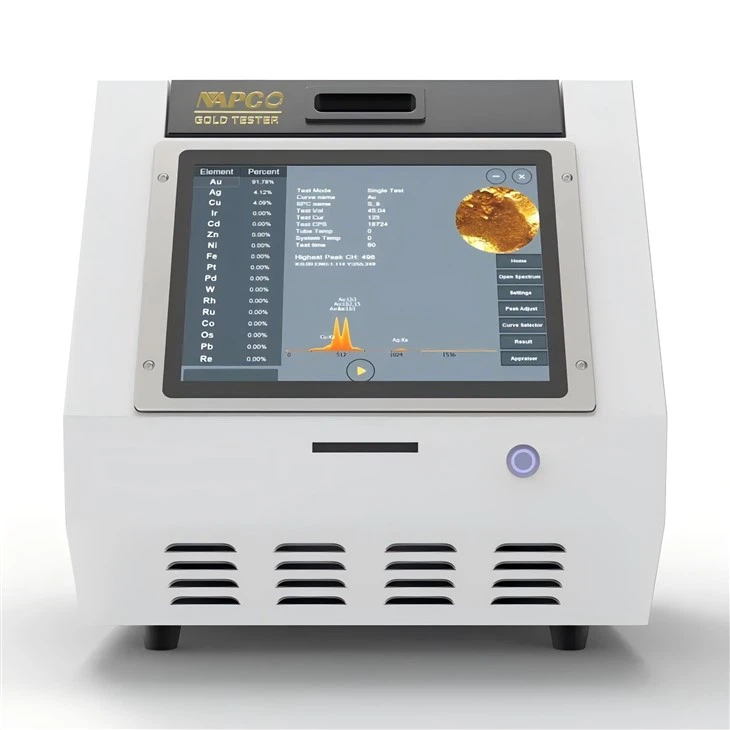

First off, let's get into why accuracy matters when it comes to gold testing. Whether you're a jeweler, a pawnbroker, or just someone who wants to make sure they're getting a fair deal on gold, having an accurate reading is crucial. If the machine gives you a false reading, you could end up overpaying for gold that's not as pure as it claims to be, or selling your own gold for less than it's worth. So, accuracy is like the name of the game here.
Now, let's take a look at how these handheld gold testing machines work. Most of them use a technology called X-ray fluorescence (XRF). This tech shoots X-rays at the gold sample, and then measures the energy of the X-rays that are emitted back. Different elements in the gold, like copper, silver, or platinum, will emit X-rays with different energies. By analyzing these energies, the machine can figure out what elements are in the gold and in what amounts. This way, it can tell you the purity of the gold, usually in karats.
But here's the thing: no testing method is 100% accurate. Handheld gold testing machines are pretty good, but they do have some limitations. One of the main factors that can affect their accuracy is the surface condition of the gold sample. If the surface is dirty, scratched, or has a coating on it, the X-rays might not penetrate the sample properly. This can lead to inaccurate readings. For example, if there's a thin layer of dirt on the gold, the machine might think that the dirt is part of the gold and give a wrong purity reading.
Another factor is the thickness of the gold. If the gold is very thin, like in a gold-plated item, the machine might not be able to accurately measure the purity of the actual gold layer. It could end up giving a reading that includes the base metal under the gold plating, which would be misleading.
The composition of the gold alloy also plays a role. Some gold alloys have complex mixtures of different elements, and it can be a bit tricky for the machine to accurately distinguish between all of them. For instance, if there are trace amounts of rare elements in the alloy, the machine might not be able to detect them correctly, which can affect the overall purity reading.
However, despite these limitations, modern handheld gold testing machines are getting better and better. Many of them are calibrated to be as accurate as possible within a certain range. For example, our N1 - 25 XRF Gold Tester is designed to give highly accurate readings for a wide variety of gold samples. It has advanced software that can compensate for some of the factors that could affect accuracy, like surface conditions and alloy complexity.
Our N1 - 10 XRF Gold Tester is also a great option. It's more portable and user - friendly, making it perfect for on - the - go testing. It uses the latest XRF technology to provide reliable purity readings. And the NAP 8200E XRF Gold Tester is another top - notch machine. It has a high - resolution detector that can pick up even the smallest differences in the X - ray energies, which means more accurate readings.
To get the most accurate results from a handheld gold testing machine, there are some best practices you can follow. First, make sure to clean the surface of the gold sample before testing. You can use a mild detergent and a soft cloth to gently clean the surface. This will remove any dirt or debris that could interfere with the X - ray analysis.
Second, if possible, test multiple spots on the gold sample. Different parts of the gold might have slightly different compositions, especially if it's an alloy. By testing multiple spots, you can get a more comprehensive view of the overall purity of the gold.
Also, it's a good idea to compare the results from the handheld machine with other testing methods, like acid testing or fire assay. Acid testing involves using different acids to react with the gold and see how it behaves. Fire assay is a more traditional and accurate method, but it's also more time - consuming and destructive. By comparing the results from different methods, you can be more confident in the purity of the gold.
In the gold - testing industry, handheld gold testing machines have become really popular because of their convenience. You can take them to different locations, like a jewelry store or a pawnshop, and test gold samples right on the spot. They're also much faster than traditional testing methods. Instead of waiting days for the results of a fire assay, you can get a reading from a handheld machine in just a few seconds.
So, how accurate are handheld gold testing machines? Well, they're pretty accurate, especially when used correctly. They can give you a good estimate of the purity of the gold, but you should always keep in mind their limitations. If you're in the market for a reliable handheld gold testing machine, we've got some great options for you. Our machines are designed to be as accurate as possible, and we're constantly working on improving them.
If you're interested in learning more about our gold testing machines or want to discuss your specific testing needs, don't hesitate to reach out. We're here to help you make the right choice for your business. Whether you're a small - scale jeweler or a large - scale gold dealer, we've got a machine that can meet your requirements.
References
- "Gold Testing: Methods and Accuracy" - Journal of Precious Metals Testing
- "X - Ray Fluorescence Technology in Gold Analysis" - International Journal of Analytical Chemistry