




As a leading supplier of XRF gold testing equipment, I often receive inquiries about the applicability of XRF testing in various scenarios. One question that has come up frequently is whether XRF testing can be used on gold - containing glass. In this blog, we'll explore this topic in depth, considering the principles of XRF testing, the characteristics of gold - containing glass, and the potential applications and limitations of using XRF for this type of material.
Understanding XRF Testing
XRF, or X - ray fluorescence, is a non - destructive analytical technique used to determine the elemental composition of a sample. It works by irradiating the sample with high - energy X - rays. When these X - rays interact with the atoms in the sample, they cause the ejection of inner - shell electrons. As outer - shell electrons fill the resulting vacancies, characteristic X - rays are emitted. The energy and intensity of these emitted X - rays are unique to each element, allowing the identification and quantification of the elements present in the sample.

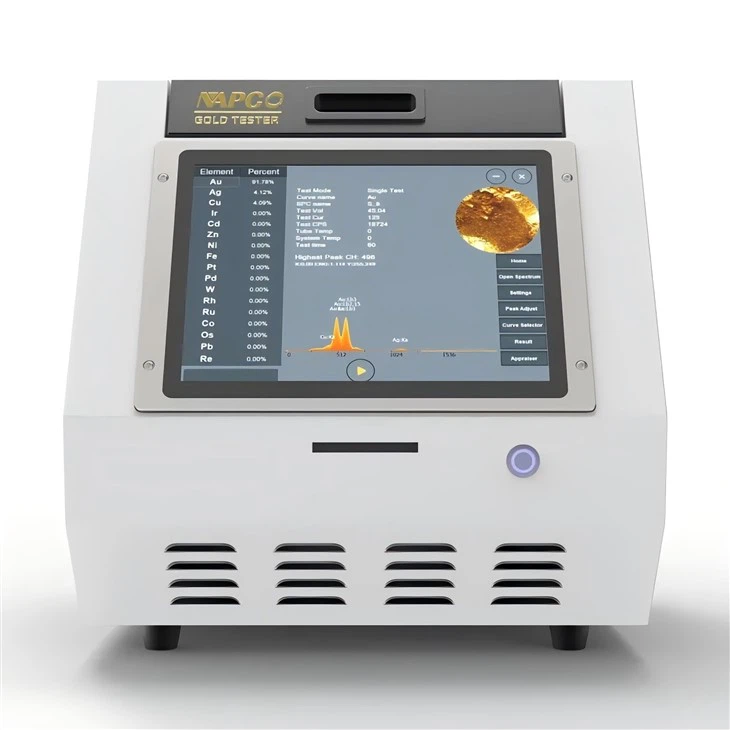
XRF testing is widely used in many industries, including jewelry, automotive, and electronics. In the context of gold testing, it provides a quick and relatively accurate way to determine the purity and composition of gold alloys. Our company offers a range of high - quality XRF gold testers, such as the N1 - 25 XRF Gold Tester, N1 - 10 XRF Gold Tester, and NAP 8200E XRF Gold Tester, which are designed to provide precise and reliable results for gold and other precious metals.
Gold - Containing Glass
Gold - containing glass is a unique material that has been used for decorative and artistic purposes for centuries. The gold in the glass can be present in different forms, such as colloidal gold particles or gold ions. Colloidal gold in glass can impart a beautiful red color, while the presence of gold ions can also affect the optical and physical properties of the glass.
The production process of gold - containing glass involves heating a mixture of glass - forming materials with a small amount of gold compound. The gold is then dispersed throughout the glass matrix during the melting and cooling process. Due to the complex structure and composition of gold - containing glass, it presents some challenges for XRF testing.
Can XRF Testing Be Used on Gold - Containing Glass?
The answer is yes, XRF testing can be used on gold - containing glass, but with certain considerations.
Advantages
- Non - destructive: One of the main advantages of using XRF for gold - containing glass is that it is a non - destructive technique. This means that the glass sample can be analyzed without being damaged, which is particularly important for valuable or historical glass artifacts.
- Elemental identification: XRF can accurately identify the presence of gold in the glass and provide information about its concentration. It can also detect other elements that may be present in the glass, such as other metals or impurities, which can be useful for understanding the composition and origin of the glass.
- Quick analysis: XRF testing typically provides results in a matter of seconds to minutes, allowing for rapid assessment of the gold content in the glass.
Limitations
- Surface analysis: XRF is a surface - sensitive technique. It mainly analyzes the elemental composition of the outer layer (usually a few micrometers deep) of the sample. In the case of gold - containing glass, if the gold is unevenly distributed within the glass matrix, the surface analysis may not accurately represent the overall gold content in the entire piece of glass.
- Interference: The glass matrix itself can contain various elements that may interfere with the XRF analysis of gold. For example, elements such as silicon, sodium, and calcium, which are common components of glass, can produce X - rays that may overlap with the characteristic X - rays of gold, making it more challenging to accurately measure the gold content.
- Calibration: Accurate quantification of gold in glass requires proper calibration. Since the matrix of gold - containing glass is different from that of gold alloys, special calibration standards need to be used to account for the effects of the glass matrix on the XRF signal.
Applications of XRF Testing on Gold - Containing Glass
- Art and antiques: In the field of art and antiques, XRF testing can be used to authenticate and analyze gold - containing glass objects. It can help determine the presence and amount of gold, as well as identify any other elements that may indicate the origin or manufacturing process of the glass.
- Glass manufacturing: XRF testing can also be useful in the glass manufacturing industry. It can be used to monitor the quality control of gold - containing glass production, ensuring that the gold content meets the desired specifications.
Tips for XRF Testing on Gold - Containing Glass
- Sample preparation: To improve the accuracy of the analysis, it is important to prepare the glass sample properly. This may involve cleaning the surface of the glass to remove any contaminants that could affect the XRF signal.
- Multiple measurements: Taking multiple measurements at different locations on the glass sample can help account for any inhomogeneities in the gold distribution. The average of these measurements can provide a more representative value of the gold content in the glass.
- Use of appropriate calibration standards: As mentioned earlier, using calibration standards that are similar in matrix to the gold - containing glass is crucial for accurate quantification.
In conclusion, while XRF testing can be used on gold - containing glass, it is important to be aware of its limitations and take appropriate measures to ensure accurate results. Our company, with our advanced XRF gold testers like N1 - 25 XRF Gold Tester, N1 - 10 XRF Gold Tester, and NAP 8200E XRF Gold Tester, is committed to providing reliable solutions for gold testing in various materials, including gold - containing glass.
If you are interested in learning more about our XRF gold testing equipment or have specific requirements for testing gold - containing glass, please feel free to contact us for further discussion and potential procurement. Our team of experts is ready to assist you in finding the most suitable solution for your needs.
References
- Jenkins, R., Gouadec, G., & Creff, G. (2017). X - ray Fluorescence Spectrometry. John Wiley & Sons.
- Varshal, L. (2015). Analytical Techniques for Archaeological Glass. Springer.