


Hey there! As a supplier of XRF testing equipment for gold, I often get asked if XRF testing can be used for quality control in gold manufacturing. Well, let me tell you, it's a game-changer in the industry, and I'm here to break it down for you.
First off, what the heck is XRF testing? XRF stands for X-ray fluorescence. It's a non-destructive analytical technique that determines the elemental composition of a sample. When it comes to gold manufacturing, this means we can quickly and accurately figure out the purity of gold and detect any other elements that might be mixed in.
In gold manufacturing, quality control is super important. You've got to make sure that the gold you're using and producing meets the right standards. Whether it's for jewelry, investment bars, or industrial applications, customers expect a certain level of purity and quality. That's where XRF testing steps in.
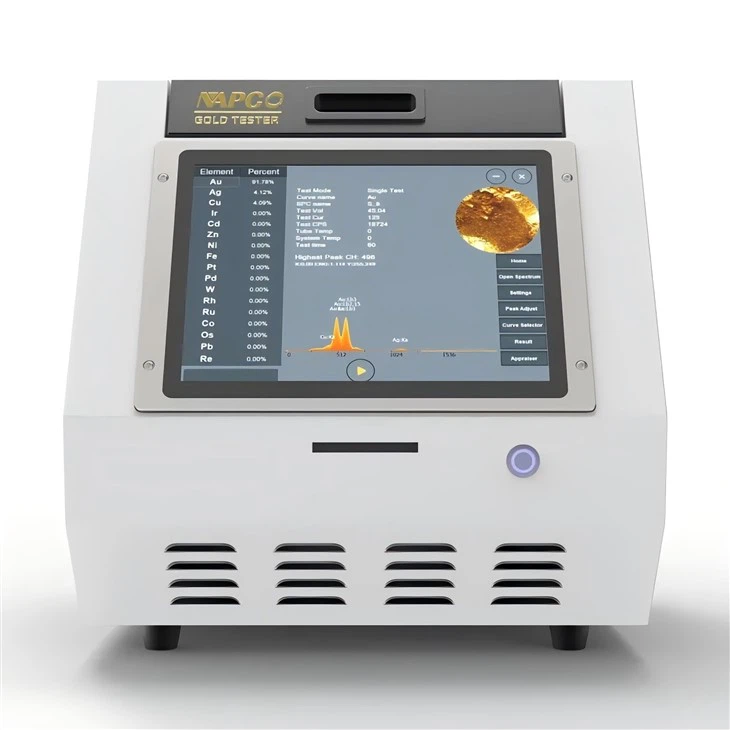
One of the biggest advantages of using XRF testing for quality control is its speed. With traditional methods, like acid testing or fire assay, you're looking at a time-consuming process. Acid testing can be messy and might damage the sample, and fire assay takes a long time to complete. But with an XRF gold tester, you can get results in just a few seconds to a couple of minutes. For example, our N1-25 XRF Gold Tester is designed to provide rapid and accurate results, allowing you to keep the production line moving without any major delays.
Accuracy is another key factor. XRF technology has come a long way, and modern XRF gold testers can provide highly accurate results. They can detect even trace amounts of other elements in the gold, such as silver, copper, zinc, and nickel. This is crucial because even small amounts of impurities can affect the quality and value of the gold. Our NAP 8200E XRF Gold Tester is calibrated to provide precise measurements, ensuring that you can trust the results for your quality control processes.
Non-destructive testing is a huge plus. In gold manufacturing, you don't want to damage the products you're testing. With XRF testing, you can analyze the gold without leaving any marks or altering its structure. This is especially important for high-value items like fine jewelry or investment-grade gold bars. You can test the products at various stages of the manufacturing process, from raw materials to finished goods, without any risk of ruining them. Our N1-10 XRF Gold Tester is a great option for non-destructive testing, making it suitable for a wide range of applications in the gold industry.
Let's talk about how XRF testing fits into the different stages of gold manufacturing. When you're sourcing raw materials, you need to know the purity of the gold you're buying. An XRF gold tester can quickly verify the quality of the incoming gold, helping you avoid purchasing low-quality or impure materials. This saves you money in the long run by preventing issues further down the production line.
During the manufacturing process, XRF testing can be used to monitor the quality at each step. For example, when melting and alloying the gold, you can use an XRF tester to ensure that the correct proportions of different metals are being added. This helps maintain the desired purity and properties of the final product.
Once the gold products are finished, XRF testing can be used as a final quality check. You can verify that the products meet the required purity standards and that there are no unexpected impurities. This gives you confidence in the quality of your products and helps you build a good reputation with your customers.
But like any technology, XRF testing does have its limitations. It's important to understand these so that you can use the technology effectively. One limitation is that XRF testing is a surface analysis technique. It mainly analyzes the elements on the surface of the sample. If there are impurities or variations in the composition below the surface, XRF testing might not detect them accurately. However, in most cases, this isn't a major issue, especially for thin-walled or homogeneous gold products.

Another limitation is that XRF testing might not be able to distinguish between some elements that have similar atomic structures. For example, it can be challenging to accurately differentiate between certain platinum group metals. But with proper calibration and advanced algorithms, these issues can be minimized.
Despite these limitations, the benefits of using XRF testing for quality control in gold manufacturing far outweigh the drawbacks. It's a reliable, efficient, and cost-effective way to ensure the quality of your gold products.
If you're in the gold manufacturing business and you're looking for a way to improve your quality control processes, I highly recommend considering XRF testing. Our range of XRF gold testers, including the N1-25 XRF Gold Tester, NAP 8200E XRF Gold Tester, and N1-10 XRF Gold Tester, are designed to meet the needs of different customers and applications.
We're here to help you find the right XRF testing solution for your business. Whether you're a small jewelry maker or a large-scale gold manufacturer, we can provide you with the equipment and support you need. If you're interested in learning more about our XRF gold testers or have any questions about using XRF testing for quality control, don't hesitate to reach out. Let's have a chat and see how we can work together to improve the quality of your gold products.
References
- "X-ray Fluorescence Spectroscopy: Principles and Applications" by Frank Adams
- "Gold Refining: Principles and Practice" by John Marsden and Iain House