


In the world of precious metals, ensuring the purity and quality of gold is of utmost importance. Whether you're a jeweler, a gold trader, or an investor, having accurate information about the composition of gold is crucial for making informed decisions. One of the most popular and efficient methods for testing gold is X-ray Fluorescence (XRF) testing. As a leading XRF test gold supplier, I often get asked the question: "Can XRF test detect impurities in gold?" In this blog post, I'll delve into the science behind XRF testing and explore its ability to identify impurities in gold.
How XRF Testing Works
XRF testing is a non-destructive analytical technique that uses X-rays to determine the elemental composition of a sample. When an X-ray beam is directed at a sample, it causes the atoms in the sample to emit secondary X-rays, known as fluorescent X-rays. These fluorescent X-rays have unique energies that are characteristic of the elements present in the sample. By measuring the energies and intensities of these fluorescent X-rays, an XRF analyzer can identify and quantify the elements in the sample.
In the context of gold testing, an XRF analyzer can detect a wide range of elements commonly found in gold alloys, including silver, copper, zinc, nickel, and platinum. These elements are often added to pure gold to increase its hardness, durability, and color. However, they can also affect the value and quality of the gold. By accurately measuring the concentrations of these elements, an XRF analyzer can determine the purity of the gold and identify any impurities.
Detecting Impurities in Gold with XRF Testing
One of the key advantages of XRF testing is its ability to detect impurities in gold quickly and accurately. XRF analyzers can detect trace amounts of elements, even at concentrations as low as parts per million (ppm). This makes them ideal for identifying impurities that may not be visible to the naked eye or detectable by other testing methods.
For example, let's say you're a jeweler who has purchased a batch of gold jewelry. You suspect that some of the pieces may contain impurities, such as nickel or lead, which can cause allergic reactions in some people. By using an XRF analyzer, you can quickly and easily test the jewelry to determine if it contains these impurities. If the XRF analyzer detects the presence of nickel or lead above a certain threshold, you can take appropriate action, such as returning the pieces to the supplier or notifying your customers.
Another example is in the gold refining industry. Gold refiners use XRF analyzers to test the purity of gold bullion and scrap before refining it. By accurately measuring the concentrations of impurities, such as copper and silver, the refiner can determine the appropriate refining process and ensure that the final product meets the desired purity standards.
Limitations of XRF Testing
While XRF testing is a powerful tool for detecting impurities in gold, it does have some limitations. One of the main limitations is that XRF analyzers can only detect elements on the surface of the sample. If the impurities are located deep within the sample, they may not be detected by the XRF analyzer. This is known as the "surface effect."
To overcome this limitation, some XRF analyzers are equipped with advanced features, such as multiple X-ray beams or depth profiling capabilities. These features allow the analyzer to penetrate deeper into the sample and detect impurities that may be hidden beneath the surface. However, these advanced features can also increase the cost and complexity of the analyzer.
Another limitation of XRF testing is that it can only provide a qualitative or semi-quantitative analysis of the sample. While an XRF analyzer can accurately identify the elements present in the sample and provide an estimate of their concentrations, it cannot provide a precise measurement of the purity of the gold. This is because the XRF analysis is based on the assumption that the sample is homogeneous, which may not always be the case.
To obtain a more accurate measurement of the purity of the gold, other testing methods, such as fire assay or inductively coupled plasma mass spectrometry (ICP-MS), may be required. These methods are more time-consuming and expensive than XRF testing, but they can provide a higher level of accuracy and precision.
Choosing the Right XRF Analyzer for Gold Testing
If you're in the market for an XRF analyzer for gold testing, there are several factors to consider. One of the most important factors is the type of analyzer you need. There are two main types of XRF analyzers: handheld and benchtop.
Handheld XRF analyzers are portable and easy to use, making them ideal for on-site testing and field applications. They are also relatively inexpensive compared to benchtop analyzers. However, handheld XRF analyzers typically have lower sensitivity and accuracy than benchtop analyzers, and they may not be suitable for testing large or thick samples.

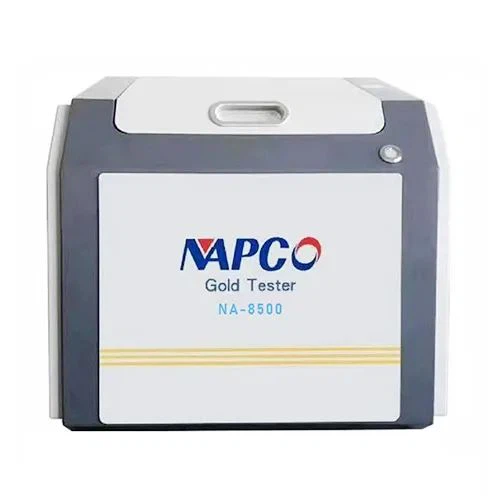
Benchtop XRF analyzers, on the other hand, are more powerful and accurate than handheld analyzers. They are designed for laboratory use and can handle larger and thicker samples. Benchtop XRF analyzers also offer a wider range of features and capabilities, such as multiple X-ray beams, depth profiling, and automated sample handling. However, they are more expensive and less portable than handheld analyzers.
As an XRF test gold supplier, we offer a range of high-quality XRF analyzers for gold testing, including the NA 8500 XRF Gold Tester, the NA 6500 XRF Gold Tester, and the NAP 8200E XRF Gold Tester. These analyzers are designed to provide accurate and reliable results, and they are suitable for a wide range of applications, from jewelry testing to gold refining.
Conclusion
In conclusion, XRF testing is a powerful and reliable method for detecting impurities in gold. XRF analyzers can quickly and accurately identify a wide range of elements commonly found in gold alloys, and they can detect trace amounts of impurities at concentrations as low as parts per million. While XRF testing has some limitations, such as the surface effect and the inability to provide a precise measurement of the purity of the gold, it is still one of the most popular and widely used methods for gold testing.
If you're in the market for an XRF analyzer for gold testing, I encourage you to contact us to learn more about our products and services. Our team of experts can help you choose the right analyzer for your needs and provide you with the support and training you need to get the most out of your investment. Whether you're a jeweler, a gold trader, or an investor, an XRF analyzer can help you ensure the purity and quality of your gold and make informed decisions.
References
- "X-ray Fluorescence Spectroscopy: Principles and Applications." By Michael D. Hochella Jr. and Anthony F. White.
- "Gold Analysis: Techniques and Applications." By John R. Dean and Robert C. Rowe.
- "Handbook of X-ray Fluorescence Spectrometry." By Ronald Jenkins, Robert L. Gould, and David W. Gedcke.