


Can XRF Detect Gold in Jewelry Settings?

As a supplier of XRF gold testing equipment, I often get asked whether XRF technology can effectively detect gold in jewelry settings. The answer is a resounding yes, but there are some nuances to understand.
XRF, or X-ray fluorescence, is a non-destructive analytical technique that can quickly and accurately determine the elemental composition of a sample. When it comes to gold in jewelry, XRF can not only identify the presence of gold but also measure its purity and the concentrations of other elements in the alloy.
How XRF Works for Gold Detection
The basic principle of XRF is relatively straightforward. An X-ray beam is directed at the sample, causing the atoms in the sample to emit secondary X-rays, or fluorescent X-rays. Each element emits X-rays at specific energies, which are characteristic of that element. By analyzing the energies and intensities of the emitted X-rays, an XRF analyzer can identify the elements present in the sample and quantify their concentrations.
In the context of jewelry, this means that an XRF analyzer can distinguish between different gold alloys, such as 14K, 18K, and 24K gold. It can also detect other metals commonly used in jewelry settings, such as silver, copper, nickel, and zinc. This information is crucial for jewelers, pawnbrokers, and precious metal dealers, as it allows them to accurately assess the value of the jewelry.
Advantages of Using XRF for Gold Detection in Jewelry Settings
One of the main advantages of XRF technology is its non-destructive nature. Unlike traditional methods of gold testing, such as acid testing or fire assay, XRF does not damage the jewelry. This is particularly important for valuable or antique pieces, where preserving the integrity of the item is essential.
Another advantage is the speed of analysis. XRF analyzers can provide results in a matter of seconds to minutes, depending on the complexity of the sample and the desired level of accuracy. This allows for rapid screening of multiple pieces of jewelry, making it a practical option for high-volume operations.
XRF analyzers are also highly accurate. They can detect trace amounts of elements, which is important for identifying counterfeit or low-quality gold. For example, some counterfeit gold jewelry may be made from a base metal with a thin gold plating. An XRF analyzer can quickly detect the difference between the gold plating and the underlying metal, helping to prevent fraud.
Limitations of XRF for Gold Detection in Jewelry Settings
While XRF is a powerful tool for gold detection, it does have some limitations. One limitation is that it can only analyze the surface layer of the sample. If the gold in the jewelry is plated or coated, the XRF analyzer will only detect the composition of the surface layer, not the underlying metal or the entire piece. In some cases, this may lead to inaccurate results if the plating is very thin or if there are variations in the composition of the plating.
Another limitation is that XRF analyzers may have difficulty distinguishing between certain elements that have similar X-ray energies. For example, it can be challenging to differentiate between gold and platinum using XRF alone. In such cases, additional testing methods may be required to confirm the identity of the elements.
Our XRF Gold Testers
At our company, we offer a range of high-quality XRF gold testers that are specifically designed for jewelry applications. Our NA 6500 XRF Gold Tester is a benchtop analyzer that provides fast and accurate results. It is easy to use and can analyze a wide range of precious metals, including gold, silver, platinum, and palladium.
The N1 XRF Gold Tester is another popular option. It is a portable analyzer that offers the same level of accuracy as our benchtop models but with the added convenience of being able to take it on the go. This makes it ideal for jewelers who need to test jewelry at different locations or for on-site inspections.
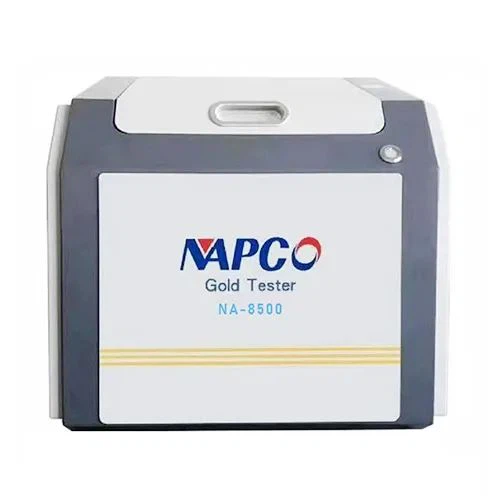
For more advanced applications, we also offer the NA 8500 XRF Gold Tester. This analyzer features a high-resolution detector and advanced software, allowing for even more precise analysis of complex jewelry samples.
Conclusion
In conclusion, XRF technology is a valuable tool for detecting gold in jewelry settings. It offers many advantages, including non-destructive testing, fast analysis, and high accuracy. However, it is important to be aware of its limitations and to use it in conjunction with other testing methods when necessary.
If you are in the jewelry industry and are looking for a reliable and accurate way to test gold and other precious metals, we invite you to contact us to discuss your needs. Our team of experts can help you choose the right XRF gold tester for your specific application and provide you with the support and training you need to get the most out of your investment.
References
- "X-ray Fluorescence Spectroscopy: Principles and Applications." Springer, 2018.
- "Handbook of X-ray Spectrometry." John Wiley & Sons, 2004.
- "Precious Metals Testing: A Guide for Jewelers and Pawnbrokers." Gemological Institute of America, 2019.