


Can a gold tester detect gold alloys? That's a question I get asked a lot as a supplier of gold testers. And the answer is a resounding yes! But let me break it down for you in more detail.
First off, let's talk about what gold alloys are. Pure gold, also known as 24-karat gold, is too soft for most practical uses. So, it's often mixed with other metals like copper, silver, nickel, or zinc to make it stronger and more durable. These mixtures are called gold alloys, and they come in different karat values, such as 18-karat (75% gold), 14-karat (58.3% gold), and 10-karat (41.7% gold).
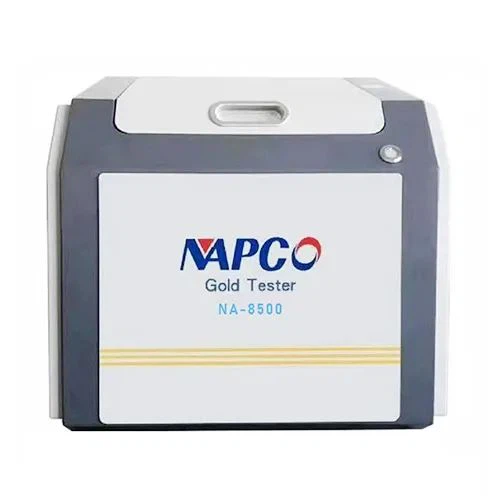
Now, how can a gold tester detect these alloys? Well, there are different types of gold testers out there, but the ones I supply, like the NA 6500 XRF Gold Tester, N1 XRF Gold Tester, and NA 8500 XRF Gold Tester, use X-ray fluorescence (XRF) technology.
XRF is a non-destructive testing method that works by emitting X-rays onto the surface of the sample. When these X-rays interact with the atoms in the sample, they cause the atoms to emit secondary X-rays, which are then detected by the tester. Each element in the sample emits X-rays at a specific energy level, so by analyzing the energy spectrum of the emitted X-rays, the tester can identify the elements present in the sample and their concentrations.
For gold alloys, this means that the XRF gold tester can accurately determine the percentage of gold in the alloy, as well as the presence and concentration of other metals. For example, if you have an 18-karat gold ring, the tester can tell you that it contains 75% gold and also identify the other metals that make up the remaining 25%.
One of the great things about XRF gold testers is that they're very fast and easy to use. You just place the sample on the testing platform, close the lid, and press a button. In a matter of seconds, the tester will give you a detailed analysis of the sample. This makes them ideal for use in jewelry stores, pawn shops, gold refineries, and other places where quick and accurate gold testing is needed.
Another advantage of XRF gold testers is that they're non-destructive. Unlike some other testing methods, such as acid testing, which can damage the sample, XRF testing doesn't leave any marks or scratches on the sample. This means that you can test your gold jewelry or other items without worrying about damaging them.
But how accurate are XRF gold testers? Well, the accuracy of an XRF gold tester depends on several factors, such as the quality of the tester, the calibration of the instrument, and the type of sample being tested. Generally speaking, a high-quality XRF gold tester like the ones I supply can provide accurate results within a few percentage points. However, it's important to note that the accuracy may be affected by factors such as the presence of surface contaminants, the thickness of the sample, and the homogeneity of the alloy.
To ensure the accuracy of your XRF gold tester, it's important to have it calibrated regularly by a qualified technician. Calibration involves comparing the results of the tester to a known standard sample to ensure that it's providing accurate readings. It's also a good idea to test multiple samples to get an average result and to cross-check the results with other testing methods if possible.

So, if you're in the market for a gold tester that can accurately detect gold alloys, I highly recommend considering an XRF gold tester. Whether you're a jeweler, a pawnbroker, a gold refiner, or just someone who wants to test their own gold jewelry, an XRF gold tester can provide you with fast, accurate, and non-destructive gold testing.
If you're interested in learning more about our gold testers or have any questions, please don't hesitate to reach out. We're here to help you find the right gold tester for your needs and to provide you with the support and service you deserve.
References
- "X-ray Fluorescence Spectroscopy: Principles and Applications" by E. P. Bertin
- "Handbook of X-ray Spectrometry" by J. L. Goldstein et al.
- "Non-Destructive Testing of Metals" by P. J. Shull