


In the realm of precious metals testing, gold purity testers have long been indispensable tools for jewelers, pawnbrokers, and precious metal dealers. These devices offer a non - destructive and efficient way to determine the purity of gold items. However, with the rapid advancement of nanotechnology, the question arises: Can a gold purity tester test gold nanoparticles? As a leading gold purity tester supplier, we are well - positioned to explore this topic in depth.
Understanding Gold Nanoparticles
Gold nanoparticles are tiny particles of gold with sizes typically ranging from 1 to 100 nanometers. At this scale, gold exhibits unique physical and chemical properties compared to its bulk form. These properties include enhanced optical, electrical, and catalytic characteristics, which have led to their widespread use in various fields such as medicine, electronics, and environmental science.
The small size of gold nanoparticles presents several challenges when it comes to testing their purity. Unlike traditional gold items, which are macroscopic and have a relatively uniform composition, gold nanoparticles can vary significantly in size, shape, and surface chemistry. Additionally, they are often synthesized in complex mixtures that may contain other substances such as stabilizers, surfactants, and impurities.
Working Principles of Gold Purity Testers
Before delving into whether gold purity testers can test gold nanoparticles, it is essential to understand how these devices work. There are several types of gold purity testers available on the market, each utilizing different technologies.
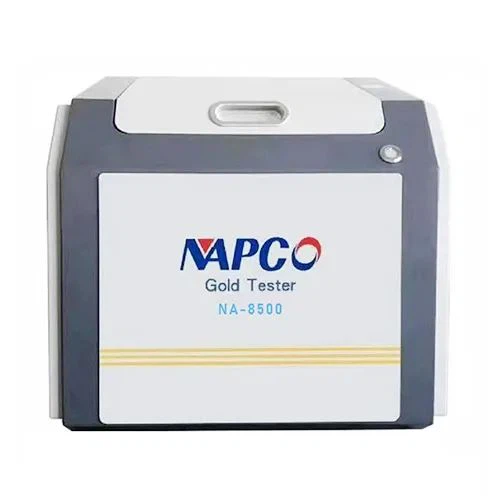
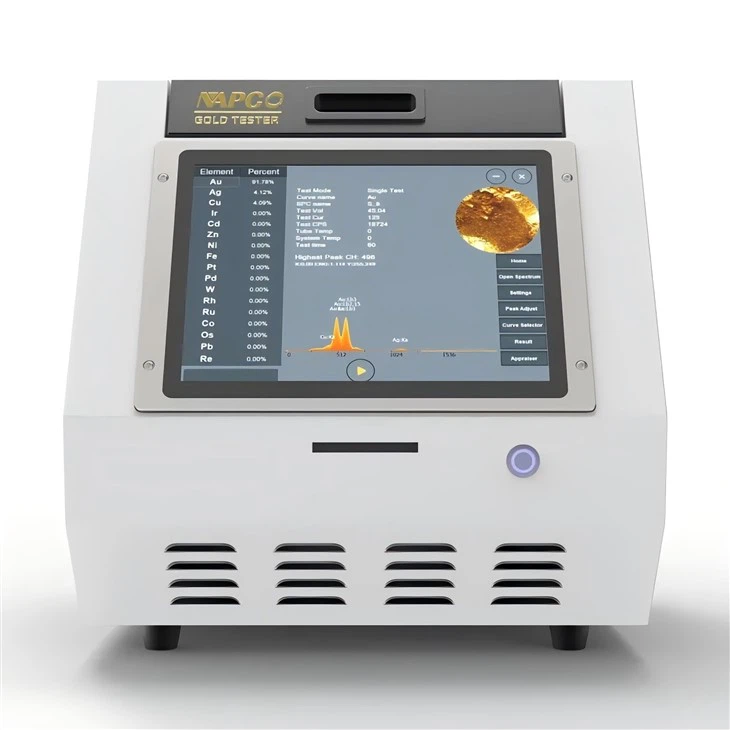
One of the most common types is the X - ray fluorescence (XRF) gold tester. XRF testers work by emitting X - rays onto the sample. When the X - rays interact with the atoms in the sample, they cause the atoms to emit secondary X - rays, known as fluorescent X - rays. The energy and intensity of these fluorescent X - rays are characteristic of the elements present in the sample. By analyzing the fluorescent X - rays, the XRF tester can determine the elemental composition of the sample and, consequently, its gold purity.
Another type of gold purity tester is the acid test kit. This method involves applying a small amount of acid to the gold sample and observing the reaction. Different purity levels of gold will react differently to the acid, allowing the tester to estimate the gold content. However, this method is destructive and not suitable for testing valuable or delicate samples.
Can XRF Gold Testers Test Gold Nanoparticles?
XRF gold testers, such as our NA 8500 XRF Gold Tester, N1 XRF Gold Tester, and NAP 8200E XRF Gold Tester, have the potential to test gold nanoparticles. However, there are several factors that need to be considered.
Sensitivity
One of the main challenges is the sensitivity of the XRF tester. Gold nanoparticles are extremely small, and their signal may be weak compared to macroscopic gold samples. To accurately detect and analyze the gold content in nanoparticles, the XRF tester needs to have a high sensitivity. Our advanced XRF gold testers are equipped with state - of - the - art detectors that can detect trace amounts of elements, making them suitable for testing samples with low gold concentrations, such as gold nanoparticles.
Sample Preparation
Proper sample preparation is crucial when testing gold nanoparticles with an XRF tester. The nanoparticles need to be evenly distributed on a suitable substrate to ensure a representative analysis. Additionally, the substrate should not interfere with the X - ray fluorescence signal. In some cases, it may be necessary to concentrate the nanoparticles or remove any unwanted substances before testing.
Matrix Effects
Matrix effects refer to the influence of the surrounding material on the X - ray fluorescence signal. Gold nanoparticles are often dispersed in a liquid or solid matrix, which can affect the accuracy of the measurement. Our XRF gold testers are designed to minimize matrix effects through advanced calibration techniques and software algorithms. However, it is still important to carefully consider the matrix composition when testing gold nanoparticles.
Limitations and Considerations
While XRF gold testers can provide valuable information about the elemental composition of gold nanoparticles, there are some limitations to keep in mind.
Size and Shape Effects
The size and shape of gold nanoparticles can affect their X - ray fluorescence properties. Smaller nanoparticles may have different electronic structures and surface plasmon resonance characteristics compared to larger ones, which can lead to variations in the X - ray fluorescence signal. Therefore, it may be necessary to calibrate the XRF tester specifically for the size and shape of the gold nanoparticles being tested.
Surface Chemistry
The surface chemistry of gold nanoparticles can also influence the X - ray fluorescence measurement. Nanoparticles with different surface coatings or functional groups may interact differently with the X - rays, leading to inaccurate results. It is important to take into account the surface chemistry of the nanoparticles and, if possible, remove any surface coatings before testing.
Applications of Testing Gold Nanoparticles
Despite the challenges, testing the purity of gold nanoparticles is of great importance in many applications.
Biomedical Applications
In medicine, gold nanoparticles are used in various diagnostic and therapeutic applications, such as cancer imaging and drug delivery. Ensuring the purity of gold nanoparticles is crucial for their safety and efficacy. Our gold purity testers can help researchers and manufacturers verify the quality of gold nanoparticles used in biomedical applications.
Electronics
Gold nanoparticles are also used in electronics, particularly in the development of high - performance sensors and conductive materials. Accurate testing of their purity is essential for optimizing the performance of these devices.
Conclusion
In conclusion, while testing gold nanoparticles with a gold purity tester presents some challenges, it is possible with the right equipment and techniques. Our advanced XRF gold testers, such as the NA 8500 XRF Gold Tester, N1 XRF Gold Tester, and NAP 8200E XRF Gold Tester, offer high sensitivity, advanced calibration capabilities, and the ability to minimize matrix effects, making them suitable for testing gold nanoparticles.
If you are involved in the research, production, or quality control of gold nanoparticles and are looking for a reliable gold purity testing solution, we invite you to contact us for more information. Our team of experts is ready to assist you in selecting the most appropriate gold purity tester for your specific needs and to provide you with comprehensive technical support.
References
- Murphy, C. J., Gole, A. M., Stone, J. W., Sisco, P. N., Alkilany, A. M., Kinard, B. E., & Hankins, P. (2008). Anisotropic metal nanoparticles: Synthesis, assembly, and optical applications. Journal of Physical Chemistry C, 112(45), 17867 - 17879.
- Rosi, N. L., & Mirkin, C. A. (2005). Nanostructures in biodiagnostics. Chemical Reviews, 105(4), 1547 - 1562.
- Vigderman, L., & Schatz, G. C. (2012). Surface - enhanced Raman scattering from gold nanoparticles: Influence of size, shape, and aggregation. Journal of Chemical Theory and Computation, 8(10), 3777 - 3786.