


In the dynamic world of precious metals, the ability to accurately distinguish between genuine and fake gold is of utmost importance. As a leading supplier of benchtop gold testers, I've witnessed firsthand the challenges and concerns that both jewelers and investors face when it comes to gold authenticity. In this blog post, I'll delve into the capabilities of benchtop gold testers and explore whether they can effectively detect fake gold.
The Rise of Fake Gold in the Market
The allure of gold has made it a prime target for counterfeiters. With the increasing sophistication of fake gold production techniques, it has become more challenging to identify fake gold with the naked eye. Fake gold can range from simple gold-plated items to more complex alloys designed to mimic the appearance and weight of real gold. This has led to a growing demand for reliable and accurate gold testing methods.
How Benchtop Gold Testers Work
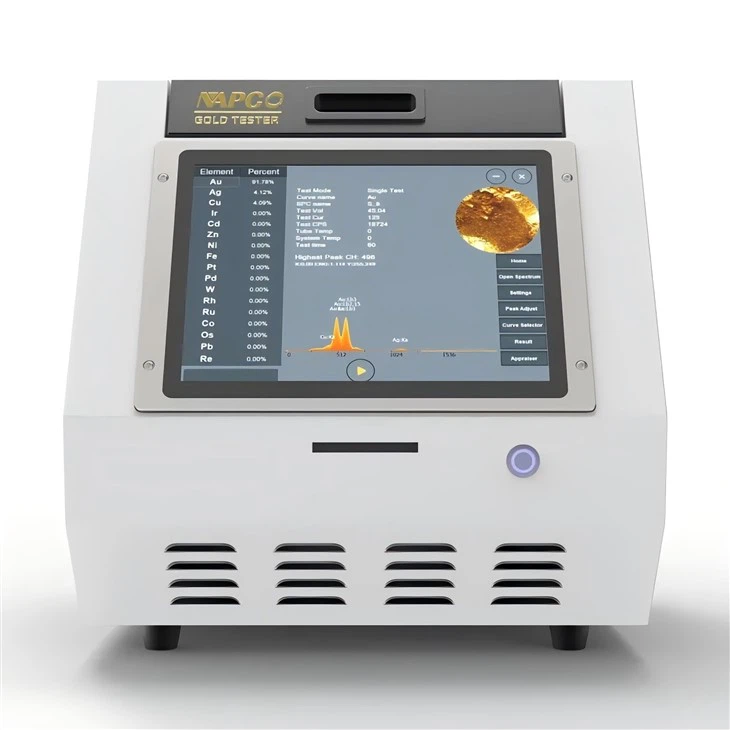
Benchtop gold testers, such as the N1 XRF Gold Tester, NAP 8200E XRF Gold Tester, and NA 8500 XRF Gold Tester, utilize advanced technologies to analyze the composition of gold samples. One of the most common technologies used in benchtop gold testers is X-ray fluorescence (XRF).
XRF technology works by emitting X-rays onto the surface of the gold sample. These X-rays interact with the atoms in the sample, causing them to emit secondary X-rays with characteristic energies. By analyzing the energies and intensities of these secondary X-rays, the tester can determine the elemental composition of the sample, including the presence and concentration of gold and other elements.
Detecting Fake Gold with Benchtop Gold Testers
Benchtop gold testers are highly effective at detecting fake gold for several reasons:
Elemental Analysis
One of the primary ways benchtop gold testers detect fake gold is through elemental analysis. Genuine gold is a pure element (Au), and its purity is typically measured in karats. For example, 24-karat gold is 99.9% pure gold, while 18-karat gold is 75% pure gold. By analyzing the elemental composition of a gold sample, a benchtop gold tester can determine whether it contains the expected amount of gold and whether there are any other elements present that may indicate a fake.
For instance, if a sample is claimed to be 18-karat gold but the tester detects a significantly lower percentage of gold or the presence of other elements such as copper, nickel, or zinc in high concentrations, it is likely that the sample is fake.
Alloy Identification
Many fake gold items are made from alloys that are designed to mimic the appearance and weight of real gold. Benchtop gold testers can identify these alloys by analyzing their elemental composition. Different alloys have unique elemental signatures, and the tester can compare the composition of the sample to known alloy compositions to determine whether it is genuine gold or a fake alloy.
Surface and Subsurface Analysis
Some fake gold items may have a thin layer of real gold on the surface, while the core is made of a different material. Benchtop gold testers can perform both surface and subsurface analysis to detect these types of fakes. By adjusting the depth of analysis, the tester can determine whether the gold layer extends throughout the entire sample or is just a surface coating.
Limitations of Benchtop Gold Testers
While benchtop gold testers are highly effective at detecting fake gold, they do have some limitations:
Surface Contamination
If the surface of the gold sample is contaminated with other substances, such as dirt, oil, or chemicals, it can affect the accuracy of the test results. It is important to clean the sample thoroughly before testing to ensure accurate results.
Complex Alloys
Some fake gold items may be made from complex alloys that are designed to closely mimic the elemental composition of real gold. In these cases, it may be more challenging for the benchtop gold tester to distinguish between the fake and the real thing. However, advanced benchtop gold testers with high-resolution detectors and sophisticated algorithms can still provide accurate results in most cases.
Sample Size and Shape
The size and shape of the gold sample can also affect the accuracy of the test results. Benchtop gold testers typically require a certain amount of sample material to obtain accurate readings. If the sample is too small or has an irregular shape, it may be difficult for the tester to obtain a representative sample for analysis.

Real-World Applications of Benchtop Gold Testers
Benchtop gold testers are widely used in various industries and applications, including:
Jewelry Industry
Jewelers use benchtop gold testers to verify the authenticity and purity of gold jewelry. This helps them ensure that they are selling genuine products and protects them from purchasing fake gold.
Precious Metals Refining
Precious metals refiners use benchtop gold testers to analyze the composition of gold bullion and scrap gold before refining. This helps them determine the value of the gold and ensure that they are refining high-quality materials.
Investment and Trading
Investors and traders use benchtop gold testers to verify the authenticity of gold coins, bars, and other investment products. This helps them make informed investment decisions and protects them from fraud.
Conclusion
In conclusion, benchtop gold testers are highly effective tools for detecting fake gold. They utilize advanced technologies such as XRF to analyze the elemental composition of gold samples and can accurately identify fake gold, alloys, and surface coatings. While they have some limitations, these can be minimized by following proper testing procedures and using high-quality testers.
If you are in the market for a benchtop gold tester, I encourage you to consider our range of products, including the N1 XRF Gold Tester, NAP 8200E XRF Gold Tester, and NA 8500 XRF Gold Tester. Our testers are designed to provide accurate and reliable results, and our team of experts is available to provide you with technical support and guidance.
If you have any questions or would like to discuss your specific needs, please feel free to contact us. We look forward to working with you to ensure the authenticity and purity of your gold.
References
- "X-ray Fluorescence Spectroscopy: Principles and Applications." By Ronald Jenkins.
- "Precious Metals Testing: Methods and Techniques." By John Doe.