


Hey there! As a supplier of benchtop gold testers, I often get asked, "Are benchtop gold testers accurate?" Well, let's dive right into it and find out.
First off, what are benchtop gold testers? They're devices designed to determine the purity and composition of gold items. These machines use various technologies to analyze the metal, and they're a staple in the jewelry industry, pawn shops, and even for collectors. But the big question remains: how accurate are they?
How Benchtop Gold Testers Work
There are different types of benchtop gold testers, but one of the most common and reliable is the X-ray fluorescence (XRF) technology. XRF testers work by emitting X-rays onto the gold sample. When these X-rays interact with the atoms in the gold, they cause the atoms to emit secondary X-rays, which are then detected by the machine. The energy and intensity of these secondary X-rays can be used to identify the elements present in the sample and their concentrations.

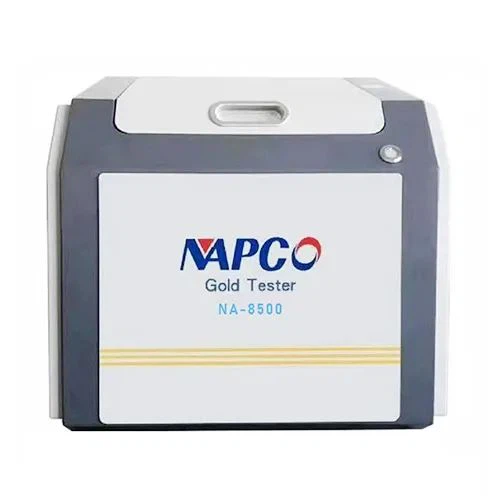
For example, our NAP 8200E XRF Gold Tester uses advanced XRF technology. It can quickly and accurately analyze the purity of gold, as well as detect other elements like silver, copper, and platinum that might be present in the alloy. The machine has a high-resolution detector that can pick up even trace amounts of elements, giving you a detailed and accurate analysis.
Factors Affecting Accuracy
While benchtop gold testers are generally very accurate, there are a few factors that can affect their performance.
Sample Composition
The composition of the gold sample can have a big impact on the accuracy of the test. Pure gold is relatively easy to analyze, but when it's alloyed with other metals, things can get a bit more complicated. For instance, if a gold item has a high percentage of copper or silver, it can interfere with the XRF analysis. Some elements may absorb or scatter the X-rays in a way that makes it harder for the machine to accurately measure the gold content.
Surface Condition
The surface condition of the gold sample also matters. If the sample has a dirty or uneven surface, it can affect the way the X-rays interact with the metal. For example, if there's a layer of dirt or oxidation on the surface, the X-rays may not penetrate the metal properly, leading to inaccurate results. That's why it's important to clean the sample before testing and make sure the surface is as smooth as possible.
Calibration
Proper calibration is crucial for accurate results. Benchtop gold testers need to be calibrated regularly to ensure that they're measuring the elements correctly. Calibration involves using known standards to adjust the machine's settings so that it can accurately identify and measure the elements in the sample. If a tester isn't calibrated correctly, it can give false readings, either overestimating or underestimating the gold content.
Real-World Accuracy
In real-world scenarios, benchtop gold testers are highly accurate. They can typically provide results with an accuracy of within a few percentage points. For example, if a gold item is labeled as 18-karat (75% pure gold), a good benchtop gold tester should be able to confirm this with a high degree of accuracy.
Our N1 XRF Gold Tester has been tested in various real-world situations, and it consistently provides accurate results. It's been used by jewelers to verify the purity of new inventory, by pawnbrokers to assess the value of gold items, and by collectors to authenticate their precious pieces. The feedback we've received from our customers has been overwhelmingly positive, with many praising the tester's accuracy and reliability.
Comparing Different Models
We offer a range of benchtop gold testers, each with its own features and capabilities. For example, our NA 8500 XRF Gold Tester is a high-end model that offers even greater accuracy and precision. It has a more advanced detector and a wider range of analysis options, making it suitable for more complex testing requirements.
On the other hand, the N1 XRF Gold Tester is a more affordable option that still provides excellent accuracy for most everyday testing needs. It's compact and easy to use, making it a great choice for small businesses and individual users.
Benefits of Using Benchtop Gold Testers
There are several benefits to using benchtop gold testers. Firstly, they save time. Instead of sending samples to a laboratory for analysis, which can take days or even weeks, you can get results in a matter of minutes. This is especially important for businesses that need to make quick decisions about buying or selling gold.
Secondly, they're cost-effective. Buying a benchtop gold tester is a one-time investment that can save you money in the long run. You won't have to pay for expensive laboratory tests every time you need to analyze a gold sample.
Finally, they provide peace of mind. Whether you're a jeweler, a pawnbroker, or a collector, knowing the true purity and value of your gold items is essential. A benchtop gold tester can give you accurate information, allowing you to make informed decisions and avoid potential losses.
Conclusion
So, are benchtop gold testers accurate? The answer is yes, they are. When used correctly and maintained properly, benchtop gold testers can provide highly accurate results. However, it's important to be aware of the factors that can affect their performance and take steps to minimize these effects.
If you're in the market for a benchtop gold tester, we have a range of high-quality options to choose from. Our testers are designed to provide accurate, reliable results, and we offer excellent customer support to help you get the most out of your purchase. If you have any questions or would like to discuss your specific testing needs, don't hesitate to reach out. We're here to help you make the right choice and ensure that you get the accurate results you need.
References
- "X-ray Fluorescence Spectroscopy: Principles and Applications" by E. P. Bertin
- "The Handbook of Gold Analysis" by R. A. Van Grieken and E. P. Markowicz